The 10 Best B2C Marketing Strategies


Here are 10 B2C marketing strategies that will help you outperform your competitors and drive measurable revenue growth.
Business-to-consumer marketing, or B2C marketing, has been shaken up in the past year. Competition is fiercer, customer expectations are sky-high, and AI-driven search is rewriting the rules.
Because of this, you might be left wondering what marketing strategies are best for B2C businesses. In this guide, we’ll share ten ways to make your B2C marketing stand out in 2026 and beyond.
1. Future-Proof Your Search Traffic with GEO
Generative Engine Optimisation (GEO) isn’t optional in 2026.
Users aren’t just relying on traditional search engines like Google or Bing anymore. They’re turning to AI platforms like ChatGPT, Perplexity, and Gemini to ask more complex, conversational questions and get instant answers.
Search engine result pages (SERPs) are evolving, too. Google’s AI Overviews now appear across a growing number of searches, offering condensed, AI-generated summaries of information from multiple trusted sources right at the top of the page.
Now we have Google’s AI Mode, which has been rolled out in the U.S. This AI search feature layers personalisation and conversational engagement into the search experience, offering product recommendations and streamlining the path from discovery to purchase.
If your brand, product, or service isn’t appearing in these AI-driven answers, you’re:
- Losing valuable visibility at the exact point of consumer decision-making.
- Falling behind competitors who are already optimised to rank in AI search.
- Missing out on revenue opportunities driven by AI-powered recommendations.
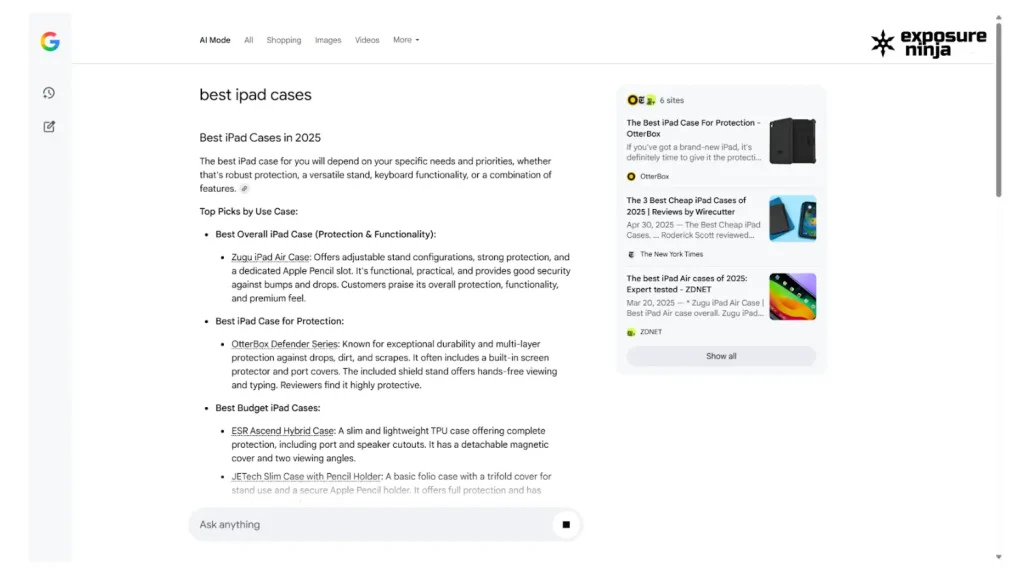
But when you implement GEO, you get results — just like our client, ZUGU. This B2C brand, known for its premium iPad cases, now dominates key AI-generated answers. Search for “best iPad cases” in Perplexity or Google’s AI Mode, and you’ll see ZUGU mentioned.
To capitalise on these wins, you need a smart GEO strategy:
- Interview the AI platforms to see how they describe your brand and fix gaps and misinformation.
- Rank in traditional search, ensuring your website performs strongly in organic listings and has the structured data that AI platforms reference.
- Optimise your content for clarity, structure, and authority to increase the chances of being surfaced in AI answers.
- Amplify your brand through digital PR and consistent mentions across the web, making your brand impossible for AI platforms to ignore.
GEO is your ticket to staying visible, relevant, and revenue-ready in the AI-driven era.
2. Align SEO with Search Intent
Aligning your Search Engine Optimisation (SEO) with user intent isn’t new. For years, Google has shifted its focus beyond simple keyword matching to understanding what users are really looking for — whether it’s a quick answer, a product recommendation, or a detailed guide.
In 2026, this alignment will become non-negotiable. AI-driven search platforms like Google’s AI Overviews, AI Mode, and ChatGPT don’t just match keywords — they analyse context and intent, delivering curated, multi-faceted answers. If your content doesn’t align with what AI believes the user wants, your business risks losing visibility and revenue.
To stay competitive:
- Map your content to each stage of the customer journey, from initial research to decision-making.
- Build pages that answer real customer questions with clarity, authority, and structure.
- Use schema and structured data to make your content AI-friendly and easy to surface in search results.
This isn’t just about improving rankings — it’s about adapting your SEO strategy to meet customers exactly where they are, give them the answers they need, and smoothly guide them to the next step.
3. Nail Your Brand Positioning
Brand positioning is the foundation of how your customers see you and why they choose you over the competition. In simple terms, it’s the answer to the question, “What makes us worth buying from?”
If your brand feels vague or inconsistent, your potential customers will move on to a competitor who’s more explicit about what they stand for. In a world where attention spans are short and choices are endless, a strong brand position doesn’t just help you stand out — it helps you convert.
Look at The Ordinary. This skincare brand disrupted the beauty industry with a position focused on transparent, science-backed formulas at affordable prices. They deliver this messaging clearly and consistently across everything — from product packaging to website copy to outreach. And it works — their effective brand positioning has turned into a loyal customer base and a multi-million-dollar business.
To create a brand position that helps you stand out, consider your competition, your customer needs, and how you’ll put your positioning into action.
Analyse Competitor Positioning
To nail your brand positioning, you need to know how your competitors are playing the game.
Check out their websites, social feeds, and PPC ads. What strengths are they leaning into? Are they winning on customer service, product quality, or maybe pricing?
But don’t just look at what they’re shouting about — dig into the gaps. Perhaps they include excellent customer service as a benefit of shopping with them, but many customer complaints on social media or Trustpilot go ignored.
Use this information to adjust your positioning. You shouldn’t copy your competitors, but seeing what’s out there will help you find ways to stand out from others.
Understand Your Customers
Examine your current and ideal customers — focus on their problems, concerns, demographics, and buying habits.
Use surveys, market research, social media insights, customer emails, reviews, and live chat responses to gain a deep understanding of your target audience.
Pay attention to what customers do and don’t like about your brand. This information will help you identify their pain points and tailor your brand’s positioning to address those issues.
It’s important to be authentic and highlight what sets you apart from your competitors while meeting your customers’ needs.
Define and Implement Your Positioning
Based on your analysis of competitors and customers, it’s time to define your brand’s positioning.
Sum it up in a few words that capture your values, such as personalised service, trustworthiness, or ease of purchase.
Let’s compare two life insurance brands to illustrate this point.
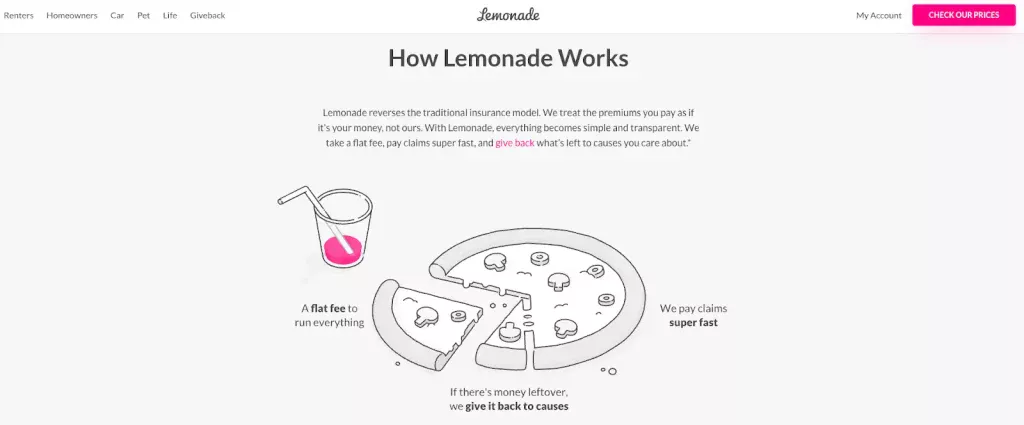
Lemonade positions itself as the tech-driven, transparent insurance disruptor. It’s all about fast, AI-powered claims processing, a simple flat-fee model, and a socially conscious twist where unclaimed premiums are donated to charity. This resonates with younger, digital-savvy consumers who value efficiency and ethics.
Polly positions itself as the go-to insurance brand for mums, using warm, approachable language and stressing affordability. Its messaging taps into the emotional motivations behind purchasing life insurance, positioning the brand as a trusted choice for families looking for security and value.
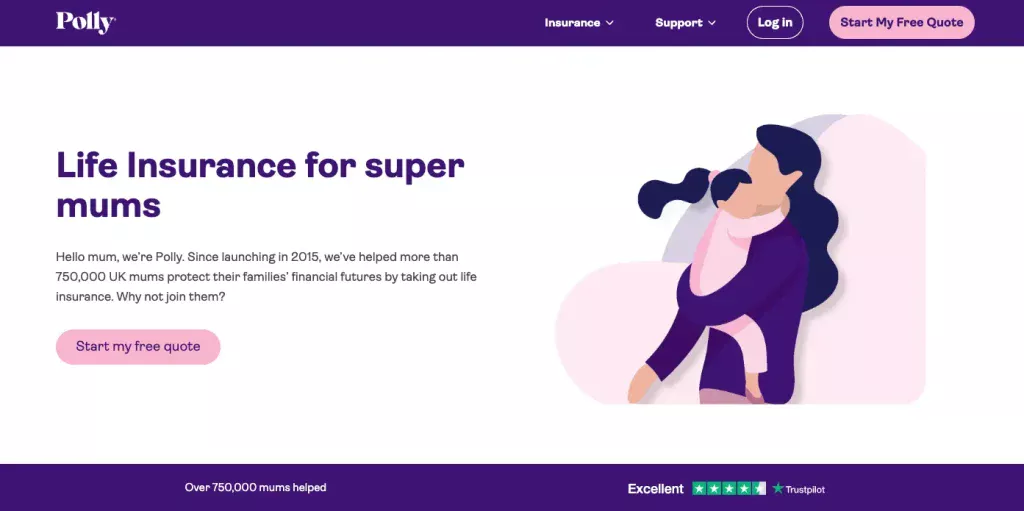
These are two brands with totally different positioning that essentially sell the same thing — life insurance.
Once you’ve defined your positioning, ensure it’s consistently reflected across your website and all your marketing efforts.
Putting Your Positioning in Action
Your brand’s positioning should be seamlessly integrated into your marketing and the entire business as a whole.
Consider the customer journey and how each aspect of your positioning connects with customers at different stages.
For example, if simplicity is part of your positioning, make information easily accessible at the beginning, provide detailed product descriptions in the middle, and ensure a straightforward checkout process at the end.
Mastering brand positioning is crucial in a competitive market.
By understanding your competition, analysing customer pain points, defining your positioning and implementing it consistently, you can create a unique brand that resonates with your target audience.
Remember to be authentic and ensure your positioning aligns with the actual brand experience. Consistency across all touchpoints is essential.
4. Drive Conversions Through Content Marketing
Content marketing isn’t just about reaching the top of Google or racking up likes and shares. For B2C businesses with ambitious growth goals, content needs to deliver results.
While not every piece of content will lead to an immediate conversion, every piece should nudge the customer closer to a decision.
Whether the customer is at the start of their journey or ready to buy, your content should keep them engaged and make the next step easy. Great content creation builds a clear path from first contact to conversion.
When content guides users through this journey — whether it’s signing up for updates, requesting a quote, or making a purchase — it turns passive readers into active customers. That’s content that drives revenue, not just awareness.
Frictionless CTAs
Strong content is great, but if it doesn’t give readers a clear next step, it’s missing a trick. That’s where frictionless calls-to-action (CTAs) come in.
A well-placed CTA doesn’t just sit at the end of a blog, hoping someone notices it. It’s designed to gently guide readers towards the next logical step — whether that’s booking a consultation, making a purchase, or signing up for updates. This is how content turns passive engagement into measurable revenue.
Our client, Personal Injury Law Firm, a U.S.-based personal injury lawyer, creates informative content tailored to attract high-intent visitors. They then seamlessly convert that traffic into leads by embedding a free consultation form directly within their blogs, making it easy for readers to take the next step when their interest is at its peak.
Or consider our client Golf Course Lawn Store, which has a seamless Add to Cart functionality in their blog content. As customers learn about lawn care solutions, they can add the exact product they need to their cart immediately. It’s all about reducing friction and making it effortless for readers to act on their intent.
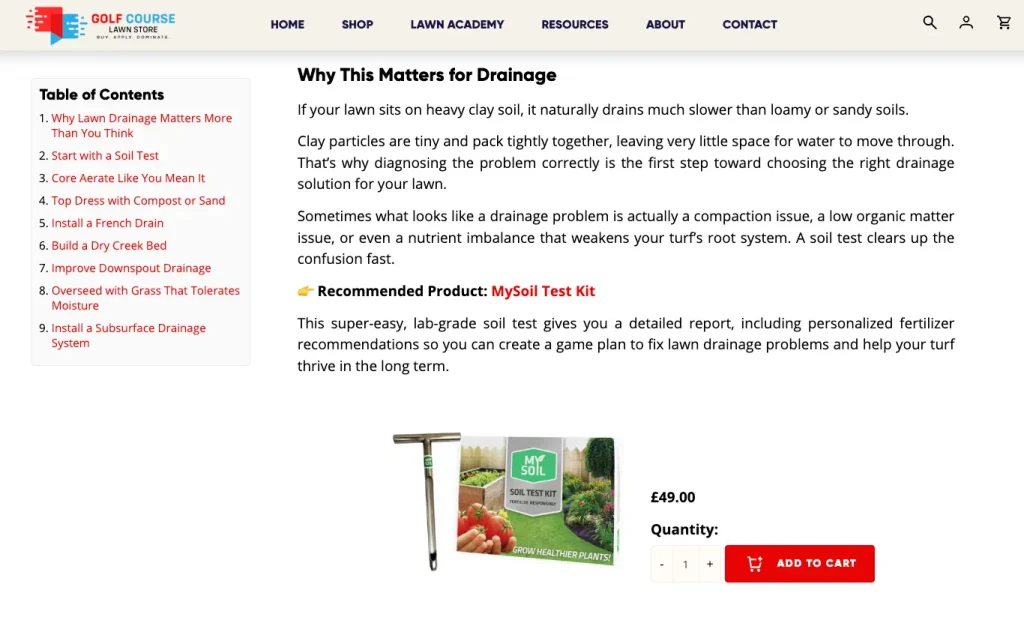
Whether you’re capturing leads or closing sales, CTAs should be natural extensions of your content, offering solutions and next steps when your audience is most engaged.
Interactive Assets
Interactive content does more than just make your site look good — it boosts rankings, delivers real value to your audience, and drives conversions. Interactive tools engage users with personalised experiences that keep them on your site longer and help move them closer to taking action.
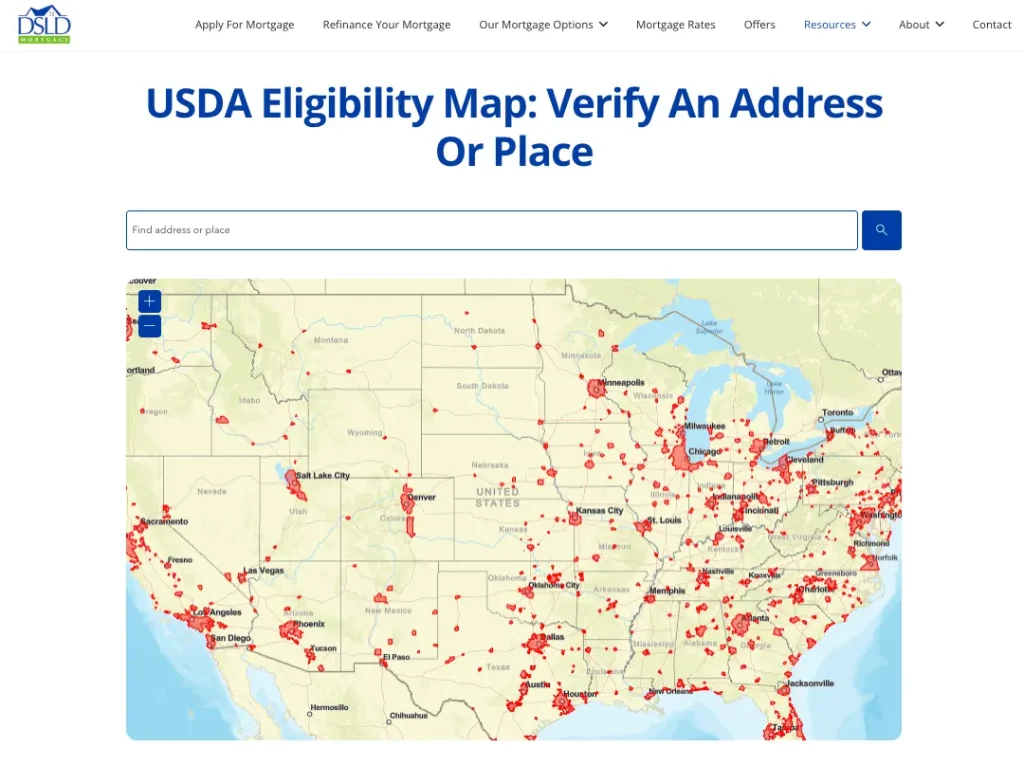
Consider the USDA Eligibility Map we built for our client, DSLD Mortgage. USDA loans are only available in specific areas of the U.S., but most people don’t want to wade through dense PDFs or decode complex eligibility criteria. We built them a simple, intuitive map that lets users enter their ZIP code and instantly see whether their location qualifies.
Eligible users are prompted to book a free loan consultation, while ineligible ones are smoothly directed to other mortgage options like FHA loans. Either way, they’re staying on the site, discovering solutions, and moving closer to conversion.
5. Reposition Your PPC Campaigns
In 2026, AI-driven search and ad experiences are transforming the pay-per-click (PPC) landscape. With Google’s AI Overviews pulling traffic away from organic listings and AI-generated ad formats becoming standard, B2C brands need to rethink where and how they invest their PPC budgets.
Simply increasing ad spend to keep pace won’t cut it. The focus now is on strategically reallocating budgets to platforms and formats that deliver the highest ROI.
- Embrace AI ad formats — but make them better. Google’s AI-generated Shopping ads, Bing’s Chat ads, and Meta’s AI-powered creatives flood platforms with acceptable but generic content. Stand out with campaigns that are human, creative, and directly address your audience’s pain points and aspirations.
- Test and double down on what works. If your Google Ads are becoming less effective in the new AI-driven landscape, don’t just spend more — consider shifting budgets to other high-performing platforms like Meta or Microsoft.
- Use data and automation — while staying in control. Platforms like Google and Meta offer advanced AI tools for bidding and placement. Leverage them, but monitor performance closely, refresh ad creatives regularly, and be ready to adapt quickly.
- Think multi-channel. With generative AI changing the search game, diversification is key. Avoid putting all your budget into one channel. Expand your PPC strategy to include search, social, and display.
B2C brands that proactively reposition their PPC spend, embrace AI with intent, and infuse campaigns with creative, human touches will be the ones capturing attention and revenue while competitors fall behind.
6. Make Use of Personalisation
Brand personalisation is a revenue-driving B2C marketing strategy you can use in 2026 and beyond.
Consumers want to feel a connection with brands, and a personalised experience can help build that connection. It also gives individual consumers a better experience by focusing on the products and services that are the most important to them. Get this right, and you’ll boost engagement, loyalty, and conversions.
Leading brands like Amazon and Netflix have set the gold standard. Amazon’s entire homepage adapts based on individual user behaviour, serving up product recommendations driven by browsing and purchase history. Netflix also personalises recommendations to maximise engagement and drive continued viewing.
Here’s how you can integrate personalisation into your B2C marketing strategy to drive results:
Tailored Recommendations and Dynamic Website Content
You can use customer data and algorithms to provide personalised product recommendations like Netflix and Amazon. This can be based on the customer’s browsing history, previous purchases, or preferences they might have set up when registering with your site or signing up for your mailing list.
Your website can also dynamically display content based on visitors’ browsing history, geographic location, or past interactions. For example, retailers like ASOS and Nike showcase products tailored to browsing patterns and user locations.
Personalised Email Campaigns
You can segment your email subscriber list based on customer preferences, purchase history, or demographic information.
By sending targeted emails with personalised product recommendations, exclusive offers, or tailored content, you can increase open rates, click-through rates (CTRs), and conversions. You’ll also reduce the number of people who unsubscribe because they feel the content isn’t relevant to them.
Customised Landing Pages
You can create unique landing pages for specific customer segments or marketing campaigns. These landing pages can be personalised to match the interests, needs, or demographics of the target audience, resulting in higher engagement and conversion rates.
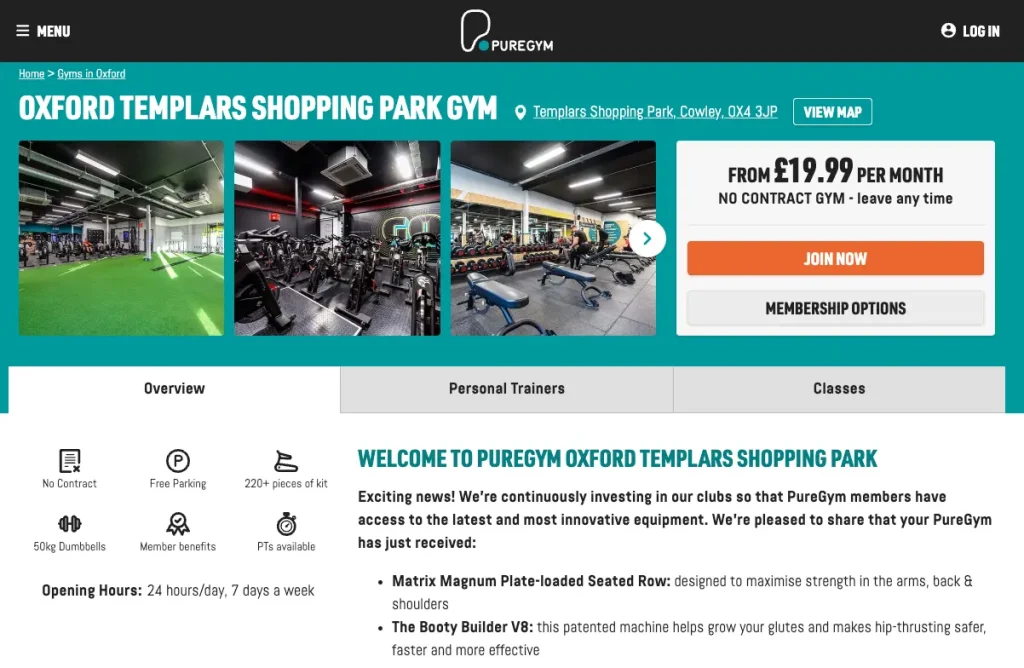
A great example is PureGym, which creates location-specific landing pages for its gyms. Their Oxford Templars Shopping Park page is tailored with a local phone number, gym-specific amenities, and nearby promotions. This approach builds trust and shows users they’re engaging with a local branch, not just a generic national chain.
7. Boost Brand Mentions and Backlinks
Digital PR will be one of the top ways to compete with AI-generated search results.
It’s the ideal way to get your brand in front of prospective customers where they already spend their time, such as reading online publications, reading the news, or browsing social media.
Here are some digital PR strategies that help B2C businesses thrive in this AI world:
Publishing Original Studies or Stats
Publishing stats or studies is an old-school but effective method of digital PR.
These don’t need to be brand-new studies either — you may already have customer data you can use to inform these studies as long as no identifying customer information is used.
The best studies then share the new data or insights in a fresh, engaging way. An excellent example is Barratt Homes’ interactive London Underground Property Prices map. This tool transformed existing data into a user-friendly, interactive experience, showcasing property prices along different Tube stops. This resulted in a high-profile feature in TimeOut, complete with a valuable backlink and brand mention.
Not only are great studies often linked to by big publications, but they may also give you an advantage regarding AI Overviews.
For example, a search for “digital marketing statistics” could return “according to Exposure Ninja, 55% of marketers struggle to understand why their target audience doesn’t convert”, which was pulled from our digital marketing ROI survey as part of the AI response.
Newsjacking
Newsjacking is a savvy digital PR tactic where brands jump on trending news or cultural moments to boost visibility. By offering timely expert commentary, clever insights, or even a playful meme, you can position your brand as both relevant and authoritative.
At Exposure Ninja, we use newsjacking regularly — especially when it comes to the evolving world of AI. Our team doesn’t just react to AI headlines; we break them down and share actionable insights that resonate with business owners and marketers. For example, we recently created a video unpacking Google’s AI Mode, giving our audience a first look at how it works and what it means for their marketing strategies.
When done right, newsjacking keeps your brand in the conversation, attracts media attention, and showcases your expertise in real-time.
Coining a Term
If you create a new process in your industry or find a better way of doing an old process that doesn’t have a name, you can use this as an opportunity to coin a term.
Create content around this term and reach out to publications whose readers could benefit from this knowledge.
Then, people will be more likely to search for “What is the X technique?” or “How to use the X technique”.
As you are the originator, your site will likely be used to corroborate the info — and put your brand at the top of SERPs.
Alongside that, if people are nice, they’ll credit you with the idea — “The X technique, coined by Y” — which is likely to be picked up by AI Overviews and included in the generated results.
For example, Hubspot’s co-founder Brian Halligan coined the phrase “inbound marketing.”
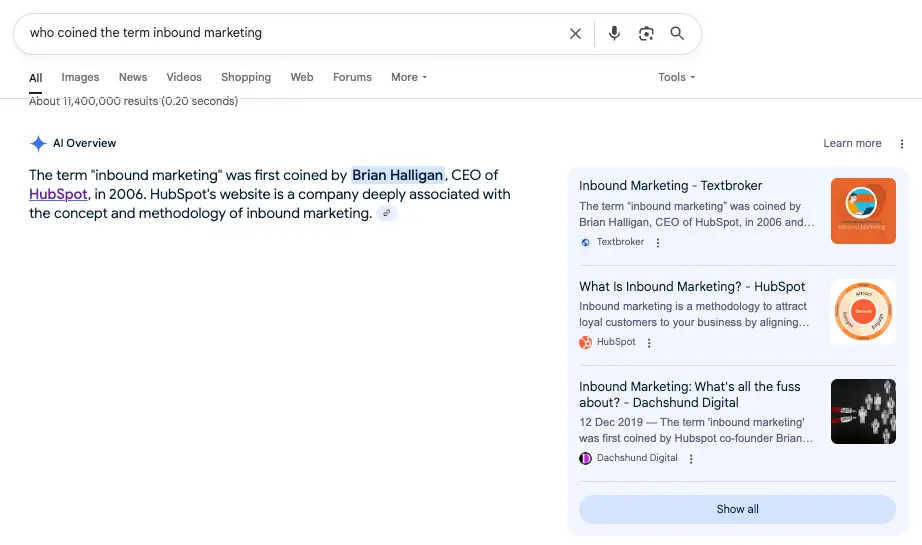
You’ll also get more backlinks if your term takes off. Remember that linked and unlinked mentions will fuel the knowledge graph, so even if sites aren’t linking to you, it will help your brand name appear alongside the term you’ve coined in the AI-generated search result.
Link Insertion
Identify the websites that consistently appear in searches related to your products or services and focus on getting your brand featured on them.
One of the simplest and most effective tactics is to secure placements in top 10 lists and product roundups, especially as these become more valuable in an AI-driven search that leans on trusted third-party recommendations.
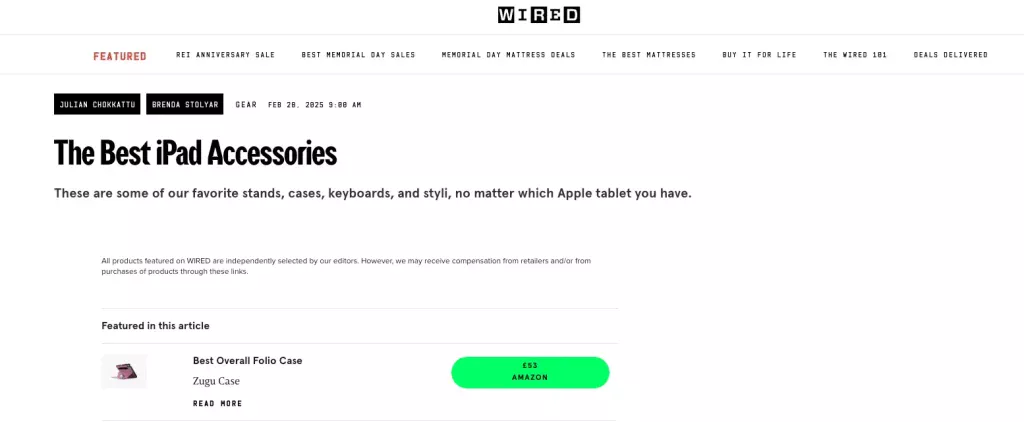
That’s exactly how we helped ZUGU gain visibility in Perplexity and Google’s AI Mode for searches like “best iPad cases.” Through strategic digital PR and outreach, we positioned ZUGU in authoritative tech-industry roundups on sites like Wired and ZDNet. These credible, high-quality mentions not only boosted their visibility in traditional search but also influenced AI-generated search results, strengthening ZUGU’s digital presence and authority.
8. Master Video Marketing
Video marketing has become a must-have for B2C brands in 2026. According to Wyzowl:
- 83% of consumers want to see more videos from brands.
- 78% of consumers would prefer to learn about a product or service by watching a short video.
While most businesses know it’s important, they often cite high video production expenses as the main barrier. But in 2026, you don’t need a huge budget or professional setup to make an impact.
Let’s look at Golf Course Lawn Store, a perfect example of how to do video right. Founder Ron Henry regularly posts videos tackling common lawn care problems, sharing real results, and offering practical advice. Most of his content is filmed with a handheld camera, which makes it feel personal and relatable — and explains why it’s so successful.
Video marketing doesn’t just boost visibility — it builds trust and connection with your audience, which is essential for driving growth in 2026. To make your video strategy effective:
- Focus on value-driven content that genuinely helps viewers.
- Research whether short-form or long-form content is more popular in your niche.
- Keep the production simple and authentic — if budget is limited, even a smartphone can work.
- Integrate your product or service naturally into the content.
- Use platforms where your audience spends time, like YouTube, TikTok, Instagram, or wherever works best for your niche.
9. Ethical Marketing That’s Credible
Today’s consumers still care deeply about ethics, sustainability, and social responsibility. They want to know that the brands they support are making a positive impact, whether that’s through environmental initiatives, fair working practices, or community engagement.
They’re not just talking the talk. Research shows that consumers are willing to pay up to 9.7% more for sustainably produced or sourced products, even in today’s high cost-of-living environment.
But this isn’t a strategy to fake. With greenwashing on the rise, studies show that consumers are becoming increasingly wary of sustainability claims and will conduct their own research before trusting what companies say.
To build real trust and lasting loyalty, your brand must showcase its commitments through genuine, ethical marketing. Back your promises with clear, verifiable actions, and communicate them transparently across all your channels.
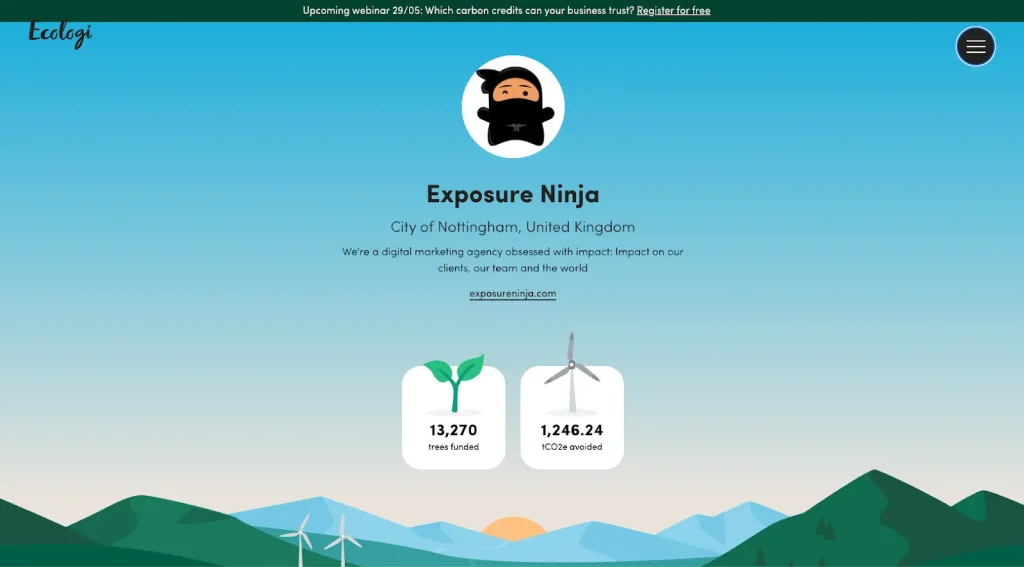
At Exposure Ninja, we practice what we preach. We proudly display our verified B Corporation status, make our tree-planting commitments public, and share our latest Impact Report for anyone to read. This isn’t just marketing — it’s proof that we’re living our values.
10. Reach Customers Across Multiple Platforms and Touchpoints
The most effective B2C marketing strategies don’t rely on just one channel. Instead, they combine multiple approaches into a seamless, integrated experience that connects with customers wherever they are.
This is called an omnichannel marketing strategy. It blends digital and physical touchpoints, like your website, social media, email, in-store experiences, and events, into a consistent and cohesive journey that builds trust and brand loyalty.
True omnichannel marketing doesn’t just consider where customers interact, but how they feel during those interactions. Whether they’re scrolling through Instagram, visiting your website, attending a live event, or walking into your store, the experience should feel unified and aligned with your brand.
Consistency is key. Every interaction should deliver the same messaging, tone, and value so customers feel connected no matter where they engage with your business.
To execute this well, you need a deep understanding of the customer journey. For example, social media is often where customers first encounter your brand — so instead of pushing for an immediate sale, focus on engagement and value-driven content. Once they’re further down the funnel, that’s when you introduce more conversion-focused messaging.
Mastering omnichannel marketing improves customer experiences and drives measurable results by meeting your audience at every stage of their buying journey, ensuring no opportunity slips through the cracks.
B2C Marketing Strategies for 2026 and Beyond
2026 will be the year B2C marketing gets smarter, more integrated, and relentlessly focused on delivering measurable results.
Here’s a quick overview of the strategies to put in place to stay ahead of the competition:
- Optimise for AI-driven search to stay visible as user behaviour shifts toward generative search platforms.
- Create content that matches what customers want at every stage of the journey, from discovery to decision, and leverage structured data for AI recognition.
- Define a clear, customer-aligned brand message that sets you apart from competitors. Make it consistent across all channels.
- Focus on creating content that guides users to take action with frictionless CTAs, interactive tools like calculators, and personalised recommendations.
- Adapt to AI-generated ad formats and shift spend to platforms and channels that show the highest ROI.
- Use data to deliver tailored product recommendations, dynamic website content, and personalised email campaigns that boost engagement and conversions.
- Build authority through digital PR by publishing original studies, newsjacking, and securing placements in top-tier roundups.
- Tap into high-engagement video formats with content that’s authentic, valuable, and aligned with your brand’s tone and goals.
- Build trust and loyalty by making genuine, ethical, sustainable, and socially responsible commitments.
- Create a seamless omnichannel experience where customers get the same value and brand message across social, search, in-store, and events.
Need help putting this into action? At Exposure Ninja, we’ve helped numerous B2C brands establish strategies that don’t just generate traffic — they drive measurable growth. Request a callback to see how we can help you scale your marketing and revenue.
Looking for a channel-specific approach? Dive into our expert guides:
- How to Create a GEO Strategy
- Step-by-Step PPC Strategy That Delivers ROI
- How to Create a Content Marketing Strategy That Gets Results
- How to Build an Effective SEO Strategy (and Actually Get Results)
FAQs
What is a B2C marketing strategy?
A B2C marketing strategy is a revenue-focused plan that connects your products or services directly to consumers. A solid B2C marketing strategy aligns tactics across digital channels to attract, engage, and convert.
What’s the difference between B2C and B2B marketing strategies?
B2C marketing strategies focus on individual consumers, prioritising emotional connections and capitalising on fast buying decisions. B2B marketing strategies need to accommodate longer sales cycles and multiple decision-makers, relying on long-term relationship building.
How often should I update my B2C marketing strategy?
Your B2C marketing strategy should be revised annually and adjusted at least quarterly. Market trends, AI search shifts, and consumer behaviours change fast. Regularly reviewing and adjusting your strategy will help you stay agile and maintain your competitive edge.
Can small B2C brands still compete with big brands in 2026?
Yes. Agile, authentic brands that embrace personalisation, Generative Engine Optimisation (GEO), and omnichannel strategies can punch well above their weight.
Is email marketing still effective for B2C in 2026?
Absolutely. When personalised and value-driven, email delivers some of the highest ROI in B2C marketing.