How to Get to the Top of Google Search in 10 Steps


Want to know how to get to the top of Google search results in 2025? Here are 10 proven steps that will help you climb the rankings and drive more traffic.
Google and its ever-changing algorithms can feel like a bit of a mystery. But knowing how to get to the top of Google search results isn’t about cracking a secret code — it’s about having the right Search Engine Optimisation (SEO) strategy.
We break down exactly how to work with Google’s ranking systems to get your site to the top of page one — and keep it there. We’re focusing on Google because it’s still the biggest search engine, but these strategies will also help you rank on Bing and other search engines.
How To Get To The Top of Google Search Results with SEO
Before you start securing backlinks or creating content, your website must be in peak condition. A solid SEO strategy starts with on-site optimisation, ensuring Google sees your site as relevant, user-friendly, and authoritative. Nail this foundation and every other digital marketing effort will be more effective.
1. Optimise Your Technical SEO
Technical SEO might not be glamorous, but it’s essential. It ensures that Google can easily crawl and index your website, leading to better rankings. A well-optimised site is fast, secure, and mobile-friendly — things Google (and your visitors) love.
Is Your Site Mobile-Friendly?
With over 60% of website traffic coming from mobile devices, providing a mobile-friendly experience isn’t optional. If your site is clunky or hard to navigate on mobile, visitors won’t stick around. Instead, they’ll bounce back to search results and choose a competitor’s site that’s easier to use.
Google takes note of this. High bounce rates from mobile users signal to Google that your site isn’t providing a great experience, which can hurt your rankings.
Since 2016, Google has used mobile-first indexing, meaning it primarily evaluates the mobile version of your site when determining where you should rank.
Quick Check: Open your website on your phone. If you have to pinch, zoom, or struggle to tap buttons, it’s time to implement a responsive design.
Page and Site Speed
Consumers are used to websites loading nearly instantly.
If your site takes more than a couple of moments to load, your visitor has already returned to Google to find a site that loads faster. Don’t miss out on a new customer because of a slow website.
You can check the speed of both your desktop and mobile sites using Google’s PageSpeed Insights tool.
That said — if your website is a little bit slower than others but converts well, don’t feel like you need to remove a lot of great content just to make your website faster.
Is Your Website Secure?
This is one of those boring but important topics. Ensure your website has an SSL certificate, which is what makes your website more secure against online attacks, protecting the information of your business and your customers. It also allows for safe transactions, protects login details, and keeps data transfers safe.
Why does Google care about this? They want their searchers to have the best experience possible, and that includes visiting safe sites where their information will be protected. Because of this, they will want to push safer sites higher in search results over websites without SSL certificates, which may put customers’ data at risk.
Google Search Console
Google offers a free tool for analysing your site’s performance. It will show you where your content can be optimised, give you alerts for site issues, and will help you understand how Google Search sees your pages.
2. Select Your Keywords
If you want to get to the top of Google search results, you must speak the same language as your audience. That means choosing the right keywords.
Keyword research is the process of figuring out exactly what your ideal customers are searching for. It’s not just about guessing the most obvious terms; it’s about uncovering the words and phrases that real people type into Google when they need a product, service, or answer.
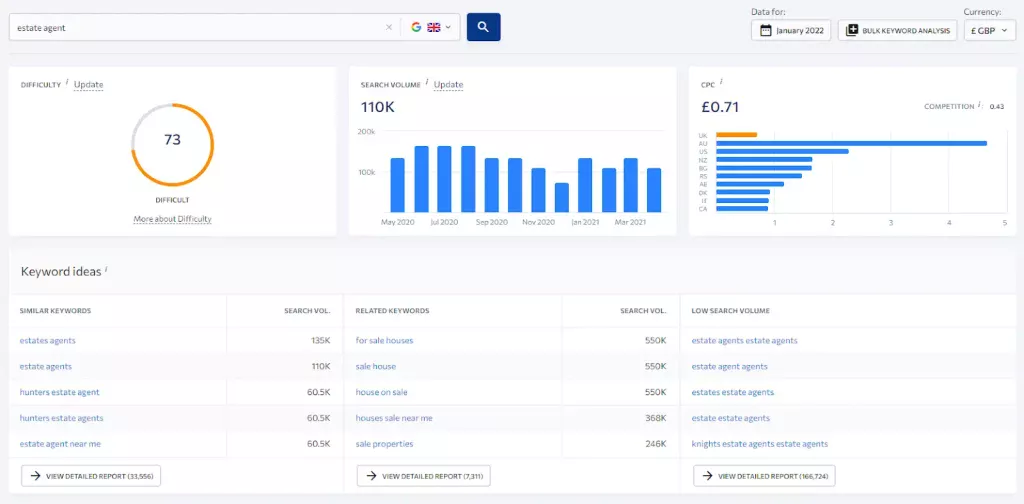
Tools like SE Ranking* and Semrush* are great for finding keywords with solid search volume and manageable competition. These tools give you the chance to look at specific keywords as well as related keywords. Not every single keyword in the list will be relevant to your business, but you can choose the ones you think fit best.
For example, if you are an estate agent in Nottingham, you’ll want to do keyword research around the term “estate agent.”
Also Asked is another great tool you can use to see the questions that people are likely to ask when they are searching for a product or service. Here are the results for “rent a house.”
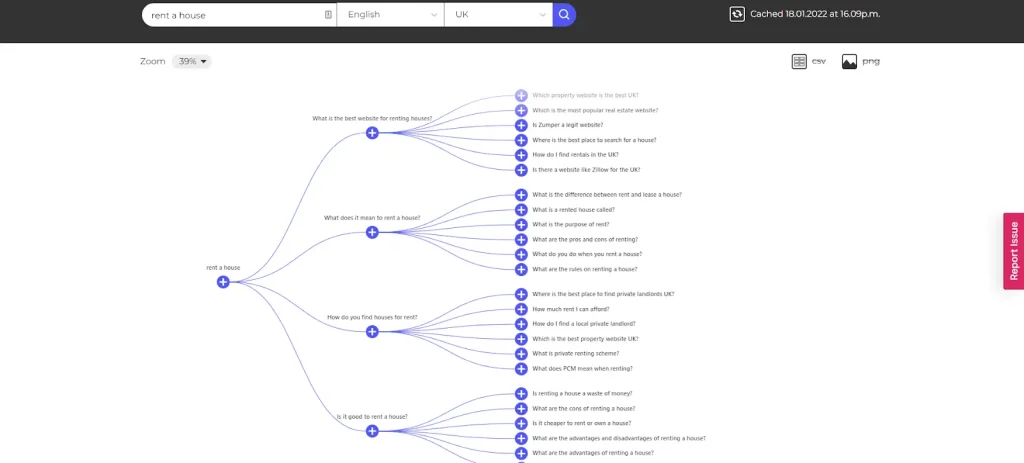
Once you have your list, ensure you’ve got a mix of short-tail and long-tail keywords. Short-tail keywords are broad and competitive, like “estate agent.” Long-tail keywords are more specific and often easier to rank for, like “best estate agent in Nottingham.” While short-tail terms can bring volume, long-tail terms often bring visitors further down the buying journey and more likely to convert.
And here’s where it gets really important: match your keywords to search intent. What searchers type into Google influences the search results. If someone is asking a question, Google will present them with results that answer that question.
A great way to check a keyword’s intent is to simply search it yourself. If the results are similar to what your website offers, then great! If not, then it’s possible the keyword isn’t quite right for you.
Back to the estate agent example.
Let’s say that while you were doing your keyword research, you ended up seeing that “interior design” was a high-volume keyword related to homeownership.
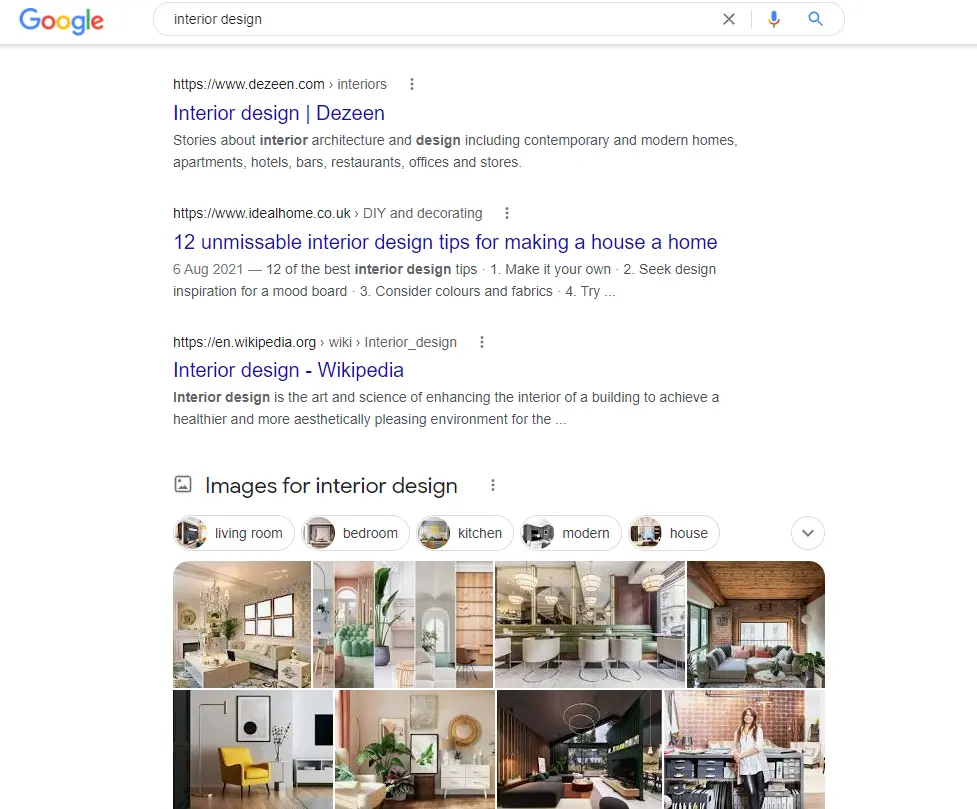
If you put that into Google, you’ll see that the top results are all DIY articles or interior design services. There’s even a Wikipedia article in there, and the “People Also Ask” section is more about doing interior design as a career.
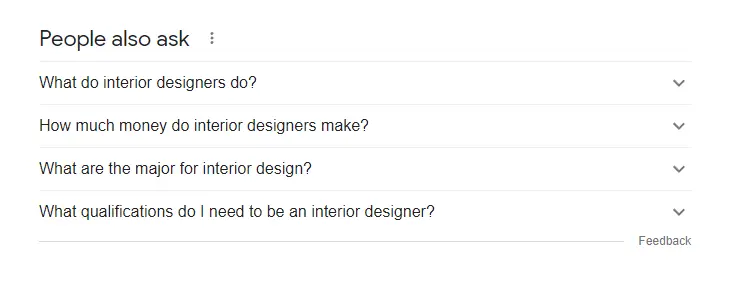
Not a result about estate agents anywhere. So even though a keyword may get a high volume of searches and be related to your business, it might not be quite the right fit when it comes to what your target customers are actually searching for.
3. Optimise Your Website for Your Keywords
Now you’ve chosen your keywords, it’s important to add them to your website. Each web page should be optimised for a specific keyword or phrase. This will help Google identify which site pages are related to those keywords so they can present the right pages to those searching online for terms related to your business.
Going back to the estate agent example, if you offer services for both house buyers and house renters, you will want to include pages on your site that are focused on those individual keywords. If you try to put all the information on one page and don’t have separate pages dedicated to your most important keywords, your page may not rank as high.
This is down to several factors, the main ones being: search intent and user experience.
If someone searches for “rental property Nottingham” and ends up on a page that is also about buying houses, they may conclude that the page is not for them and leave.
Google will see that they didn’t spend long on your site and make the assumption that their user experience was bad. If they had been served a page that was clearly related to their specific search query, they would have been more likely to stay longer.
Search intent ties into this and is crucial for reaching potential customers at different stages of their customer journey.
The best place to start is with your most important pages, such as your homepage and key product or service pages. Ensure they are optimised for the correct keywords, have a good load speed, and are helpful to the visitor.
4. Improve Your Metadata
Your meta title and meta description, or metadata, have a couple of different impacts on web traffic – one algorithm-based and one more human-based.

Your meta title is the blue link users see in the search results. It tells Google what your page is about and encourages searchers to click. The best meta titles are clear, specific, and front-load their main keyword to show immediate relevance (without sounding unnatural).
Meta title tips:
- Keep it under 60 characters to avoid getting cut off.
- Include your primary keyword early in the title.
- Make it compelling. What makes your page better than the 10 others fighting for that click?
Your meta description is the grey text under your title. It isn’t used by Google to identify keywords; instead, it is a chance to appeal to the searcher. You should use your meta description to essentially sell to the searcher why they should click your result over the others.
Meta description tips:
- Aim for 120–160 characters to fit within the visible limit.
- Include your target keyword naturally.
- Highlight your value. What’s in it for the reader if they open this page?
5. Create a Content Strategy
Content marketing isn’t optional if you want to know how to get on the top of Google. But random blog posts here and there won’t cut it either. You need a content strategy — a clear, intentional plan that turns words into rankings and clicks into customers.
Your content strategy should answer five key questions:
- Why are you creating content?
- Who are you speaking to?
- What type of content will help them the most?
- Where will this content live?
- How will you create it consistently and keep it up to date?
To create content that is optimised for position one in the search engine results pages (SERPs), you need to align every piece with your keyword research. If you find that a lot of your search terms are long-tail keywords or questions, blogging or knowledge-based content is the way to go.
If you didn’t come across any questions during your research, possibly because you’re part of a small or emerging niche, think about the types of questions your customers have asked in the past.
If you still can’t come up with anything, hold some focus groups of your target demographic. Listen to the questions the focus group asks about your product or service, and bring them into your content strategy.
Try thinking outside the box with your content, too. How can you be helpful while also encouraging the reader to make a purchase with you?
Being helpful is great for reaching the top of Google, as visitors will spend a while on your site reading the article and Google’s algorithm will take that as a good sign. However, your ultimate goal is making sales, too. It’s all about finding that balance.
6. Publish High-Quality Content
We rave about blogging at Exposure Ninja for one simple reason: it works. We’ve seen it drive huge traffic increases for clients across various industries. If you’re trying to get to the top of Google, blogging has got to be a priority.
But not just any blog content will do. Your latest office move or “team lunch roundup” might be exciting for your team, but your potential customers? Not so much. What your audience wants is useful, trustworthy, and well-written content that answers their questions, solves their problems, and makes them feel like you get them.
That’s where E-E-A-T comes in.
E-E-A-T stands for Experience, Expertise, Authoritativeness, and Trustworthiness. It’s the framework Google uses in its Search Quality Rater Guidelines to decide whether your content deserves to rank.
Here’s how to make your content tick all four boxes:
- Experience: Use real-life examples, credible author bios, original photos or videos, or advice from actual use.
- Expertise: Use facts, back up claims with data or authoritative citations, include expert quotes, or have it reviewed by a qualified expert.
- Authoritativeness: Publish content in your topical niche and earn high-quality backlinks or mentions.
- Trustworthiness: Keep your content up to date, ensure your website is secure, and represent your reviews fairly.
Say you sell anti-bacterial water bottles. You spot the question “how to clean a water bottle” in your keyword research. You could write a helpful step-by-step guide to cleaning all types of bottles. But to make it a high-quality, E-E-A-T piece (that will rank higher), you could include stats, reference reliable sources, step-by-step images or a video, and show how your anti-bacterial bottle solves the issue. Now, you haven’t just created an optimised blog; you’ve created a post that’s useful, search-friendly and trust-building.
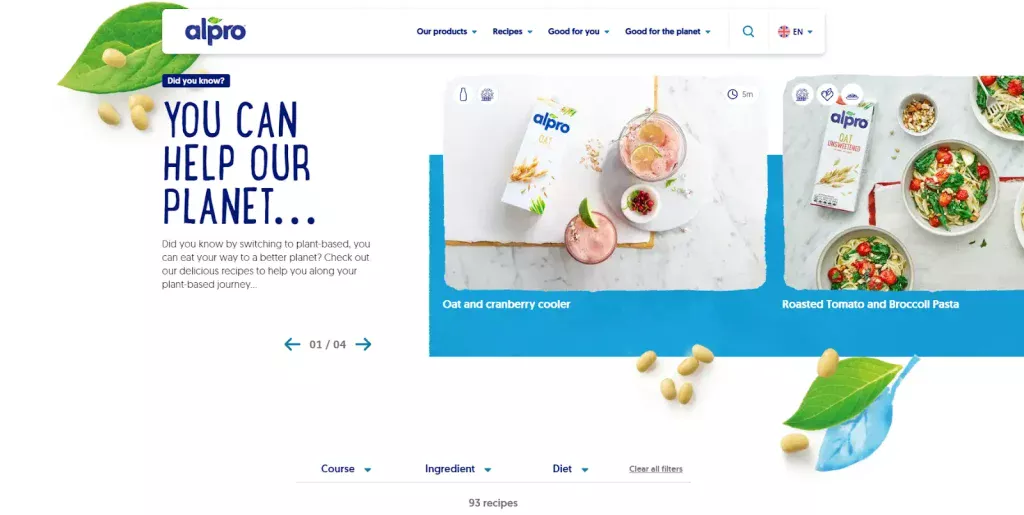
Another great strategy is product-integrated content, which Alpro effectively uses. They publish recipes that subtly (but consistently) feature their own soya products. This helpful, relevant content that positions the product as the natural solution. Yes, you could substitute another brand, but will it give the same flavour or results? Maybe not. And that’s the point.
7. Build Strong Internal Links
Strong internal linking does two things:
- Keeps your visitors on your site for longer by guiding them to related, relevant content.
- Helps Google understand your website’s structure, your content’s hierarchy, and which pages matter most.
Think of your website as a city. Each page is a building, and internal links are the roads connecting them. Without proper links, Google’s bots (and your visitors) will have no idea where to go next. With them, your visitors find what they need faster, and your most valuable pages get more visibility in search (known as passing “link juice”).
Here’s how to do internal linking right:
- Link from new content to relevant existing pages (and vice versa).
- Use keyword-rich anchor text that clearly tells Google and users what the linked page is about.
- Don’t overdo it. Be strategic, not spammy.
But it’s not just about rankings. Internal links can turn traffic into leads and sales. For example, if a blog post drives a ton of organic traffic, drop in a well-placed link to your service page or lead gen form. That way, when someone’s ready to take action, the next step is right before them.
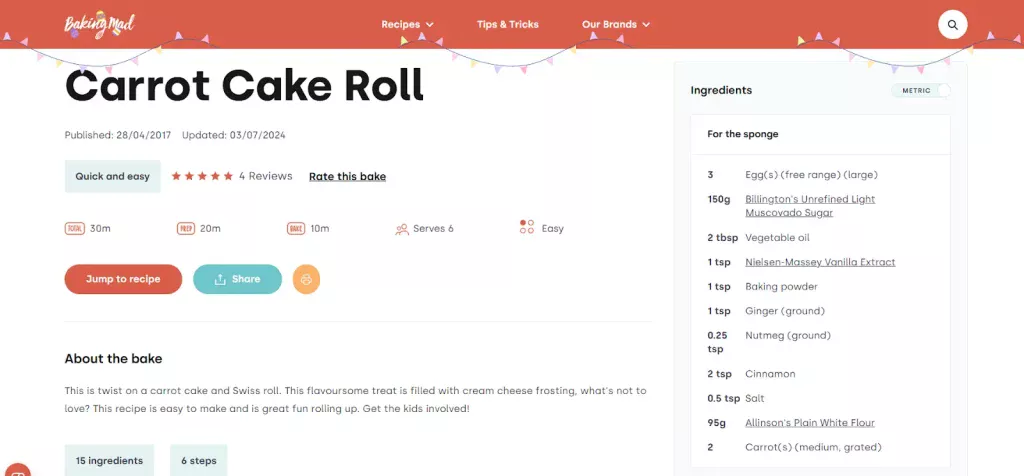
We see this often in recipes. In Baking Mad’s Carrot Cake Roll recipe, ingredients like sugar, vanilla essence, and flour link internally to their own shop pages. Users can easily order what they need, improving their experience and boosting sales.
8. Go After Quality Backlinks
If you’re serious about knowing how to get to the top of Google, you need to get serious about backlinks.
Backlinking is when another website links to a page on your site. For Google, that link is more than just a helpful connection for users — it’s a vote of confidence. The more high-quality sites that link to your content, the more trustworthy and authoritative Google assumes you are. And that means better rankings.
Backlinks help in two major ways:
- They drive traffic. If someone clicks a link from another site and lands on yours, that’s a win. If you have a steady traffic flow to the page, Google will see this as a positive sign and recommend your page more often in search results.
- They build authority. If respected sites in your industry link to you, Google sees that as social proof that your content is valuable and relevant.
You can get backlinks organically when someone finds your content, products, or services and links to it naturally. But you can also build backlinks through strategic link building:
- Reach out to influencers to promote your product or service.
- Pitch guest blogs to relevant blogs and publications.
- Get listed in industry roundups and “best of” posts.
- Use digital PR to connect with journalists looking for expert sources.
- Turn unlinked brand mentions into backlinks.
Buying backlinks might seem like a shortcut, but it’s a risky move that can backfire fast. Google’s guidelines strictly prohibit paid link schemes, and getting caught could mean a penalty or a serious drop in rankings. Instead of chasing cheap backlink wins, focus on earning high-quality links through genuinely valuable content.
9. Improve Your Local SEO
If you’re a local business rather than a nationwide or worldwide company, you want to connect with customers in your local area. Local SEO is great for any business where part of the customer journey involves a customer coming to you or you going to them.
It’s about more than just dropping a pin on Google Maps. Local SEO helps you appear in the right searches for your area, making it easier for nearby customers to find and choose you over competitors. So if someone Googles “haircut near me” or “best plumber in Nottingham,” your business should be front and centre.
Here are three tactics to boost your local visibility and climb the local search rankings:
Claim Your Google My Business Listing
Start by setting up or claiming your Google Business Profile (formerly Google My Business).
Fill in every detail: business hours, contact info, website URL, services, and high-quality photos. Keep it updated regularly and ensure it reflects what a potential customer actually needs to know. Google rewards completeness and customers trust it.
Earn Online Reviews
Having lots of good reviews shows potential customers that your site and company are trustworthy and high quality. They can also help boost your rankings.
Google uses reviews to determine your business’s relevance, prominence, and trustworthiness. A steady flow of high-quality reviews signals that people are engaging with your brand and having good experiences. That makes Google more likely to recommend your business in local search results and the map pack.
The more reviews you have, the better, so don’t be afraid to ask your customers to leave a review! You could send them a follow-up email a few days after the service, asking if they’d be happy to leave you one. Most people simply forget that leaving a review is something they can do until they have a complaint.
Get Listed in Online Directories
Having a Google Business Profile is one directory, but it’s worth getting in as many as you can, as long as they are relevant to your local area and business.
National and international directories such as Yelp and Citysearch are great but also consider local and trade-specific directories that will help you rank better in your local area specifically.
Local newspapers often have directories linked on their websites, or you can simply search for “[your city] directory” or “[your business category] directory”.
10. Monitor and Improve Your Results
If you’re wondering how to get to the top of Google search and stay there, the answer is test, tweak, and repeat.
Getting to the top of Google search results is an ongoing process. Algorithms change, competitors catch up, and search behaviour shifts. Plus, there’s AI and its constant changes that impact search engines. That’s why monitoring your performance and making regular improvements is non-negotiable if you want to stay ahead.
Use tools like Google Search Console to track keyword rankings, page performance, and indexing issues. Pair that with your Google Analytics 4 (GA4) data to understand how visitors interact with your content — are they bouncing or converting?
Regular SEO audits can help you spot quick wins, like fixing broken links or updating content. You’ll also spot bigger opportunities, like optimising underperforming pages for higher-converting keywords.
Bonus: Get to the Top of Google Fast with Google Ads
If you’re trying to rank on the first page for a high-volume search term and you have a PPC budget, then Google Ads may be a good direction for you.
It gives you a better chance to be at the top of more competitive searches and often gets you results faster than organic search, but at a literal price. It can also be an important lead generation tool for small and new businesses that haven’t been able to rank highly for search queries organically just yet.
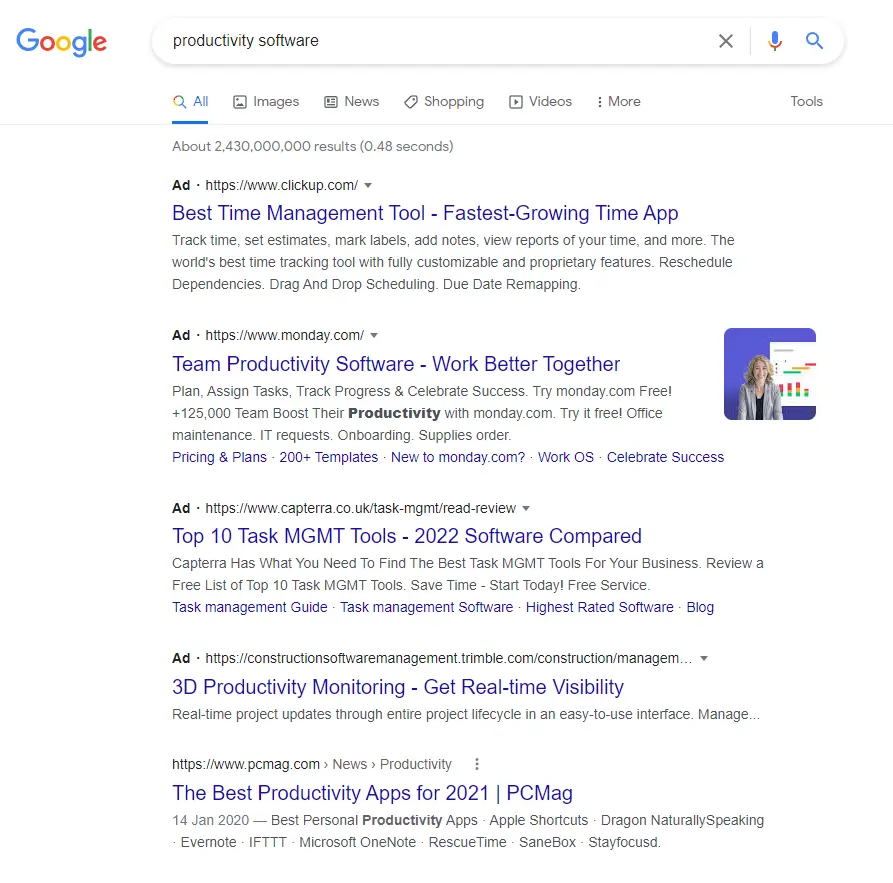
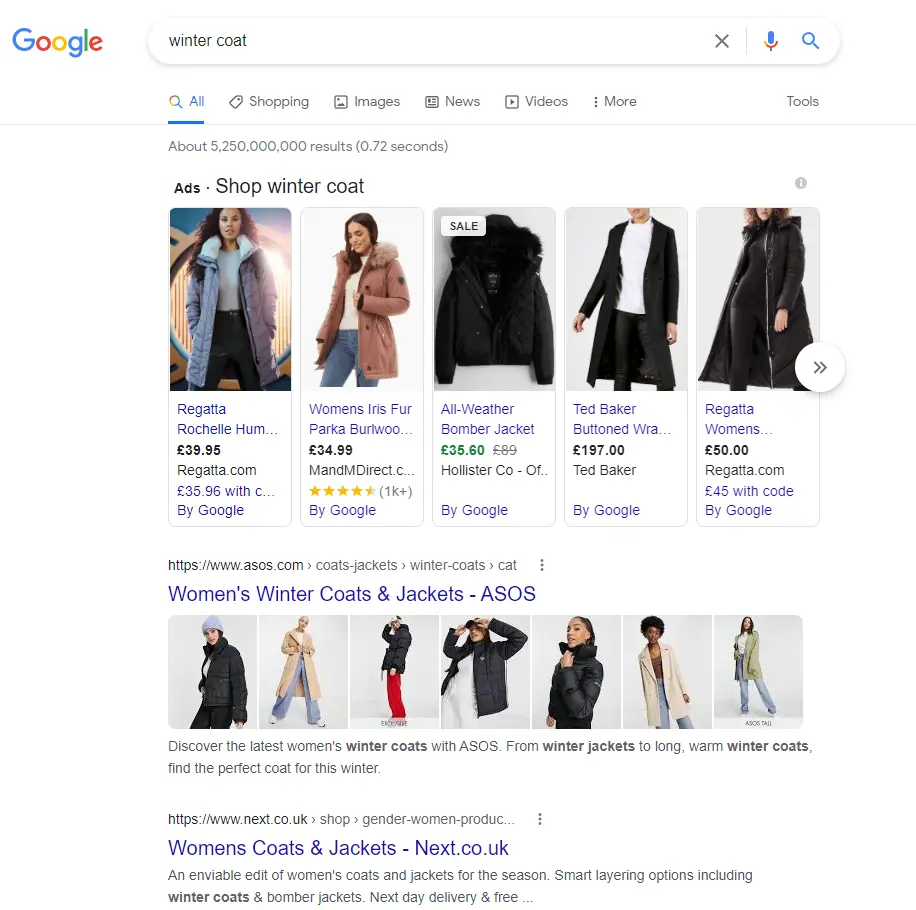
There are various ways ads can appear on Google Search, the most common being text ads and shopping ads. These can be identified by the bolded “Ad” text next to the paid-for search results.
So, how much does it cost to be at the top of a Google search? This depends on the searches you are targeting and who else is already paying for ads there.
The more people searching for a keyword or phrase, the higher the cost. This is also true if many brands are trying to appear for ads for a certain search term.
If you’re unsure where to start with PPC, we’re here to help. We’ve run many successful PPC campaigns for our clients, so we certainly know a thing or two about the topic.
How to Rank in Position 0 on Google
Do you think getting to the top of Google is impressive? Try beating the top. That’s what position 0 is all about.
Position 0 refers to the content that appears above the standard organic listings, usually as a Featured Snippet or an AI Overview. It’s Google’s way of pulling out what it sees as the best and fastest answer to a user’s question and showcasing it front and centre.
AI Overviews
AI Overviews (previously known as Search Generative Experience or SGE) are Google’s way of using artificial intelligence to summarise key information on the search results page. Google corroborates the answer it provides with multiple sources and potentially your content.
To increase your chances of being included in AI Overviews:
- Focus on clear, well-structured content that answers specific user queries.
- Use concise subheadings and short paragraphs. This helps AI scan and pull relevant points.
- Include definitions, step-by-step guides, and quick takeaways.
- Support your content with trusted sources and original insights to show credibility.
Featured Snippets
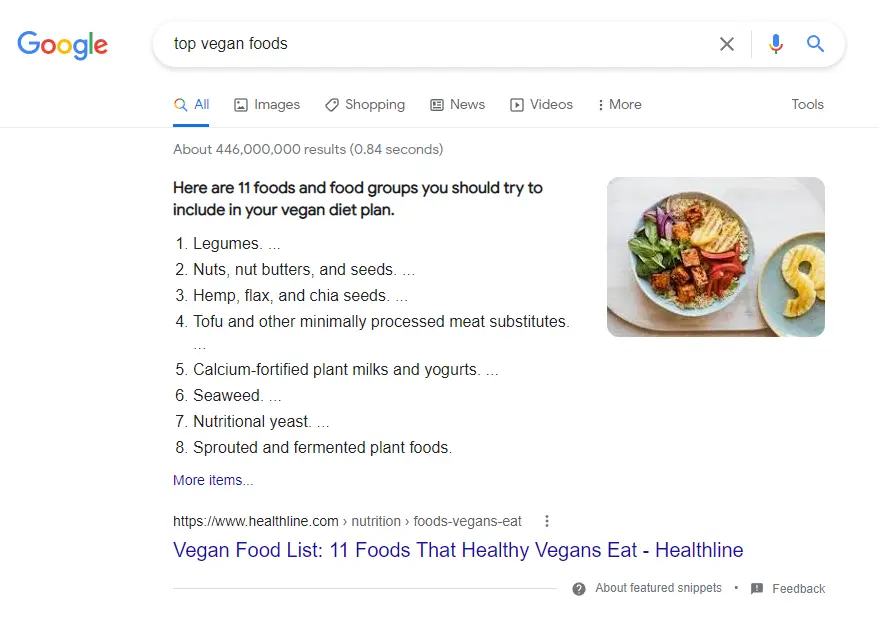
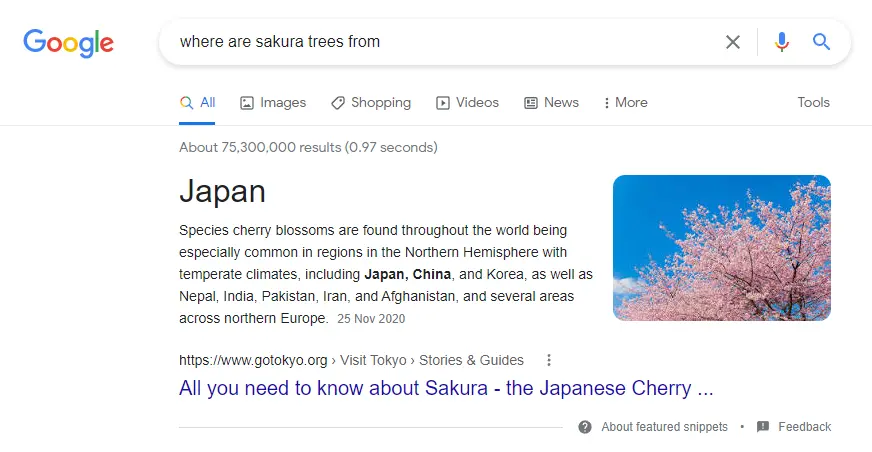
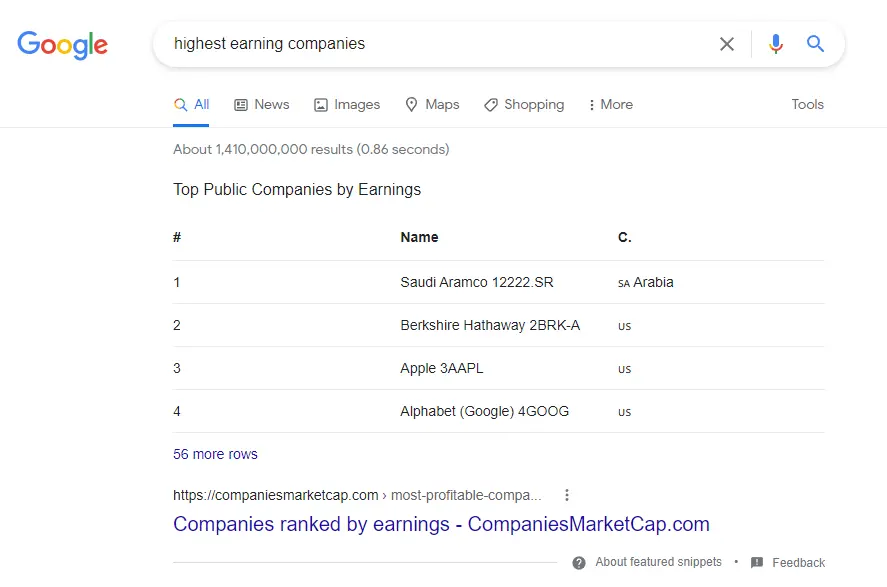
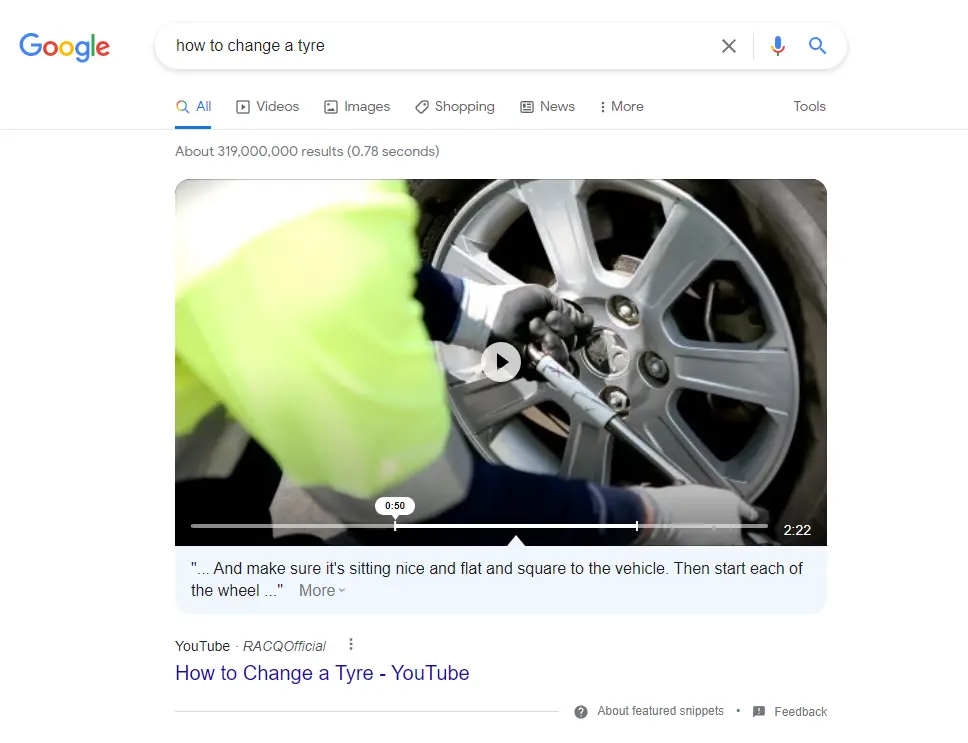
Ever seen those little boxes at the top of Google with a quick answer to your question? That’s a Featured Snippet — and if your content grabs one, you’re sitting in position 0.
Winning a featured snippet means your content is chosen by Google as the most relevant and helpful answer to a particular search. They don’t appear in every search, but when they do, you can use them as an opportunity to outrank your competitors.
Start by Googling the keyword you want to target and take note of the snippet format:
- Is it a paragraph with a short explanation?
- A list of steps or tips?
- A table comparing features or prices?
- A video showing how to do something?
Now, reverse engineer it. If it’s a list, structure your content with clear subheadings and bullet points. If it’s a paragraph, write a concise 40–60-word answer directly under a relevant heading.
Get to the Top of Google with Google Experts
Reaching the top of Google search results isn’t magic —it’s method:
- Optimise your technical SEO. Ensure your site is fast, mobile-friendly, and easy for Google to crawl.
- Do keyword research. Understand what your audience is searching for and why.
- Optimise your pages for keywords. Align each page with specific terms and search intent.
- Improve your metadata. Write click-worthy titles and descriptions.
- Build a smart content strategy. Create content that actually helps (and converts).
- Publish high-quality content. Showcase E-E-A-T and give users and Google a reason to trust you.
- Use internal links. Guide visitors and Google to your most important pages.
- Earn quality backlinks. Get other credible sites to vouch for your content.
- Level up your local SEO. Dominate in your area with reviews, listings, and location-based content.
- Track and improve. Keep a close eye on what’s working and where to level up.
Need help making it happen? That’s where we come in. We’ve literally written a best-selling book on how to get to the top of Google search results (updated recently to be AI-ready).
Send us your website for a review, and our experts will break down exactly what you need to improve to start climbing Google’s rankings.
*Some links within this article are affiliate links which Exposure Ninja receives a fee for promoting (these links are not sponsored). Exposure Ninja only promotes services we already use within our marketing stack.
FAQs
Can you pay Google to rank higher?
Google doesn’t accept payment to boost your site in organic search results. You can pay for visibility through Google Ads, which appear above the organic listings.
How long does it take to get to the top of Google?
It depends on your industry, competition, and how strong your SEO is to start with. Some low-competition keywords can rank within weeks, while more competitive terms might take several months. SEO is a long game — but the results are worth the wait.
How do I get on the first page of Google in 24 hours?
The fastest way is through Google Ads — you can appear at the top quickly by bidding on the right keywords. But for organic rankings, there’s no guaranteed 24-hour shortcut. That said, publishing highly relevant, well-optimised content can help you rank quicker for low-competition terms if you have great website authority.