How to Turn AI Mentions Into High-Value Leads

Most businesses tracking their AI Search visibility are measuring the wrong thing. Being cited in an AI Search answer feels like a win, but if that mention happens in a low-intent conversation, it’s unlikely to generate a single qualified lead.
Tim Cameron-Kitchen, Founder of Exposure Ninja, breaks down the three-step framework for getting recommended in high-value AI conversations that actually turn into leads.
Not All AI Mentions Are Equal
There’s a fundamental mistake that most businesses make when they start optimising for AI Search. They chase volume: more mentions, more citations, and more visibility scores. But Tim Cameron-Kitchen makes the distinction clearly:
“Our goal as marketers isn’t always just maximum AI visibility, it’s maximum AI visibility for the sort of searches or queries that lead to inquiries.”
To illustrate why this matters, Tim Cameron-Kitchen walks through a mortgage example on Perplexity. A brand cited in the answer to “What is a mortgage?” is not talking to a buyer. That person is learning. Compare that to someone asking, “Is it better to choose Halifax or Nationwide for a mortgage as a first-time buyer?” That is a completely different conversation, one where the user has commercial intent and is close to making a decision.
Being visible in the right conversation is worth far more than being visible in hundreds of the wrong ones. Revenue-driving mentions are what matter.
Getting recommended in the right AI conversations can generate really valuable leads, and right now that's the bit that many businesses are missing. They're obsessing over their visibility score, the number of citations and mentions, but if those mentions aren't happening in the high-value conversations, they might not be driving sales.
 Tim Cameron-Kitchen
Founder
Tim Cameron-Kitchen
Founder
Step 1: Find the Commercial Prompts Worth Targeting
The starting point is identifying which AI prompts are actually worth ranking for. Tim Cameron-Kitchen recommends scoring every prompt you track against three criteria:
- Relevance: Whether the prompt directly connects to what you sell.
- Buyer Stage: Whether the person searching is learning, comparing, or choosing.
- Lead Value: How commercially significant is this type of customer?
Tim Cameron-Kitchen uses the example of tracking “mortgage with terrible credit” for Rocket Mortgage:
“If they’ve got terrible credit, they’re probably gonna have a fairly high interest rate, so this could be a valuable lead. The most valuable prompts for your business are gonna be the ones that score highest on relevance, buyer stage, and lead value.”
By contrast, a prompt like “steps to buying a house” scores low on buyer stage and lead value. Someone that early in their journey is a long way from signing anything.
As Tim Cameron-Kitchen puts it: “Even if they’re not the highest volume searches, they might be the ones that generate the most revenue for the business.”
AI Search visibility tools like Profound, Peec.AI, and Semrush One can all be used to set up AI visibility tracking. The key is not just adding prompts, it’s weighing your attention toward the ones that score highest commercially.
Step 2: Build Strong Entity Associations
Once you know which prompts matter, the next step is making sure AI platforms associate your brand with the right concepts. This is what Tim Cameron-Kitchen calls entity association, and it’s one of the most overlooked levers in AI Search Optimisation.
AI platforms build relationships between brands, topics, industries, types of expertise, and trust signals. If those associations don’t exist in your content and across the web, AI tools simply won’t make the connection.
Tim Cameron-Kitchen uses HubSpot as a worked example:
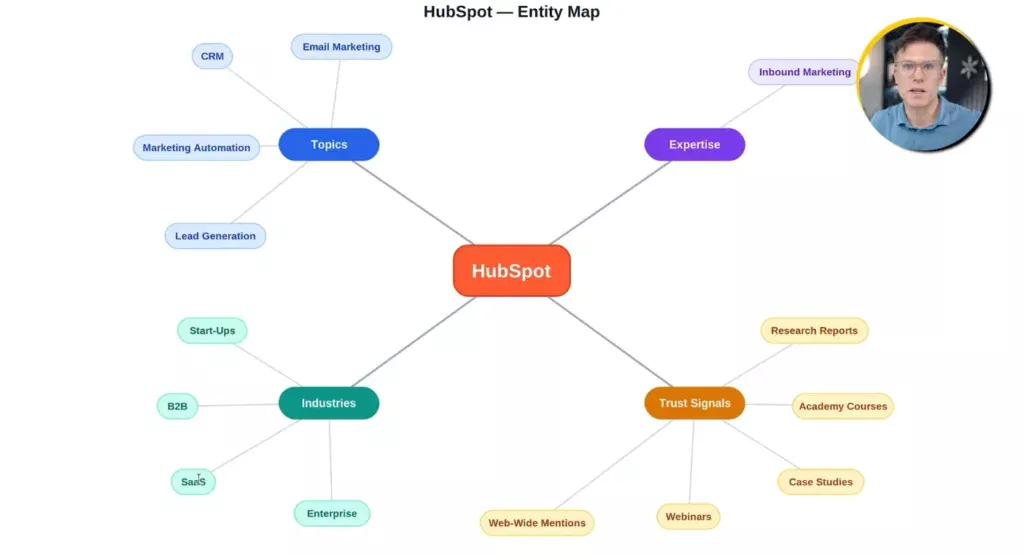
The entity map extends to topics, expertise, target industries, and trust signals like research reports, case studies, and third-party mentions. When AI platforms consistently see your brand mentioned alongside the same entities, they start recommending you in the conversations where those entities are relevant.
This isn’t just theory. Tim Cameron-Kitchen describes working with a DAX 30 brand that wanted to be positioned as innovative:
“When we had a look at the content on their website, when we had a look at where they were talked about online and how they were spoken about, innovation was nowhere to be seen. So these AI tools would never think of them as innovative because that wasn’t what their positioning was online.”
The team worked with the brand’s internal comms and PR teams, advised on content strategy and brand positioning, and identified thought leadership opportunities to reshape how AI platforms described the brand.
As Tim Cameron-Kitchen puts it: “By doing this, we were able to help shape how these AI tools spoke about the brand, mentioning them as innovative and positioning them to capture those leads.”
Step 3: Build AI-Ready Conversion Paths
Getting cited in an AI answer is only half the job. When someone clicks through to your website from that citation, the page they land on needs to convert them. This is where most businesses lose the lead.
Tim Cameron-Kitchen walks through a live example of a commercial cleaning company that earned a citation in Gemini, and then wasted it. The landing page had generic photography, no local qualification, and no clear path to inquiry.
“The most cardinal sin on this page is that there’s not really a clear conversion path. If people have objections or key questions, they’re not going to inquire to answer. They’re just gonna find another business to inquire with.”
The contrast with HubSpot is stark. Tim Cameron-Kitchen shows a HubSpot blog page cited in AI Search that leads with three CTAs immediately, two of which offer something free, which is directly relevant to what the user searched for. Those CTAs repeat throughout the page.
As Tim Cameron-Kitchen puts it: “It’s very clear what this blog wants you to do next.”
An AI Search Optimisation strategy does not stop at the citation. If the landing page experience doesn’t match the intent of the conversation that sent someone there, the lead is lost. The page needs a clear conversion path, relevant trust signals, and a frictionless next step.
This is where so many websites drop the ball. They get to the goal line, and then they fall on their face because that page doesn't then generate the lead. To turn AI mentions into valuable pipelines, focus on the right prompts that drive commercial intent, not just awareness. Then strengthen your brand's entity associations, and make sure the pages getting cited are actually built to convert.
Tim Cameron-Kitchen
Founder
Want to know which AI conversations your brand is showing up in and whether those mentions are actually driving leads? Book a Consultation for a live digital marketing review, and we will identify your biggest opportunities aligned with your goals.
*Disclosure: This page contains referral links. If you purchase through these links, we may receive a commission at no additional cost to you.