Google AI Overviews Cut Publisher Clicks by 39.8% — What CMOs Should Do Next

A new randomised field experiment published on SSRN has put a hard number on what marketing leaders have suspected all year: when Google shows an AI Overview, organic clicks to websites fall by 39.8% — and searchers are no happier for it.
Correlation studies have pointed this way for months. What makes this paper different is causality: the researchers ran a randomised experiment, showing some users AI Overviews and others none, then measured what changed. That makes it the strongest evidence yet for the click decline every marketing team has been watching in their analytics.
What the Study Found
- Organic clicks fell 39.8% when an AI Overview appeared on the results page.
- Zero-click searches rose 34.5% — more people got their answer and left without visiting anyone.
- Removing the AI Overview lifted outbound clicks by 88% for the same queries.
- User satisfaction did not measurably improve. The summaries take the click without making the search experience better.
- Paid clicks were unaffected — the traffic cost lands on organic results, not ads.
The paper — The Impact of Google AI Overviews on Publisher Traffic and User Experience (Agarwal et al., 2026) — is a working paper, so treat the precise figures as first findings rather than settled science. But the direction is unambiguous, and it matches everything else we can measure.
It Matches What We Found in Our Own Research
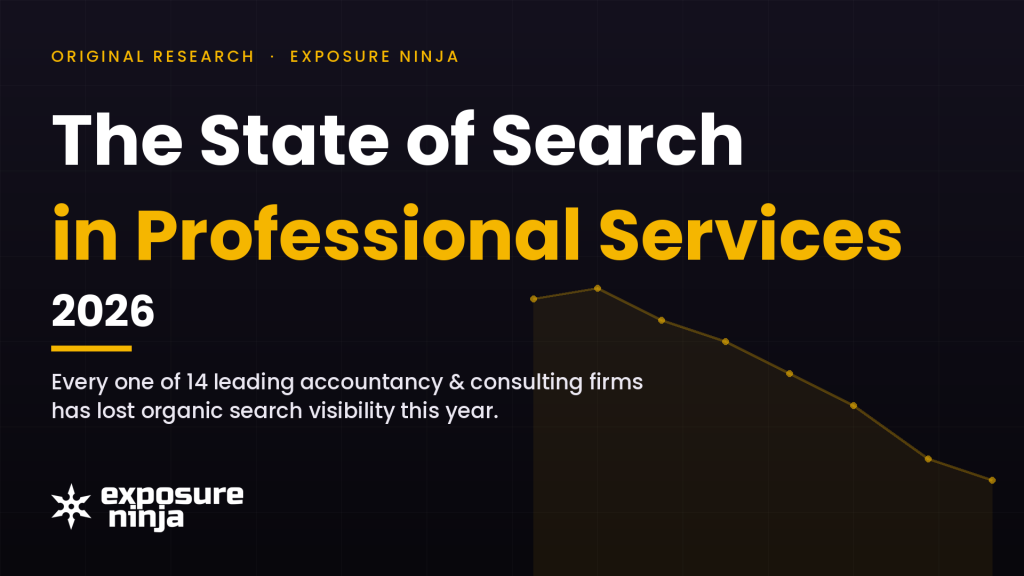
In June we analysed the organic visibility of 14 leading accountancy and consulting firms for The State of Search in Professional Services 2026. Every single one had lost organic search visibility this year. Our finance AI search leaderboard told the same story from the other direction: the brands winning AI recommendations are frequently not the ones with the biggest traditional search presence.
And in the accounts we audit week to week, the pattern is consistent: impressions climbing, clicks flat or falling. The visibility is still there — it has moved into the answer itself.
What Should CMOs Do About It?
1. Measure your AI visibility before you try to fix it
If 40% of your potential clicks are being absorbed by AI answers, the first question is whether those answers mention you. Purpose-built monitoring platforms now track this — we compared our three favourites in our tried-and-tested guide to the best AI search visibility tools.
2. Optimise to be the answer, not just the link
The clicks that remain increasingly go to brands the AI cites. That is a different optimisation discipline from classic SEO: extractable answer-first content, structured data, entity clarity and citation-worthy pages. It is exactly what generative engine optimisation and our wider AI search optimisation service exist to do.
3. Build the third-party authority AI engines trust
AI answers lean heavily on independent sources — comparison posts, industry lists, credible coverage. If those sources don’t mention you, the AI has nothing to cite you for. Sustained digital PR is now an AI visibility strategy, not just a link-building one.
The Uncomfortable Conclusion
The study’s most telling finding isn’t the 39.8%. It’s that users were no more satisfied — Google’s AI Overviews are redistributing attention without adding measurable value for searchers. You can’t opt out of that redistribution. You can only decide whether your brand is inside the answers or underneath them.
If you’d like to know where your brand currently stands in AI search — and what it would take to change it — request a free marketing review and we’ll show you, with specifics.