If My SEO Traffic Dropped, Here’s Exactly What I’d Do (It’s Easy)

If your SEO traffic has dropped recently, you’re not imagining it — and you’re in very good company. Across industries and business sizes, marketing teams are watching their organic search traffic fall and scrambling to work out whether to blame Google’s algorithm, AI Overviews, shifting user behaviour, or something they’ve inadvertently broken on their own website.
More often than not, the answer is all of the above — in different proportions, and all of them fixable.
Exposure Ninja founder, Tim Cameron-Kitchen, recently walked through the exact process his team used to diagnose and reverse a significant traffic decline for one of the world’s biggest beauty brands. The approach is systematic, prioritised, and applicable to businesses of any size. This article breaks it down step by step.#
Executive Summary
- A $10 billion-plus beauty brand came to Exposure Ninja with organic clicks down 23.5% year-on-year and impressions down 11.8%
- After a comprehensive four-step SEO audit and implementation, organic traffic grew 27% year-on-year, average rankings improved by 2.7 positions, and visibility in Google’s AI Overviews more than doubled
- The four-step process covers: technical SEO foundations, on-page signals, content and search intent alignment, and AI Search Optimisation
- Most businesses experiencing an organic traffic drop have fixable issues on their own site, compounding the effects of broader market changes
- A prioritised roadmap is essential — audits without clear sequencing rarely get implemented effectively
Why Is SEO Traffic Dropping for So Many Brands Right Now
There is no single cause — and that’s part of what makes declining organic search traffic so difficult to diagnose. When a $10 billion beauty brand sees clicks fall by nearly a quarter year-on-year, the temptation is to point at external forces: Google algorithm updates, the rise of AI Overviews intercepting queries, and users spending more time in AI-generated answers rather than clicking through to websites.
All of these are real. But they rarely tell the whole story.
As Tim explains: “You can blame the outside world — Google, AI competitors, the economy — and hope that all of this stuff goes away and things come back. Or you can use this as a chance to review everything that you’ve been doing.”
The brands recovering fastest from organic traffic declines are the ones choosing the second option. They’re treating the drop not as something happening to them, but as an invitation to audit, reassess, and improve. And in almost every case, there are significant technical, on-page, and content issues on the site that have been quietly compounding the problem.
Websites are not static. Pages get added and removed, structures change, plugins update, new brands get acquired and folded in. What starts as a well-optimised site can gradually erode — not through any single failure, but through accumulated neglect. An SEO audit is how you see that clearly.
What Does a Comprehensive SEO Audit Actually Cover
An SEO audit is a structured analysis of your website’s technical health, search visibility, and content performance. Done properly, it does two distinct things: it identifies blockers — the issues actively holding your rankings back — and it identifies opportunities, the gaps and improvements that could move the needle.
The most useful audits also produce a prioritised roadmap. Getting a list of three hundred recommendations with no indication of what to tackle first is a common frustration with generic audits, and it’s why most of them sit in a folder and gather dust. Sequencing matters as much as diagnosis.
The process we run for clients covers four sequential areas.
How Do You Fix the Technical SEO Issues Dragging Down Your Rankings
Technical SEO is the foundation everything else is built on. If search engines can’t efficiently crawl, index, and interpret your site, the quality of your content is largely irrelevant — you won’t earn the visibility it deserves.
For the beauty brand in question, the technical audit uncovered hundreds of issues that had accumulated over time, including:
- 349 duplicate page titles — often caused by page cloning, template errors, or site expansion
- 219 duplicate content issues — pages with substantially similar content competing against each other
- 195 pages with no internal links — effectively invisible to crawlers and users alike
- 188 hreflang errors — causing international targeting to misfire across the brand’s multiple territories
Fixing these issues improved crawl efficiency, indexing accuracy, and ranking signals. The site’s health score improved from 64 out of 100 to 72 out of 100 within months. Not a transformation in isolation, but a solid foundation that unlocks the value of everything built on top of it.
The tools we use at this stage are Screaming Frog (for a comprehensive X-ray of the site structure), Google Search Console (to see how the site is currently performing in search), and Semrush (for its site audit feature and keyword analysis).
At this stage, you’re specifically looking for: crawl errors, redirect chains and broken redirects, duplicate pages and page titles, pages accidentally blocked from indexing, broken internal links, missing canonical tags, and hreflang errors for international sites.
Which On-Page Signals Are Silently Hurting Your Visibility
Once the technical foundations are in good shape, the next step is on-page optimisation — not content yet, just the signals that tell search engines what each page is about and why it deserves to rank.
For this brand, the audit found:
- 201 missing meta descriptions — the text that appears in search results and directly influences click-through rate
- 136 pages missing H1 tags — leaving those pages without a clear topical signal
- 1,500 images missing alt text — a significant accessibility and SEO issue at scale
- 256 genuine metadata errors — causing confusion about page purpose and content
Each of these issues appears minor in isolation. Across a large site, they compound. Google may not officially use meta descriptions as a ranking factor, but pages with well-written meta descriptions earn more clicks — and higher click-through rates signal relevance, which does influence ranking. The relationship is indirect, but it’s real.
Fixing on-page signals improves topical clarity, keyword targeting, and how your pages are displayed and perceived in search results. It is, as Tim acknowledges, “boring work” — but the impact is measurable.
The tools to use here are the same trio: Screaming Frog for the full site inventory, Google Search Console to identify pages underperforming on click-through rate, and a keyword tool like Semrush or SE Ranking to validate keyword targeting and search intent.
What to Do When Your Content Doesn’t Match Search Intent
This is the step where a lot of businesses quietly haemorrhage organic traffic — and it’s often invisible until you look for it deliberately.
Search intent is the underlying purpose behind a query. Google has become very good at inferring what users actually want when they type something into search — and it rewards pages that deliver that, not pages that merely contain the keyword.
The most common problems Exposure Ninja finds at this stage are:
- Intent mismatch — a commercially-targeted keyword pointing to an informational blog post, or vice versa. If users searching for a term want to buy something and your page is explaining something, Google knows — and it will quietly deprioritise you.
- High impressions, low click-through rate — pages Google is tentatively surfacing but that aren’t compelling enough to earn the click. These are often closer to ranking well than they appear.
- Positions 8 to 20 — pages that are in the game but not yet generating meaningful traffic. Even a modest improvement in position on these pages can drive a significant increase in clicks.
- Missing dedicated pages — important keywords that feel like they’re covered “across the site” but don’t have a clearly focused page targeting them directly.
The output of this section is a keyword-to-page map, built around topic clusters and prioritised by the size of the gap between current content and search intent. It shows exactly which pages need restructuring, which need new commercial focus, and where new content should be created.
“A lot of companies just produce content without any sort of real, clear goal or strategy,” Tim explains. “We take a very different approach — we start from how do we cover this topic from every possible angle, and make sure we’ve got content covering all of it.”
How Do You Optimise Your Website for AI Search and AI Overviews
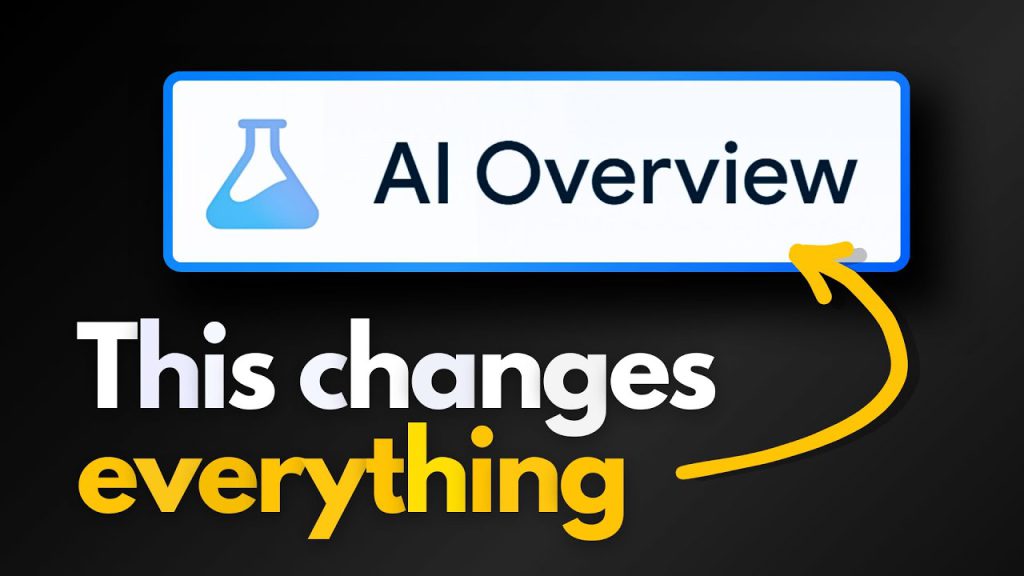
AI search is here. Whether it’s Google’s AI Overviews, ChatGPT, Gemini, Perplexity, or Claude, a growing proportion of search queries are now resolved inside an AI-generated answer — without the user ever clicking through to a website. This is a major contributing factor to why organic search traffic has dropped across so many categories in the past twelve months.
But it doesn’t have to be a one-way loss.
The beauty brand came to Exposure Ninja appearing in AI Overviews for 45 search terms. After the audit and implementation, that number rose to 110 — a more than doubling of AI search visibility that helped offset the broader market decline in click-through rates.
To understand how to optimise for AI search, it helps to understand how these tools work. Most AI search tools use what’s called query fan-out — when a user asks a question, the tool runs multiple background searches in parallel across different sub-topics related to the query, and then synthesises the answers it finds.
For example, a query like “how do I improve my grip strength?” might fan out into underlying searches on training frequency, rest days, evidence-based exercises, and sport-specific approaches. If your content addresses all of those sub-topics — either in a single comprehensive piece or across a linked cluster of pages — you dramatically increase the number of opportunities for AI tools to surface your brand in their answers.
The practical steps we took for this brand included:
- Schema markup improvements — adding and expanding structured data (FAQ, Article, Organisation) to give AI tools machine-readable signals about the site’s content and authority
- Content refocusing — sharpening pages to make their topical intent immediately clear, rather than broad or ambiguous
- Topical expansion — using tools like AlsoAsked to map the full landscape of sub-queries around priority topics, then ensuring the site has dedicated content addressing each one
- Page structure improvements — adding concise headings, clear question-and-answer sections, and structured summaries that AI tools can easily extract and reference
AI tools favour content that is authoritative, well-structured, and machine-readable. Long, narrative content without clear headings, FAQ sections, or structured data is significantly less likely to appear in AI-generated answers — regardless of how well-written it is.
Next Steps
If your organic search traffic has dropped and you’re not sure where to start, the four-step framework above is your diagnostic checklist. Here’s how to sequence it.
This week:
- Run a crawl of your site using Screaming Frog and open Google Search Console — look specifically for crawl errors, broken redirects, and pages blocked from indexing
- Pull a performance report in Search Console filtered to the last 90 days — identify your highest-impression, lowest-CTR pages and your pages sitting at positions 8 to 20
- Check for pages missing H1 tags and meta descriptions — these are quick wins that can have an immediate impact on click-through rates
Over the next 30 days:
- Audit your top 20 commercial pages for search intent alignment — are they giving users what they actually want from those queries?
- Use Semrush’s site audit tool to generate a prioritised list of technical issues, and work through them in order of impact
- Map your core topics against a query fan-out exercise in an AI tool — identify which sub-topics you’re not currently covering
Over the next 90 days:
- Build out a full topic cluster strategy covering your priority commercial areas from every relevant angle
- Implement schema markup across your key page types — at minimum, Organisation, FAQ, and Article schema
- Track your AI Overview appearances using Semrush’s AI Visibility Toolkit and set a baseline to measure improvement against
If you’d prefer a second set of eyes on your site rather than running this process in-house, Exposure Ninja offers a free digital marketing review at exposureninja.com/review. It covers SEO, AI search visibility, paid media, and content — and includes a prioritised list of the highest-impact improvements for your business over the next 6 to 12 months.
Resources Mentioned
- Mine My Brand — Our brand new AI brand reputation analyser
- Screaming Frog
- Semrush — free trial available at thankyouninjas.com
- SE Ranking
- AlsoAsked
- Our latest white paper: AI Search: The New Shelf Space for Beauty Brands
In Conclusion
An organic search traffic drop is unsettling — particularly when it’s happening against a backdrop of algorithm updates, AI Overviews, and a general sense that the rules of search are being rewritten in real time. But the response that gets results is not to wait for things to stabilise. It’s to audit, diagnose, and act.
The four-step process covered in this article — technical foundations, on-page signals, content and intent alignment, and AI search optimisation — is the same framework we used to help a $10 billion brand turn a 23.5% traffic decline into 27% year-on-year growth. It is not quick, and it is not glamorous. But it works.
As Tim puts it: “Just because you’re seeing decline doesn’t mean you can’t do anything about it. You can actually use this as an opportunity to grow rather than just try and manage your decline.”
The businesses that will come out of this period strongest are the ones treating the current disruption as a prompt to build a better SEO foundation — not an excuse to hold position and hope.
Watch This Next
There are many strategies you can use to improve your brand’s SEO performance, and we’ve compiled our favourite method for creating an SEO strategy in this post. But the most important strategy you need right now is one that will increase your brand’s AI visibility and performance.
We’ve gathered the most effective AI Search Optimisation strategies we’re using for global, international, and national brands into one singular video for you to watch and learn from. You can watch it below or on our YouTube channel instead.