How to Increase Brand Mentions for AI Search Visibility


Want to show up more often in AI-generated answers? Start with increasing your web-wide brand mentions with our seven steps.
Unlinked brand mentions used to be seen as a missed opportunity. If someone mentioned your business online but didn’t link to you, the next move was to reach out, ask for a link, and convert that mention into a backlink.
This makes sense for traditional Search Engine Optimisation (SEO), where backlinks are a main measure of quality and authority.
But AI Search is changing things. With the rise of ChatGPT, Perplexity, Gemini, and Google’s AI Overviews and AI Mode, brand mentions, even unlinked ones, are now one of the strongest signals of visibility.
Ahrefs research backs this up: branded web mentions now have a stronger correlation with AI visibility than backlinks do. This is especially true in industries where trust and authority matter most, like finance, legal, and healthcare.
What we’re seeing is a shift towards brand recognition and topical authority. These AI systems aren’t just looking for keyword relevance or backlinks. They’re building an understanding of who is credible based on how often and where that brand is discussed.
If your brand isn’t showing up in places like blogs, podcasts, social media, YouTube videos, reviews, and news articles, AI may not even know you exist. That’s more than just a missed backlink; it’s a missed chance to be featured in the AI-generated answer.
We’ll show you how to get your brand mentioned more often and in all the right places to boost your visibility in AI Search.
What Are Brand Mentions?
Brand mentions are any time your business is referenced online, whether or not there’s a clickable link attached.
These mentions can appear in a wide range of content formats. You might be name-dropped in a news article, featured in a blog post, quoted on a podcast, included in a video transcript, or casually referenced in a Reddit comment. Even user reviews and social media shout-outs count.
What matters is that your business is being recognised, cited, or discussed. Each of these instances sends a signal to search engines and AI systems that your brand is relevant, trusted, and part of the wider conversation in your industry.
Let’s see what this looks like in action. Thanks to our AI Search Optimisation approaches, we’re mentioned pretty widely across the web, including:
- Award Sites: Our name appears in winning categories on sites like UK Search Awards and UK Paid Media Awards.
- Review Platforms: We actively collect feedback on platforms like Trustpilot, boosting our credibility and discoverability.
- Media Coverage: Our digital PR efforts help us get featured in the press, like when we spoke at the House of Lords on remote work or supported Better Business Day at the House of Commons.
- Guest Appearances: Our CEO, Charlie Marchant, regularly appears on AI Search webinars and panels, including events hosted by Moz and Semrush.
- Podcasts: We host The Digital Marketing Podcast by Exposure Ninja, which is available on platforms like Spotify, Apple Podcasts, and Audible.
- YouTube: We publish educational videos on our Exposure Ninja channel, where we’re often mentioned by creators and viewers in the comments.
- Amazon: Our founder, Tim Cameron-Kitchen, published How To Get To The Top of Google under Exposure Ninja, earning frequent mentions in book reviews.
- Social Media: We’re active across LinkedIn and Instagram, where our team, clients, and community tag or mention us regularly.
Each of these is a brand mention, and they all contribute to our visibility in traditional search and AI-powered answers.
Why Brand Mentions Matter in AI-Generated Search Results
To understand why brand mentions matter in AI Search, we first need to look at how AI platforms like ChatGPT or Perplexity build and deliver their answers.
When a user inputs a question or problem, the AI platform will either:
- Perform a Background Search: The AI performs a real-time search across the web, pulling information from sources like news articles, blogs, reviews, directories, and forums. It then generates a summary using natural language, often with citations or links back to those sources.
- Use an Underlying Knowledge Base: Other times, the AI doesn’t search the web at all. Instead, it pulls from its underlying knowledge base. This knowledge base is powered by a Large Language Model (LLM), which maps relationships between words, brands, products, and topics based on how frequently they appear together online and in its training data.
Tim Cameron-Kitchen, Founder of Exposure Ninja, explains this further: “Imagine the Large Language Model as a huge brain, and inside this huge brain, you’ve got different concepts all dotted around. Now, concepts that are frequently seen next to each other in the training data have stronger links inside this brain.”
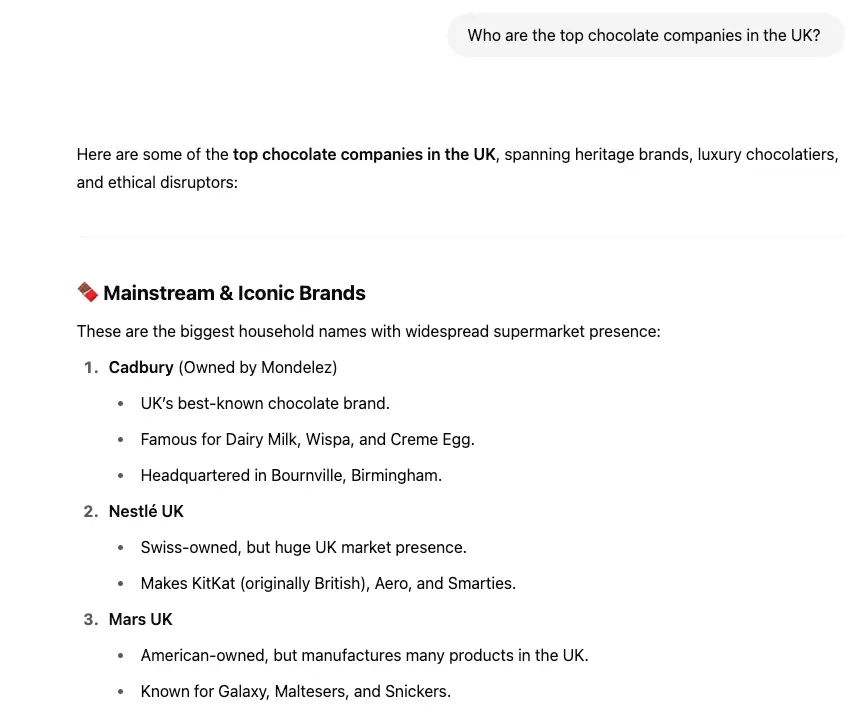
For example, when ChatGPT is asked, “Who are the top chocolate companies in the UK?” it can provide a list of recommendations without performing a background search. This is because the concepts of “best chocolate company,” “UK,” and brands like Cadbury and Nestlé are well-established connections from its training data.
This is where web-wide brand mentions come into play. Whether the AI is running a live search or relying on its internal knowledge, your brand needs to be visible across the web to be included.
- For background search answers, you need to show up on sites the AI trusts, like blogs, press articles, reviews, and directories.
- For knowledge-based responses, your brand needs to be mentioned consistently in content that’s crawled and learned from over time.
Brand mentions work as signals. The more often your brand appears in connection with relevant topics, the more likely AI is to “know” who you are and include you in its answers, either as a direct mention, cited source, or as a built-in recommendation.
Brand mentions are the biggest lever as we move into this new world of AI Search.
 Tim Cameron-Kitchen
Founder
Tim Cameron-Kitchen
Founder
Proven Ways to Increase Brand Mentions Across the Web
Nail Your Brand Positioning First
Before you focus on earning brand mentions, make sure your brand positioning is crystal clear and consistent.
Most businesses skip this step. They try to get press, backlinks, or AI visibility without first clarifying what they stand for. If your brand positioning is vague, forgettable, or inconsistent, even the best campaigns won’t stick.
Take The Ordinary. They broke into a crowded skincare market with a clear branding strategy and message: affordable, transparent, science-backed skincare. That positioning shows up everywhere: on product pages, in customer reviews, media coverage, and third-party features.
Because the message is consistent, AI systems recognise it. The Ordinary is now frequently recommended in AI search results associated with affordable and science-backed skincare, not just because of what they say but because of how often others repeat that positioning online.
Let’s take one of The Ordinary’s hero products: hyaluronic acid. In Google’s AI Mode, it’s listed as a top recommendation when you search for “affordable skincare brands that offer hyaluronic acid.” Their brand is mentioned directly in the answer.
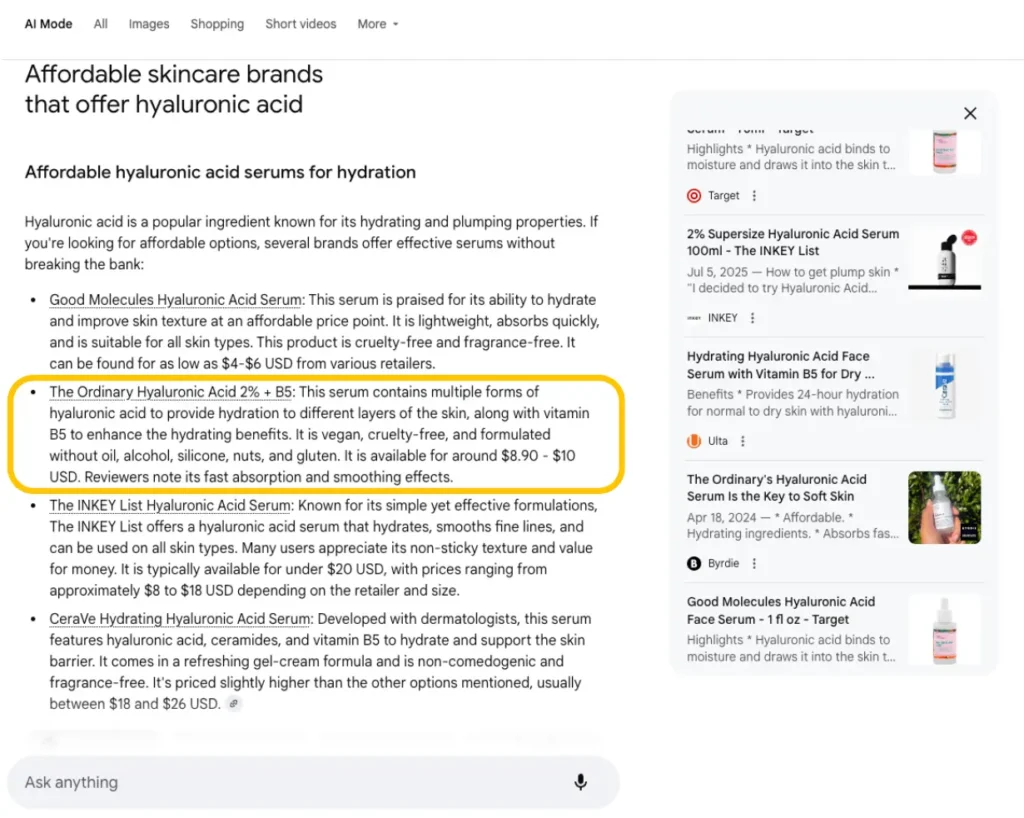
When you look at the sources cited by the AI, you’ll find a review from Byrdie, a feature on Refinery29, a news article in The Independent, and even product data from Google’s Shopping Graph.
These sources highlight exactly how The Ordinary’s brand positioning is reinforced through both live web content and underlying data:
- The Ordinary is frequently mentioned across high-authority third-party websites, helping them appear in background search results.
- At the same time, Google’s Shopping Graph plays into the platform’s underlying knowledge, connecting its products to key concepts like price points and ingredients.
- These repeated signals reinforce the brand’s identity for the AI.
This shows how brand mentions and consistent messaging work together. The more your brand is mentioned in connection with the right topics and terms, the stronger the association becomes for AI.
As Tim Cameron-Kitchen explains: “To show up in AI-generated results, your brand needs a message that’s repeated consistently across the internet, not just on your site. If AI tools see the same message in articles, reviews, and listings, they’re more likely to recommend you.”
So, before you push for coverage or content, lock in your brand message. Answer:
- What do you do?
- Who for?
- Why does it matter?
Once that’s clear, you’ll have a stronger foundation for earning coverage, being mentioned, and showing up in AI search results.
If you’re not 100% sure how your business should be positioning itself or how to turn customer insight into a message that sticks, our Branding and Positioning Accelerator is designed to help. We’ll work with you to uncover what your customers love most and shape a brand strategy that gives journalists, creators, and AI platforms something to talk about.
Build Topical Authority With Content
Topical authority is your brand’s perceived expertise on a subject. It’s earned by consistently publishing high-quality content that dives deep into your niche. The more useful, relevant, and complete your content is, the more likely it is to be referenced by AI tools.
Step 1: Start With Content on Your Own Website
The foundation of topical authority is the content you publish on your own domain.
This doesn’t just mean blogging regularly. It means strategically covering all the core topics your audience cares about and doing it better than anyone else. Aim to show depth, breadth, and clarity across your subject matter, not just sprinkle keywords into thin posts.
Start by identifying the key topics related to your brand positioning and products or services. Then, build a content structure around them:
- Create pillar pages that cover major topics in detail.
- Support them with cluster content like how-tos, explainers, FAQs, and case studies.
- Regularly update existing posts to keep them current and accurate.
This kind of content strategy helps you rank in traditional search. But just as importantly, it helps train AI tools to associate your brand with specific topics. The more often your brand is seen producing high-quality content on a subject, the stronger the connection becomes in the AI models’ knowledge base.
Step 2: Show Real Expertise
It’s not enough to write about a topic in depth to build authority. You need to show you actually know it.
“Your content strategy must change to rank in AI Search,” explains Tim Cameron-Kitchen. “Gone are the days of producing very thin, generic top-of-funnel content. What these AI tools love is high expertise, high authoritativeness, high experience content that targets the middle and the bottom of the funnel.”
In other words, search engines and AI tools are prioritising content that demonstrates real Expertise, Experience, Authoritativeness, and Trustworthiness (Google’s E-E-A-T quality guidelines).
Here’s what to focus on:
- Write from real-world experience. Share first-hand insights, use cases, test results, or client stories.
- Add expert commentary. That could be you, a team member, or a recognised specialist in your business.
- Support claims with data. Use stats, case studies, or clear examples.
- Use clear author bios and bylines. Make it obvious who wrote the piece and why they’re credible.
This level of depth helps you stand out from generic AI-written content and is how you get your content to rank in AI Mode and other AI tools.
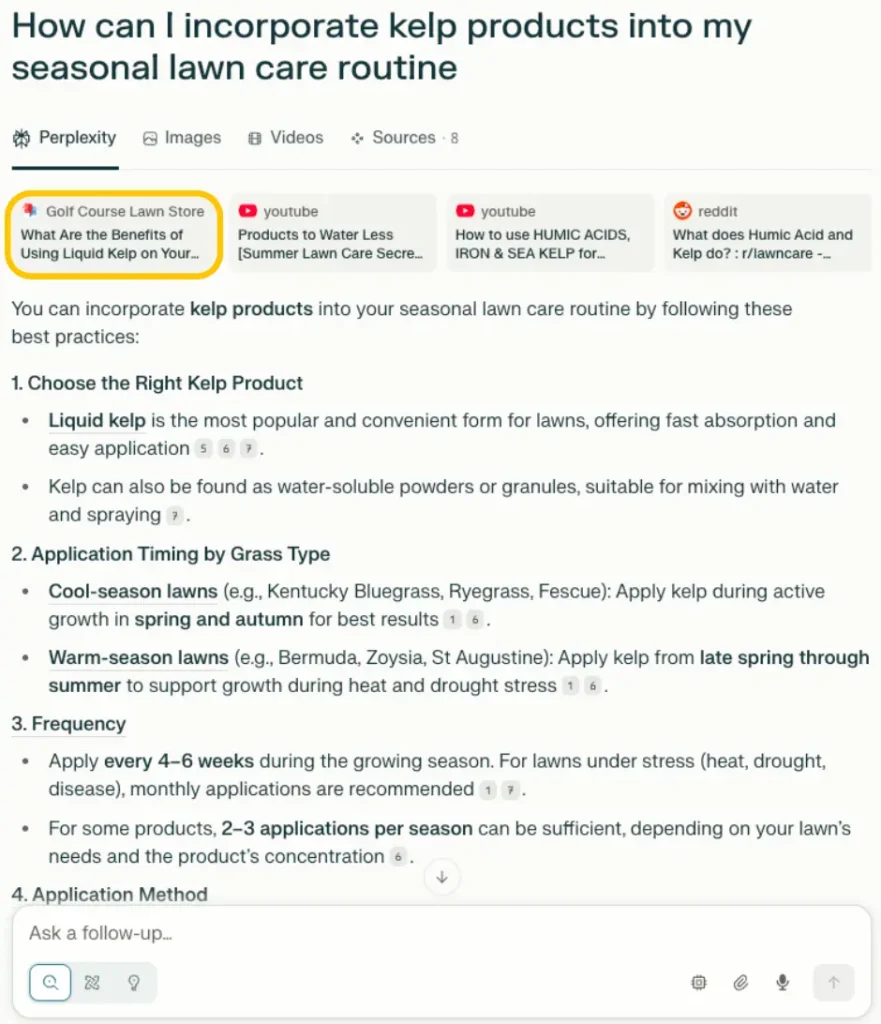
This approach is exactly why our client, Golf Course Lawn Store, does so well across AI platforms. Not only do they cover their niche topics in depth, but they also bring in clear signals of expertise, authoritativeness, and first-hand experience. For example,
- Each article includes an author section for Ron Henry, a recognised lawn care expert with years of hands-on experience.
- The blogs contain trusted product recommendations based on actual testing and use.
- Many posts are paired with video tutorials, showing Ron himself applying products and sharing real-time results.
As a result, their content ranks well in traditional search and also appears in AI-generated answers on platforms like Google’s AI Mode and Perplexity, cited as a trusted source.
Step 3: Extend Your Reach Through Guest Posting
Publishing on your own site is step one. But if you want to speed up your topical authority and earn more brand mentions at the same time, you’ll need to reach beyond your own domain.
This is where guest posting comes in.
Contributing expert content to other reputable websites in your industry helps position your brand as a trusted voice, especially when those sites have strong domain authority and loyal readerships. It’s also a great way to earn linked or unlinked brand mentions, which AI tools track and use as credibility signals.
So don’t just think of guest posts as SEO link-building tactics. Think of them as AI recognition assets. Every time your name appears in context on a credible third-party site, it reinforces your brand’s topical authority.
Earn Coverage with Digital PR
Digital PR is the secret to success with AI Search visibility. Mentions on trusted, high-authority third-party websites send powerful signals to AI systems that your brand is credible, visible, and worth recommending.
But let’s be clear: Digital PR is not quick, and it’s not easy.
Tim Cameron-Kitchen adds, “I’m not going to tell you that you can do this in half an hour every other Sunday. This requires a consistent and concerted effort over months and in some cases, years. But if you want this next generation of search to recommend your brand, products, and services consistently, this is what you need to do.”
That doesn’t mean you must be a household name or have a massive PR budget. It means you need the right digital PR strategy that’s consistent, intentional, and aligned with your brand positioning. This can include:
- Offer expert insights and quotes. Journalists are constantly looking for credible sources. Position your brand and team as subject matter experts and respond to media requests.
- Target the right media outlets and blogs. Focus on publishers that rank well in your niche and are often cited by AI platforms. Think consumer tech blogs, product round-ups, business news outlets, and high-authority review sites.
- Pitch relevant, timely stories. Tie your product or service to seasonal trends, industry news, or timely data.
- Create data-backed or expert-led content. This could be a product comparison, a mini-study, or an original insight that others will want to reference.
- Build relationships with journalists and creators. Outreach is more than cold emails. Engage on social media, respond to media requests, and make it easy for writers to feature you.
- Leverage PR wins across your other channels. Share third-party features on your website and social media to amplify your mentions and keep your authority growing.
Our client, 123 Remodeling, a kitchen and bathroom renovation company, consistently earns linked and unlinked brand mentions by contributing expert insights to media outlets. In a recent article on MarthaStewart.com, the brand was featured alongside commentary from one of their subject matter experts, positioning them as a trusted voice in home renovation.
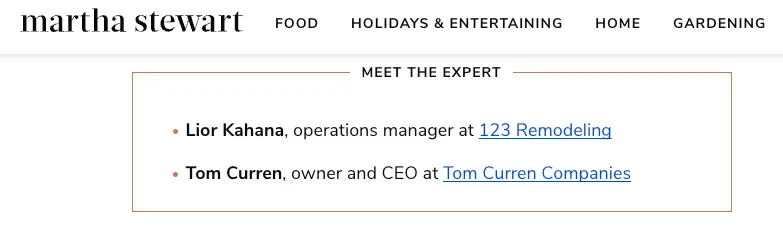
This is the power of digital PR in action. You don’t need to outspend your competitors. You just need to out-position them and earn coverage in the places that matter.
Get Featured in Trusted Round-Ups
One effective way to boost your brand’s visibility in AI Search is to be included in trusted product round-ups and editorial recommendation lists.
AI platforms pull information from third-party, high-authority content when generating their responses. Editorial reviews, expert-curated lists, and product recommendation articles are seen as credible, well-researched, and user-focused, making them highly valuable to readers and AI.
When your product is featured in these types of articles, you create contextual brand mentions that AI tools can learn from and cite. These mentions:
- Strengthen your association with key product or service categories.
- Increase the likelihood of being referenced in AI-generated answers.
- Help build your brand’s trust profile across the web.
Let’s look at what this looks like in practice. Our client ZUGU, a premium iPad case brand, has been featured prominently and consistently across AI-generated results when users ask for iPad case-related queries.
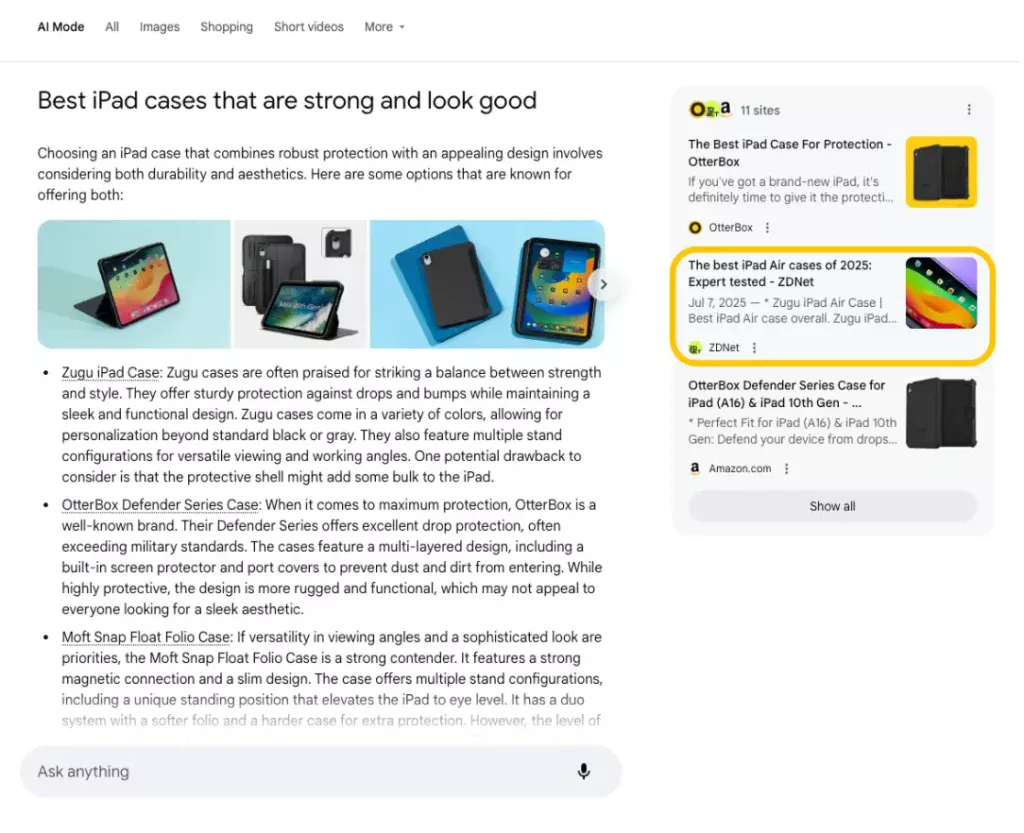
The driving force behind this visibility is ZUGU’s consistent mentions on respected review and news sites like ZDNet, which positions Zugu as the top choice in its category. That same article is often cited directly in AI-generated answers.
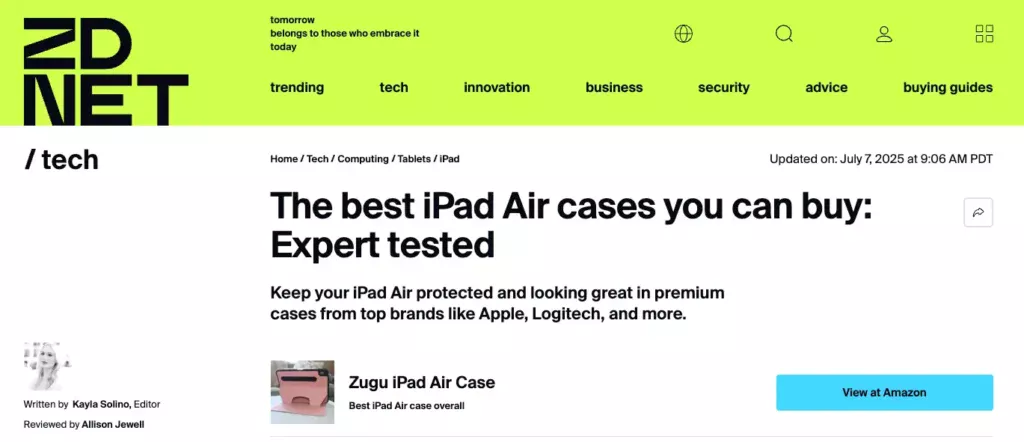
Mentions like this do more than raise brand awareness. They reinforce topic relevance, build trust with readers, and strengthen the credibility signals that AI platforms use when deciding which brands to feature in search results.
ZUGU is a great example of how third-party credibility drives AI visibility. Sure, we optimised their site, but what really pushed them into AI recommendations was repeated mentions in round-ups and product guides across sites like ZDNet and Wired. The AI saw consistent sentiment and echoed it.
Tim Cameron-Kitchen
Founder
Boost Your Online Reviews
It’s well-accepted that online reviews affect buying decisions, but they also impact your visibility in AI Search.
AI platforms scrape a wide range of content to generate answers, and that includes third-party review platforms, testimonials, and video reviews. Positive sentiment and high review volume across sites like Google, Yelp, Trustpilot, and niche directories send strong credibility signals to AI systems, deciding which brands to recommend.
But asking for reviews isn’t always easy. That’s why we use a structured, ethical approach, like the strategy we implemented for our client Personal Injury Law Firm, a personal injury practice based in Texas.
Here’s what we did:
- Created dedicated review landing pages for Google and other platforms
- Encouraged the client to provide printed cards they could hand out to clients post-case
- Advised on email review request templates and how to ask for detailed, honest feedback.
As a result, Personal Injury Law Firm doubled its Google review count in San Antonio, all without using shortcuts, incentives, or spammy tactics. This strategy helped preserve credibility when Google was actively cracking down on fake or manipulated reviews used by competitors.
As AI models evaluate brand trust and relevance, review sentiment and volume are becoming key signals. The more positive, real-world reviews you earn across platforms, the more data AI has to associate your brand with quality, reliability, and authority in your niche.
AI systems rely on review sentiment, quantity, and source credibility to evaluate brand trust. Every authentic review, even imperfect ones, helps build a clearer, more trustworthy profile of your business.
Genuine reviews are important. As Dima Raketa warns in Forbes, “entirely flawless product ratings can do more harm than good.” That’s why the goal isn’t just to get perfect scores; it’s to build a high volume of real, balanced reviews that show you’re a trusted, experienced provider in your space.
Partner with Influencers and Strategic Creators
Partnering with the right creators and influencers can be a powerful way to increase brand mentions, build authority, and boost visibility in AI Search.
You don’t need to throw money at massive influencers with inflated follower counts and low engagement. What you do need is strategic alignment.
Focus on creators within your niche who have loyal, engaged audiences. That could be a micro-influencer on Instagram, a podcast host, or a respected LinkedIn voice. You want partnerships with individuals whose followers trust their recommendations and whose content regularly sparks conversation.
This kind of partnership isn’t about paying for shout-outs. It’s about creating value together. Think:
- Co-created content, like guest posts and joint webinars.
- Product placements in YouTube reviews, tutorials, or podcasts.
- Expert interviews where your team or founder shares meaningful insight.
When done well, these collaborations lead to natural, credible brand mentions in content that feels real.
Engage With User-Generated Content
Semrush’s study found that Quora and Reddit are the most commonly cited websites in AI Overviews. These platforms are built entirely around community questions, discussions, and experience-based answers, and they’re heavily shaping how AI tools learn and respond to user queries.
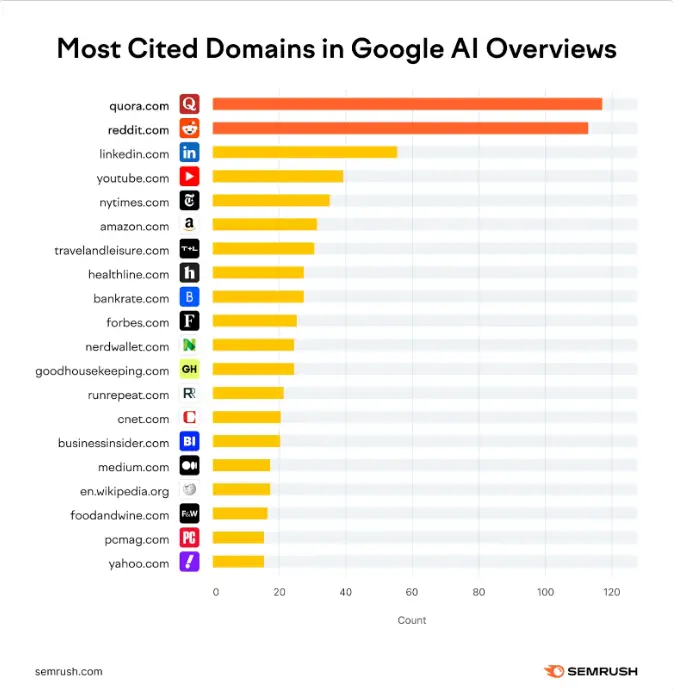
It’s not just Google’s AI, either. Josh Blyskal at Profound has reported a significant increase in Reddit citations in ChatGPT responses, showing that multiple AI systems are leaning on User-Generated Content (UGC) platforms to inform their answers.
This trend isn’t surprising. AI platforms favour content that’s honest, niche, and grounded in real-world experiences. Posts on Reddit, Quora, and similar forums offer exactly that — genuine insights, diverse perspectives, and detailed context around specific questions, problems, products, and services.
So, if you want to rank in AI Overviews and other AI platforms, you need to get active on these UGC sites. But to earn visibility here, you need to participate authentically. That means offering helpful advice, answering questions with real expertise, and sharing insights that genuinely add value.
Done right, this can lead to:
- Natural mentions from real users.
- Threads that AI tools reference when responding to future queries.
- Long-term visibility in both organic and AI-powered search results.
Drive AI Search Visibility With Boosted Brand Mentions
When your brand is consistently referenced across trusted third-party sources, from blogs and news sites to reviews, forums, and podcast transcripts, you’re sending strong signals to AI systems that you’re a credible authority in your niche. This is what boosts visibility in AI-generated answers.
Here’s a quick recap of how to increase brand mentions for AI Search:
- Nail your brand positioning, so others know what to say about you.
- Publish high-quality, topic-focused content on your site and in guest posts.
- Earn coverage through digital PR and media outreach.
- Get featured in product round-ups and editorial recommendations.
- Build a steady flow of customer reviews.
- Engage authentically with threads in UGC platforms.
- Partner with niche influencers and creators who can amplify your message.
At Exposure Ninja, we’ve helped ambitious brands boost their visibility with smart, scalable AI Search Optimisation strategies. If you’re ready to grow your online presence and get your business noticed in AI Search, we’re here to help. Request a callback, and let’s talk about how we can do the same for you.
Brand mentions are just one piece of the puzzle. Discover how to build a complete, future-proof strategy that gets you found by AI with our guide:
FAQs
Do brand mentions really affect AI rankings?
Yes! AI Search tools pull data from across the web, and frequent brand mentions help them “see” your business as trustworthy and relevant. It’s not just about links anymore. Authority now comes from context, coverage, and reputation.
What’s the difference between a brand mention and a backlink?
A backlink is a clickable link to your site. A brand mention is simply a reference to your business without the link. Both are valuable, but brand mentions are gaining influence in AI-driven searches because of their context.
How many brand mentions do you need to see results?
There’s no one-size-fits-all number, but more consistent, high-quality mentions across trusted sites generally deliver stronger results. Ahrefs found that brands in the top 25% for web mentions earn over 10x more visibility in AI Overviews than those in the next quartile down. AI tools are far less likely to recognise or recommend you if your brand isn’t being talked about online.