
Branding Strategy: How to Build a Brand That Stands Out and Sells


A strong branding strategy isn’t just about looking good — it’s about making your brand instantly recognisable, building trust, and driving real growth. Our guide shows you how to craft a strategy that sets you apart from the competition and turns brand awareness into measurable sales.
Scroll through Instagram, and you’ll see DIYers flaunting IKEA hacks, fitness gurus flexing in Gymshark gear, and even that cute cat video subtly featuring Purina.
Google anything, and you’ll be hit with sponsored ads and branded links.
Even your commute is surrounded by branded marketing — from your local bus wrapped in ads to your coffee cup covered in a logo.
This is your audience’s reality: they’re bombarded with brands at every turn. Choices are endless; attention is fleeting, and if your brand doesn’t cut through the noise, someone else’s will.
You don’t just need a good-looking logo or a catchy tagline. You need a branding strategy that makes people stop, listen, and act.
In this guide, we cover how to craft a branding strategy that captures attention, builds trust, and drives real, measurable growth.
What Is Branding Strategy?
A branding strategy is your game plan for building a recognisable, trusted, and loved brand. It’s the long-term roadmap that defines how your business presents itself to the world, how it connects with your target audience, and how it carves a unique space in a crowded market.
It’s not just your logo or colours. It’s the combination of your brand’s purpose, values, positioning, personality, visuals, voice, and storytelling — all working together to create a consistent, powerful impression.
Having a strong branding strategy helps you:
- Build Trust: Customers buy from brands they know, like, and trust.
- Differentiate: Strong branding sets you apart from competitors and clarifies why people should choose you.
- Drive Loyalty and Referrals: Loyal customers become brand advocates who bring in more business.
- Support Sales and Marketing: When your brand is clear and compelling, every marketing touchpoint becomes more effective.
6 Elements of a Strong Branding Strategy
1. Brand Purpose and Vision
Your brand purpose is the reason your business exists beyond making money. It’s the difference you want to make for your customers, your industry, and the world.
Take Duolingo as an example. It’s not just an app teaching languages; the purpose is to make language learning universally accessible and fun for everyone, regardless of background. This higher purpose resonates with tech-savvy learners around the world and shapes every decision Duolingo makes — from offering free courses to using gamification to keep learning fun and accessible.
Your vision sets the long-term direction. It’s aspirational, defining what you aim to achieve in the future. Combined with your purpose, it creates a compass for decision-making and keeps your team aligned.
2. Audience and Positioning
Trying to please everyone dilutes your brand and leaves you indistinguishable from the crowd. To stand out and win loyalty, you need to focus on who your ideal customer is and how you can serve them better than anyone else.
Duolingo’s target audience is busy young adults who want a fun, accessible way to learn a new language without breaking the bank. By understanding their audience’s frustrations with traditional language learning, such as cost, boredom, and time commitment, Duolingo designed a free-to-use language learning model that feels fresh and engaging.
Once you know your audience, it’s time to craft your brand positioning — your unique place in the market. This means identifying and clearly communicating:
- What makes your brand different?
- Why should your audience choose you over competitors?
- What unique value do you deliver that no one else does?
Your branding and positioning need to align with your audience and reflect your brand’s purpose.
Duolingo’s positioning is crystal clear: it’s a fun, free, and accessible language-learning platform that turns study time into playtime. Unlike traditional language courses or competitors, Duolingo’s bite-sized, game-like format makes it a standout choice for casual and committed learners alike.
3. Brand Personality and Voice
Your brand personality gives your business character. It’s how you come across to your audience, including the traits and emotions they associate with you — whether that’s playful, authoritative, bold, or caring.
Your voice is how you express that personality in every interaction. It’s the language, tone, and style you use in your website copy, social media posts, emails, and even customer service chats.
A strong, consistent personality and voice help your brand feel familiar and trustworthy. People know what to expect when they hear from you, and that’s a powerful asset in a world where most brands blur into the background.
Duolingo’s personality is playful, cheeky, and encouraging. Their voice matches this perfectly—it’s conversational and a little bit sassy. This voice makes Duolingo stand out while reinforcing its brand as approachable and fun.
A clear brand personality and voice show your audience who you are. They build connections and keep people coming back, not just for what you offer but because they enjoy how you offer it.
4. Visual Identity
Visuals are your first impression. Your logo, colour palette, typography, and imagery don’t just make things look pretty. They signal what your brand stands for and how it wants to be perceived.
For your visual identity to work, it must align with your brand’s purpose and personality and resonate with your target audience.
Consistency is also key. Whether someone’s scrolling through your app, reading your website, or spotting your logo in a crowded app store, the experience should feel cohesive and instantly recognisable.
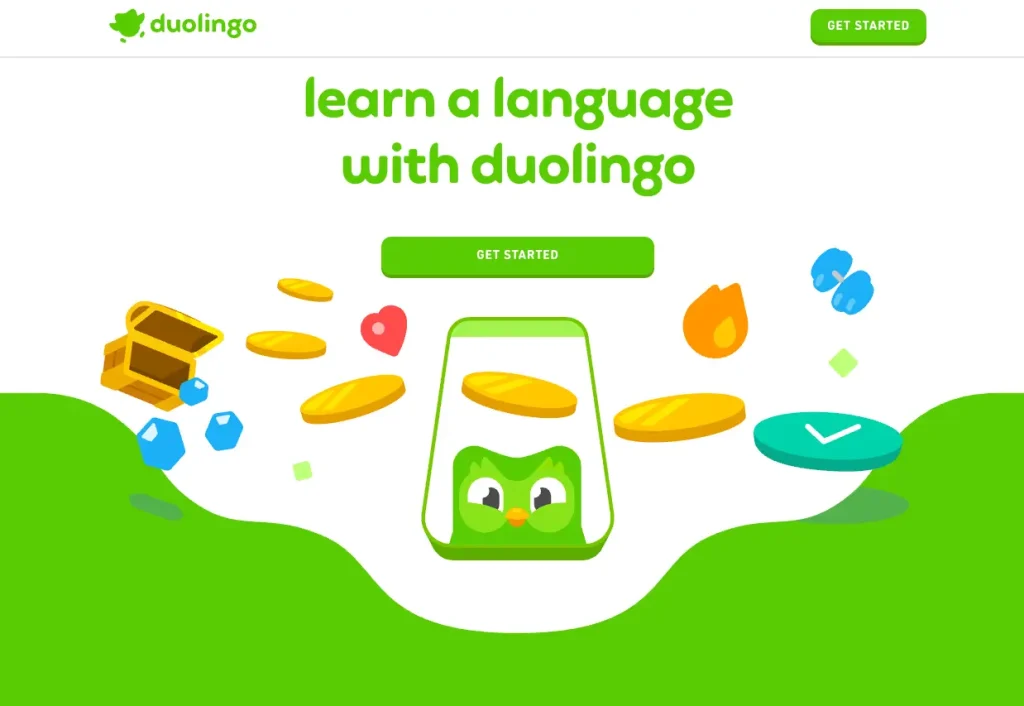
Duolingo nails this. The bright, playful green of the “Duo the owl” mascot embodies Duolingo’s friendly, accessible, and fun approach to learning. The choice of simple, rounded typography reinforces this approachable tone, while bold, contrasting colours make the interface engaging and easy to navigate.
The visual consistency extends across every touchpoint: the app’s interface, website, and social media channels all maintain the same lighthearted, cheerful aesthetic. This makes the brand feel familiar and reliable, reinforcing its core promise of making language learning enjoyable and approachable.
5. Messaging and Tone of Voice
While brand voice is your communications’ overarching style and personality, messaging and tone of voice focus on what you say and how you say it in specific contexts.
Your messaging is the key messages, taglines, and value propositions that communicate what makes your brand unique and why people should care. Your tone of voice is how you deliver those messages, infusing them with personality and emotion that reflects your brand’s identity.
Clear, compelling messaging and tone connect with your audience by highlighting your unique value without unnecessary jargon. It makes your audience feel understood and appreciated. Strong messaging answers core questions like:
- What problem does your brand solve?
- Why should your audience trust you?
- How are you different from competitors?
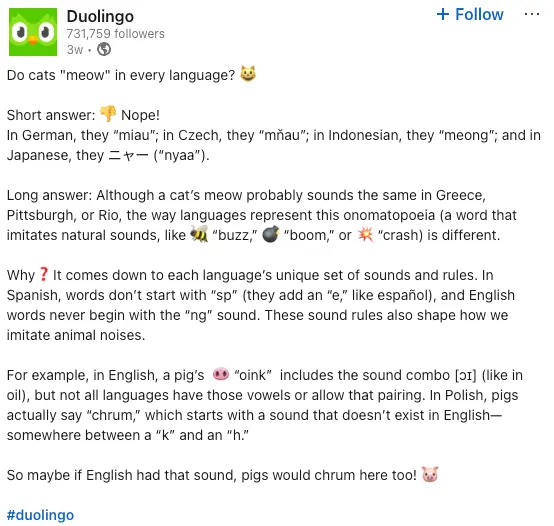
Duolingo’s messaging focuses on simplicity, accessibility, and fun. Their key messages consistently communicate that language learning can be free, easy, and even addictive.
Their tone of voice adapts based on context. For app notifications and social media, it’s cheeky and playful. For website copy and educational content, it’s still friendly and simple but leans more motivational and reassuring, ensuring learners feel supported and encouraged.
6. Brand Storytelling
Humans love stories. Share yours to build emotional connections that create loyalty and set your brand apart.
Your brand story should cover:
- Your origin: Why did you start?
- Your mission: What change are you creating?
- Your journey: What challenges have you faced and overcome?
Authentic storytelling builds relatability and makes your brand memorable in a sea of competitors.
Duolingo’s brand story is a perfect example. It started with a simple but powerful idea: language learning should be free and accessible for everyone, everywhere.
Cofounders Luis von Ahn and Severin Hacker saw an opportunity to democratise education through technology. They faced significant challenges, from keeping users engaged to sustaining a business model based on free access. But they stayed true to their mission, and today, Duolingo is a global brand with millions of users, all drawn in by its playful personality and empowering vision.
How to Build a Branding Strategy in 5 Steps
1. Define Your Brand Purpose
To define your brand purpose, start by asking yourself:
- Why did we start this business?
- What problem are we trying to solve?
- What change do we hope to create?
Think beyond your products or services and focus on the bigger picture. Take Patagonia, for example. This brand’s purpose isn’t just selling outdoor gear; it’s “We’re in business to save our home planet.” This higher purpose guides every decision the company makes, from product design to activism to corporate decisions.
Next, write a concise purpose statement that’s aspirational, authentic, and actionable. For example, a purpose statement for our client Golf Course Lawn Store could be: “Empower lawncare enthusiasts to easily create lush, golf-course-quality lawns that enhance their homes and contribute to a healthier environment.”
When you get this right, your business becomes a brand that resonates with your audience, earns their trust, and inspires loyalty. It transforms from a company selling products into a purpose-driven movement people want to join and support.
2. Understand Your Target Audience
To create a brand that resonates, you need a deep understanding of your audience and what matters to them.
Start by defining your target audience in detail:
- Who are they demographically? Look at age, gender, income, and location.
- What motivates them? Consider their aspirations, needs, and desires.
- What frustrates them? Identify their pain points and challenges.
- How do they consume information? Is it social media, blogs, or podcasts?
Don’t rely on guesswork or assumptions. Use real data to inform your understanding. Conduct customer interviews, gather surveys, analyse website analytics, and study social media behaviour. Consider focus groups or customer feedback forms to uncover deeper insights.
With this information, build detailed buyer personas. These personas should reflect your audience’s real motivations, challenges, and preferences, giving your brand and marketing teams a clear picture of who you’re speaking to.
We applied this approach when working with Transparent, a global SaaS provider in a complex, high-value B2B niche. Transparent needed a refreshed website that attracted and converted high-quality leads. To make that happen, we didn’t just guess what their audience wanted — we found out.
Through in-depth customer interviews, we uncovered key decision drivers, trust factors, and the real language Transparent’s audience used. These insights shaped every element of their new site — from messaging and layout to the calls to action (CTAs).
The result was a site that spoke directly to the real needs of Transparent’s audience. Within four months of launch, the site delivered 51 qualified leads in a high-ticket industry. That’s the power of understanding your audience: it ensures your brand communicates effectively, resonates deeply, and drives real results.
3. Research Competitors and Find Your Edge
To stand out, you need to know what you’re up against. Competitor research helps you spot gaps, highlight opportunities, and carve out a space where your brand can thrive.
- Start by mapping out your direct competitors. What are they doing well? Where are they falling short? Look at their products, pricing, branding, customer reviews, and marketing tactics.
- Pay close attention to their positioning. Look at how they present themselves in the market and what they promise customers.
Once you’ve gathered these insights, define your unique value proposition (UVP). This is what makes you different and better. It’s not just what you offer — it’s why people should choose you over anyone else.
A clear UVP helps you cut through the noise, build trust, and become the obvious choice. Without it, you’re just another option in a crowded market.
We applied this approach with Golf Course Lawn Store, which was up against heavyweight competitors like Amazon. Both offered lawn care products, but Golf Course Lawn Store needed a clear edge to stand out.
By analysing Amazon’s strengths and weaknesses, we crafted an integrated SEO and Content Marketing strategy that positioned Golf Course Lawn Store as the go-to authority for premium lawn care. Their educational content, clear brand positioning, and expert-backed product recommendations helped them outperform Amazon, driving 288% organic revenue growth.
4. Create Your Brand Guidelines
Your brand guidelines are the rulebook for how your brand shows up everywhere.
They document everything from your visual identity to your tone of voice, key messages, and usage rules. This clarity ensures your brand feels consistent and familiar, whether it’s on your website, social channels, emails, packaging, or even internal documents. Strong guidelines empower your team, partners, and stakeholders to represent your brand correctly and confidently.
Good brand guidelines can also help you scale. As your business grows, they make it easier to onboard new team members, collaborate with partners, and maintain a strong, recognisable brand presence across all channels.
To create your brand guidelines, focus on the elements that visually and verbally define your brand:
- Logo: Outline how your logo should be used, as well as its variations, sizing, and placement rules.
- Colour Palette: Define primary and secondary colours with exact specifications to ensure consistency.
- Typography: Specify fonts for headings, body text, and accent styles, including sizes and weights.
- Product Icons and Brand Mascots: Show approved icons, illustrations, or mascots with usage guidelines.
Bring all these elements together into a complete brand manual that reflects your purpose, positioning, and target audience. This manual should guide every creative decision, ensuring that your brand not only looks the part but also speaks and acts in a way that reinforces your identity at every touchpoint.
5. Apply Your Branding Strategy Consistently
When it comes to branding, consistency is everything. When your brand shows up the same way across every touchpoint — your website, socials, emails, ads, digital PR and packaging— it becomes instantly recognisable and builds the trust that turns browsers into buyers.
Make sure your team, partners, and anyone else involved in your brand know the rules. Share your brand guidelines early and make them easy to follow. This ensures everyone who represents your brand does it the same way every time.
If you work with a marketing agency, one of the most impactful things you can do is share your branding strategy with them early on — and be open to their feedback because an outside perspective is always invaluable.
 Charlie Marchant
CEO
Charlie Marchant
CEO
Strategic Branding in Action
Oatly
Oatly transformed oat milk from a niche product into a global movement by building a brand with a clear purpose and a bold personality.
Their mission is simple but powerful: to offer a sustainable, plant-based alternative to dairy that’s better for both people and the planet. This purpose resonates deeply with eco-conscious, health-aware consumers frustrated by the status quo in the food industry.
Oatly’s positioning stands out because it’s not just another dairy-free option; it’s a brand that champions a plant-based lifestyle with attitude. They target consumers who value authenticity and environmental responsibility, using a voice that’s playful and witty. Their tone engages audiences in a way that feels personal and disruptive.
Visually, Oatly breaks the mould with hand-drawn typography, bold graphics, and raw, edgy designs. Their packaging and marketing materials are instantly recognisable, reinforcing the brand’s personality and cutting through the visual clutter of the plant-based aisle.
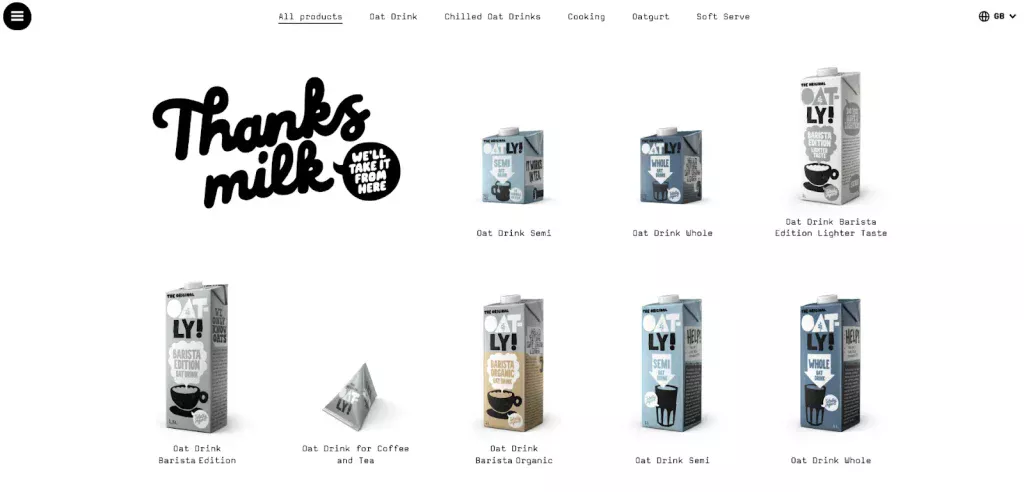
Their messaging is a mix of transparency, humour, and clarity. From campaigns like “Help Dad” to openly challenging plant-based censorship, Oatly doesn’t just talk — they start conversations. Their storytelling, rooted in their Swedish origins and decades of innovation, invites consumers to join a movement, not just buy a product.
Oatly’s branding works because it’s consistent, authentic, and bold.
GoPro
GoPro‘s branding is all about tapping into the thrill-seeker lifestyle.
Their purpose goes far beyond selling action cameras — it’s about enabling people to capture and share life’s most epic moments. This resonates with adventurers, creatives, and everyday consumers who want to turn ordinary experiences into extraordinary memories.
The brand personality is bold, energetic, and aspirational, with a voice that’s confident yet approachable. GoPro doesn’t just tell consumers what their products do — they show them through jaw-dropping user-generated content that makes viewers feel part of something bigger.
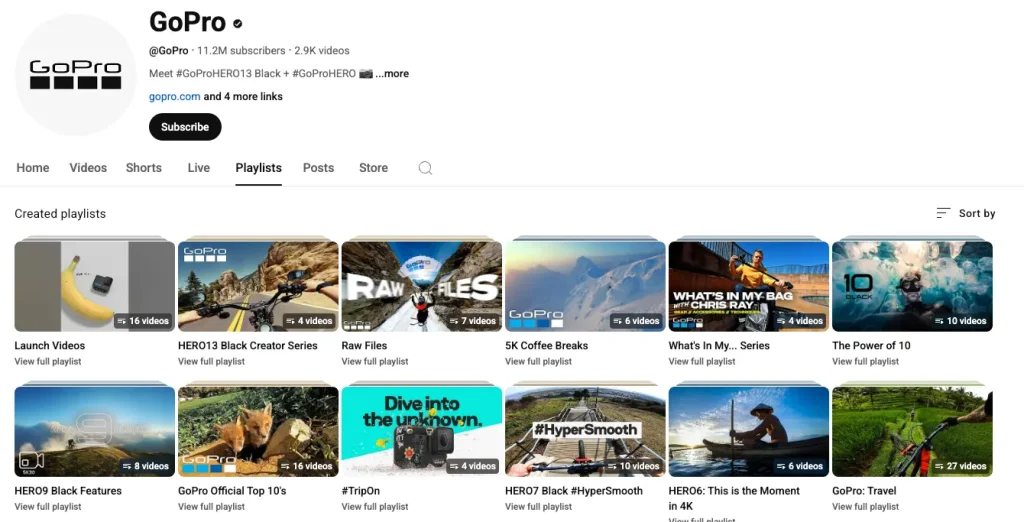
Visually, GoPro keeps things sleek and dynamic. Their marketing materials, packaging, and digital content feature clean design, high-energy visuals, and powerful, action-driven imagery. Every touchpoint reinforces the idea of movement, excitement, and adventure.
Messaging is focused on empowerment. Instead of promoting camera specs, GoPro’s narrative invites users to “Be a Hero” and capture moments that matter. Their storytelling centres on real people using GoPro products to document their experiences — whether that’s skydiving, surfing, or celebrating life’s everyday wins.
GoPro’s branding succeeds because it connects with consumers on an emotional level, celebrating the spirit of adventure and empowering everyone to tell their own story.
Can You Change Your Branding Strategy?
Branding strategies aren’t set in stone — they evolve with market shifts, technological advances, and changing consumer expectations.
The key is to stay rooted in your purpose while being flexible enough to adapt. As Charlie Marchant, CEO of Exposure Ninja, puts it: “If you put a branding strategy out there and it’s not working, that’s okay. Tweak it until it connects with the customers you want to reach.”
Rebranding or refining your strategy can inject fresh energy into your brand and drive new growth. Just make sure any changes are intentional, strategic, and aligned with your long-term vision.
Accelerate Your Branding and Positioning
Building a standout brand isn’t just about having a great logo or a catchy tagline.
It takes real strategy, a deep understanding of your audience, and a clear, consistent message that sets you apart. It’s about aligning your brand’s purpose with what your customers want and need — and doing it in a way that drives measurable growth.
That’s where our Branding and Positioning Accelerator comes in. In just 6 – 8 weeks, we’ll help you define your unique value, perform in-depth competitor and audience research, craft compelling brand guidelines, and build a cohesive, high-converting brand that cuts through the noise.
Ready to fast-track your brand’s growth and make your mark in a competitive market? Request a callback today and let’s get started.
What to read next:
- How to Build an Effective SEO Strategy
- How to Create a Content Marketing Strategy That Gets Results
- Step-by-Step PPC Strategy That Delivers ROI
FAQs
What’s the difference between brand positioning and brand strategy?
Brand strategy defines your overall plan and goals, while brand positioning determines how you’re perceived in the market. Positioning is a core part of your larger brand strategy.
How long does it take to build a brand strategy?
A brand strategy can typically take 6-12 months — but with our Branding and Positioning Accelerator, we deliver a complete, high-converting strategy in just 6-8 weeks. This fast-tracked process combines deep customer and competitor insights with expert positioning and messaging. The result is a solid brand foundation, built quickly and ready to scale.
Do you need a brand strategy before launching a website?
Yes! Without a clear brand strategy, your website risks being generic. A strong brand ensures your site reflects your purpose, engages your audience, and drives conversions.