Should You Buy Backlinks?

The Short Answer: Should You Buy Backlinks?
Usually, no. Google’s spam policies treat links bought to pass ranking value as link spam, and its SpamBrain system can quietly cancel them out, so you may pay for links that do nothing. Paying for genuine advertising or sponsorship is fine as long as the link carries rel=”sponsored”. To build rankings, earn links through digital PR and content instead.
Buying backlinks is a practice that you may have heard of, but you might not know whether you should do it.
Buying “cheap” backlinks in bulk from disreputable sources is a Black Hat SEO (Search Engine Optimisation) technique —: a way of cheating or misleading Google and other search engines so that your website is ranked higher than it deserves to.
If you buy backlinks and have little to no control over where the backlinks are placed or what kind of content your backlink will appear in, you’re not doing off-page SEO right.
If you pay for a service that helps you to generate exposure, brand awareness, and backlinks (see our guide to digital PR for businesses), that’s a little different.
Generally speaking, the easier it is to buy a backlink, the less it’s worth.
This is because Google and other search engines don’t want to reward spammy behaviour. On the other side of the coin, backlinks that are very hard to secure, such as backlinks from government websites and university websites, tend to be worth a lot more because they’re harder to manipulate.
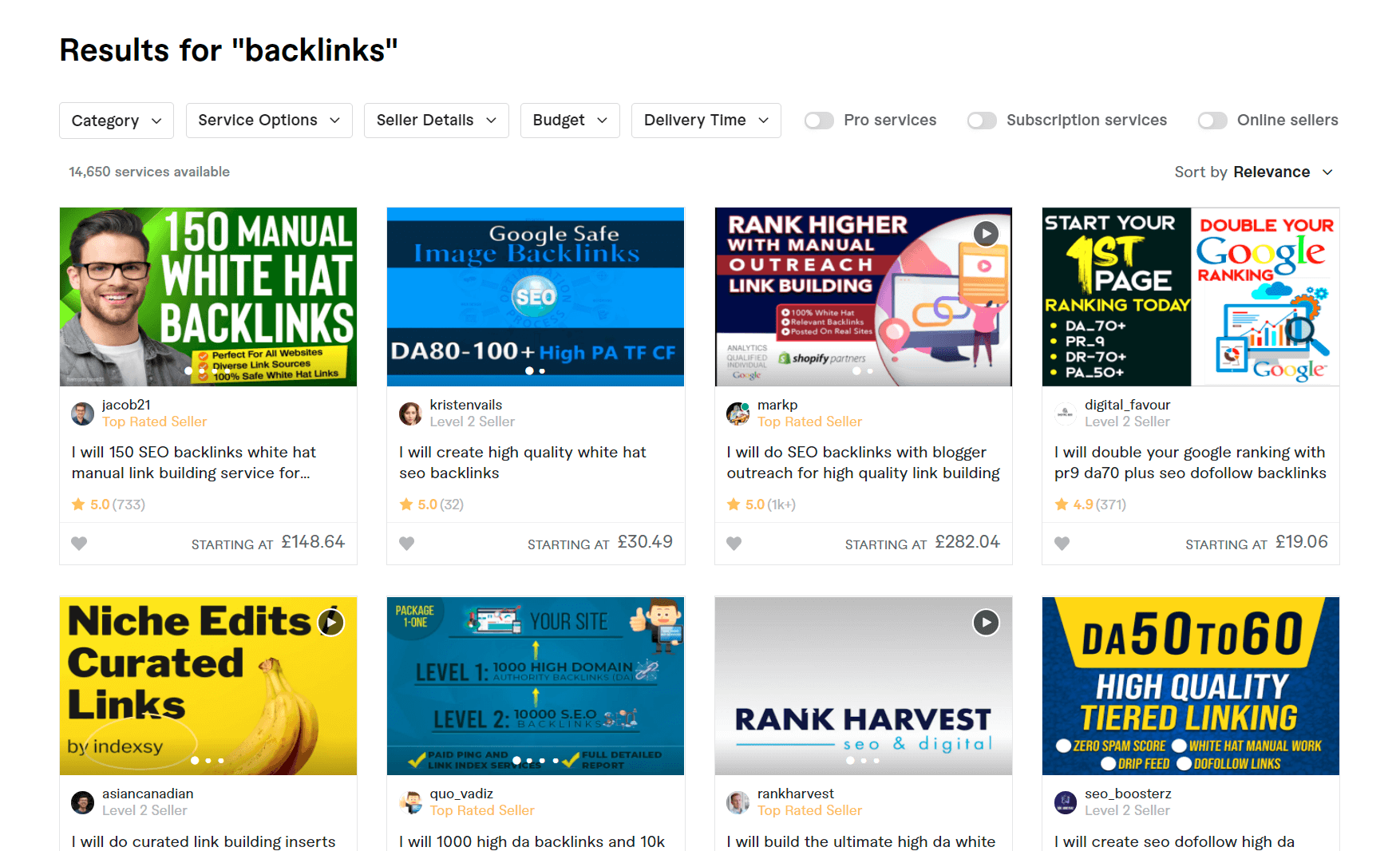
Why Buying Backlinks Is Risky
It’s easy to see why people still buy links. Links are still a ranking signal, earning them takes time and effort, and link sellers promise quick results. Many SEOs also doubt Google can spot paid links: in Editorial.Link’s 2026 survey of 518 SEO professionals, just over half said Google isn’t effective at identifying and discounting them. But “Google might not notice” is a risky foundation for your rankings.
Even though it rarely works now, it’s still possible to buy backlinks in bulk at ludicrously low prices. Ever seen this advert before? Or perhaps something like it?
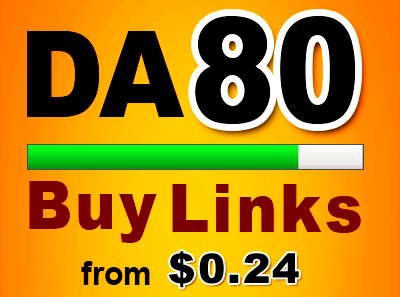
This is the essence of black hat SEO. If there was ever a link building or SEO strategy to categorically rule out, this would be it. Services like these tend to rely on link farms or low-quality “news” websites that link out to as many different services as possible.
The content on these sorts of websites is often gibberish and the links themselves tend to be completely useless.
Google’s SpamBrain system has changed what “risk” actually means for pages like this. In earlier years, the main concern with bought backlinks was a dramatic manual penalty. Today, the outcome is often quieter: SpamBrain, Google’s AI-powered spam detection system, algorithmically identifies manipulative link patterns and devalues them, often without any notification in Search Console. Your rankings can slip because the bought links simply stop counting, with no warning and nothing to “fix” in the traditional sense.
Google confirmed this in its December 2022 link spam update, saying SpamBrain can now detect both sites that buy links and sites used to pass outgoing links, and that sites affected by the update wouldn’t be notified in Search Console.
This is arguably more insidious than a manual action, which at least tells you something is wrong and gives you a route back (a reconsideration request, once you’ve cleaned up your link profile). Algorithmic devaluation just happens quietly in the background —, which is exactly why it’s worth understanding before you consider buying links at all.
Google’s Stance on Link Buying
Google is explicitly against the exchange of money in return for links. Its spam policies list “exchanging money for links, or posts that contain links” as link spam, along with exchanging goods or services for links and sending someone a product in exchange for a review that includes a link.
That doesn’t mean every paid link breaks the rules. Google’s own words: “Google does understand that buying and selling links is a normal part of the economy of the web for advertising and sponsorship purposes. It’s not a violation of our policies to have such links as long as they are qualified with a rel=”nofollow” or rel=”sponsored” attribute.”
The takeaway from this should be that the more direct and obvious an exchange of money is in return for a link, the less natural it is. The less natural it is, the more likely Google is to punish it. And some link building strategies involve the exchange of money without falling into the same spammy bucket, as the table below shows.
Types of Paid Links: Which Are Safe and Which Aren’t
“Paying for links” covers very different things. Here’s how the most common types compare against Google’s spam policies.
| Type | What it is | Risk | Why |
| Private blog networks (PBNs) and link farms | Networks of sites set up to sell or pass links | High | They exist to manipulate rankings, which is the definition of link spam |
| Paid guest posts with followed links | Paying to publish an article that links to you | High | Google lists “exchanging money for… posts that contain links” as link spam |
| Link insertions (niche edits) | Paying to have your link added to an existing article | High | The same exchange of money for a link, just on an older page |
| Free products in exchange for a followed link | Sending a product on the condition that the review links to you | High | Google lists this as link spam unless the link is qualified |
| Sponsored content with rel=”sponsored” | A clearly labelled paid placement, such as an advertorial | Low | Allowed by Google, but the link won’t pass ranking credit. The content also needs labelling as an ad |
| Agency fees for digital PR | Paying people to create and pitch stories to journalists | Low | You pay for the work, not the link. Journalists decide whether to cover the story and link to you |
Paid Links, Nofollow and rel=”sponsored”: What Google Allows
There are also follow links and nofollow links.
Nofollow is an attribute that can be applied to a backlink by webmasters. It looks like this:
rel="nofollow"
In 2019, Google announced that it would treat nofollow links as hints rather than directives. In other words, sometimes Google will “count” a nofollow link and sometimes it won’t.
We’re not quite sure why Google made this change, but there’s some speculation that it was a response to many major websites moving to nofollow links as standard across their websites. Rather than lose these news sites as sources of information completely, Google made the change so it could continue counting backlinks from some of these sites. But as said, this is unconfirmed speculation.
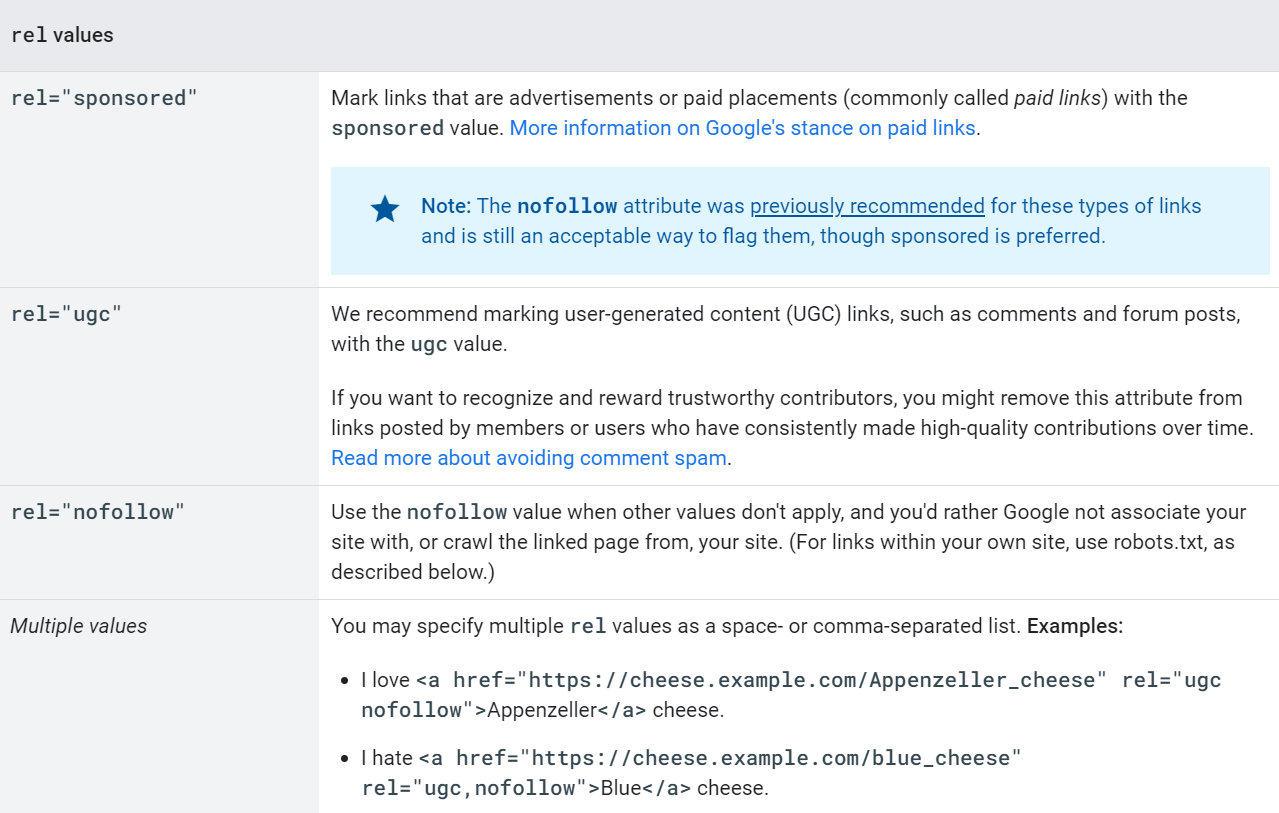
Google gives us an example of when they recommend using the nofollow attribute:
“The nofollow attribute is for cases where you want to link to a page but don’t want to imply any type of endorsement, including passing along ranking credit to another page.”
At the same time that Google made changes to the nofollow attribute, they also added a new attribute named rel=”sponsored”.
Google explicitly stated that this is the attribute you should use if the link has been created for advertorial purposes or in exchange for any compensation (in other words, a paid-for link).
Put simply: the only compliant way to have a paid link pointing to your site is with rel=”sponsored” or rel=”nofollow” attached to it. Both attributes mean the link doesn’t pass ranking credit , which is exactly why a paid dofollow link (one with neither attribute) is both against Google’s guidelines and, per the SpamBrain section above, increasingly easy for Google to detect and devalue on its own.
You’ll see some link sellers, and even some SEO guides, advise asking for a dofollow link with no sponsored label, so that the link passes ranking credit. That’s exactly what Google’s policies describe as link spam: a paid link that hasn’t been qualified. It can also cause problems beyond Google, as paid placements generally need to be clearly identified as advertising.
Red Flags: How to Spot a Link Seller to Avoid
If someone offers to sell you links, these are the warning signs to look for:
- Guaranteed rankings or metric increases. Nobody can guarantee a ranking, and promises like “DR 50+ in 30 days” focus on a third-party score, not your traffic.
- Price lists sorted by domain metrics. A menu of sites priced by DR or DA, with no mention of relevance or real readers, is a sign the links exist to be sold.
- Bulk packages. Dozens or hundreds of links delivered in days doesn’t happen naturally.
- Sites with no real audience. Check a site’s organic traffic, not just its authority score. In BuzzStream’s study of guest post marketplaces, almost 98% of sites were low quality, with a DR below 40 and under 10,000 monthly organic visits.
- Sites that publish on anything. A “news” site covering casinos, crypto, home improvement and health in the same week is selling links, not serving readers.
- “Dofollow, no sponsored tag” as a selling point. This is a promise to break Google’s rules on your behalf.
- Vagueness about where links will go. If a seller won’t name the sites in advance, or uses a “private network”, assume the worst.
Already Bought Backlinks? What to Do Now
If you’ve already bought links, don’t panic. Many paid links are simply ignored by Google rather than penalised. But it’s worth checking where you stand and cleaning up what you can.
- Check for a manual action. In Google Search Console, open the Manual actions report. If you see an “Unnatural links to your site” action, Google has reviewed your links and taken action, and you’ll need to work through every step below.
- Audit your backlinks. Export your links from Search Console’s Links report and a tool such as Ahrefs or SE Ranking. Flag every link you paid for, plus anything else that looks unnatural.
- Ask for removal. Contact the site owners and ask them to remove the links or add rel=”sponsored” or rel=”nofollow”. Keep a record of who you contacted and when.
- Disavow what you can’t remove. Use Google’s disavow links tool for links you couldn’t get removed. Use it with care: Google says most sites don’t need it, and it’s intended for when you have a significant number of spammy or artificial links that have caused, or are likely to cause, a manual action.
- File a reconsideration request. If you had a manual action, submit a reconsideration request in Search Console explaining what happened, what you’ve removed or disavowed, and how you’ll avoid it in future.
- Replace them with earned links. Cleaning up only removes the risk. To rebuild authority, you need links you’ve earned, as covered in the next section.
If there’s no manual action, the links you bought are most likely being ignored. Stop buying more, don’t rely on them for rankings, and put that budget into links you’ve earned.
Not sure what’s in your backlink profile or where to start? Request a free search visibility review and we’ll show you where you stand in Google and AI search, and the opportunities to focus on first. Our link building service can then help you replace risky links with earned ones.
What to Do Instead: Earning Links That Actually Move Rankings in 2026
If buying backlinks is off the table, the good news is that the alternatives are safer and, done well, more effective. Here’s where to focus instead.
Digital PR
Digital PR means earning coverage and links through newsworthy stories, data and campaigns, rather than paying for placement. In Editorial.Link’s 2026 survey of 518 SEO professionals, 48.6% named it the most effective link building tactic, far ahead of guest posting at 16%. It produces genuinely earned, editorially-placed links that carry far more weight than anything bought. See our digital PR and link building service for how this works as a managed service.
Journalist request platforms
Responding to journalist requests (via services like HARO and Connectively, both now run by Featured.com, or direct outreach to relevant writers) earns links from genuine news and industry publications, in exchange for expert commentary rather than money.
Competitor backlink analysis
Looking at where your competitors’ links come from , using a tool such as Ahrefs or SE Ranking, surfaces realistic, relevant opportunities: sites that already link to businesses like yours and are open to doing so again. Our guide to competitor backlink analysis shows how.
Content-led link earning
Original research, tools, and genuinely useful guides attract links naturally over time because other sites want to reference them. This is slower than buying links, but the links it earns carry far less risk of being devalued.
How Much Do Bought Backlinks Cost in 2026?
It’s worth understanding the going rate for bought backlinks, if only to see how poor the economics are. These are the most recent figures from named industry sources (in US dollars, as most of the research comes from the US and Europe):
| Link type | Typical price | Risk | Source |
| Link insertion | $179 on average | High | BuzzStream |
| Guest post, bought directly from the site | $295 on average | High | BuzzStream |
| Guest post, bought through a vendor | $461 on average | High | BuzzStream |
| High-quality or top-tier guest post through a vendor | $3,130 to $6,018 | High | BuzzStream |
| What SEOs consider an acceptable price for one high-quality link | $508.95 on average | Depends on how it’s earned | Editorial.Link 2026 survey |
| Earned link through digital PR (cost per link) | $750 on average | Low | BuzzStream State of Digital PR |
Bulk offers advertised for a few dollars a link sit far below all of these, which is a reliable signal that they’re low-quality, high-risk, or both.
On price alone, a bought guest post can look cheaper than a link earned through digital PR. But it’s not a like-for-like comparison. A bought link can be neutralised by SpamBrain and end up counting for nothing, while an earned link from a real publication carries far less risk and can bring referral traffic and brand exposure as well. That’s the real case against buying: you’re paying for something Google is designed to ignore.
Should You Buy Backlinks FAQs
Will Google penalise you for buying backlinks?
Google can penalise sites for buying backlinks, but the outcome is often quieter: SpamBrain algorithmically devalues the links so they simply stop counting, rather than issuing a manual penalty. Either way, the risk outweighs the benefit.
What is SpamBrain and how does it affect bought backlinks?
SpamBrain is Google’s AI-powered spam detection system. It identifies manipulative link patterns and devalues them automatically, often without any notification, which is different from a manual action that appears in Search Console.
What does a high-quality backlink cost in 2026?
In Editorial.Link’s 2026 survey, SEOs said around $509 was an acceptable price for one high-quality link. BuzzStream puts the average guest post at $295 bought directly or $461 through a vendor, and the average digital PR link at $750. Offers priced well below this range are a red flag for quality.
What is the safest way to build backlinks?
The safest approach is earning links through digital PR, journalist outreach, competitor analysis for realistic opportunities, and original content people want to reference , rather than paying for placement.
Is digital PR better than buying backlinks?
Yes. Digital PR produces genuinely earned, editorially-placed links with far less risk of devaluation, and 48.6% of SEOs rated it the most effective link building tactic in Editorial.Link’s 2026 survey, well ahead of guest posting at 16%.
What is the difference between a sponsored link and a bought backlink?
A sponsored link uses the rel=”sponsored” attribute, which tells Google it’s a paid placement and shouldn’t pass ranking credit. A bought backlink without this attribute breaks Google’s guidelines and is the type of link SpamBrain is designed to catch.
This article was first written by James Speyer and published in August 2020. It was revised and re-published by Luke Nicholson in July 2021. It was last updated in October 2026 by Nicola Tuxford