


Contents

- AI-Optimised Content Will Be Non-negotiable
- Smarter, More Intentional Uses of AI Tools in Content Creation
- Zero-Click Searches Will Shift Focus to Middle and Bottom-Funnel Content
- Conversational Keywords Will Dominate Search Strategies
- Content Refreshes Will No Longer Be an Afterthought
- Long Form Content Is Making a Comeback
- Mixed Media Content Will Rule Engagement
- Expert-Led Content Is Even More Important
- Demand for Video Content Isn't Slowing Down
- Expect to See More Employee-Generated Content
- What These Trends Mean for Your 2026 Content Strategy

Get Weekly Marketing Tips
Join 30,000+ marketers and get the best marketing tips every week in your inbox
Struggling to keep up with content marketing trends? You’re not alone. With AI shaking things up and search algorithms constantly changing, many marketers are scrambling to figure out what still works in 2026.
The good news is we’ve done the research, so you don’t have to. Here are the top 10 content marketing trends that will shape 2026, and how you can use them to boost engagement, visibility, and (most importantly) conversions.
AI-Optimised Content Will Be Non-negotiable
In 2026, creating content solely for traditional search engines like Google and Bing isn’t enough. You also need to consider how your content performs in AI Overviews and across platforms like ChatGPT, Claude, Perplexity, and Gemini.
These platforms are now acting as discovery engines — summarising, referencing, and recommending content, products, services, or brands directly within AI-generated responses.
Take ChatGPT, for example. With 400 million weekly users in February 2025, it’s quickly becoming a go-to source for product and service recommendations. If your brand isn’t showing up in those conversations, you risk being left behind by your competitors.
If you want to stay visible, AI-first content needs to be part of your content strategy. This means:
- clear, concise answers to commonly asked questions.
- Using conversational language that matches how users phrase queries.
- Including original insights, expert quotes, and first-hand experience.
- Structuring content with headings, bullet points, and short paragraphs.
- Adding schema markup to help AI understand your content’s context.
- Regularly updating content to keep it accurate and relevant.
- Increasing your brand mentions and earning quality backlinks.
- Prioritising topical authority with in-depth, well-researched pieces.
If AI can’t easily read, trust, and cite your content — you’ll be left out of the conversation
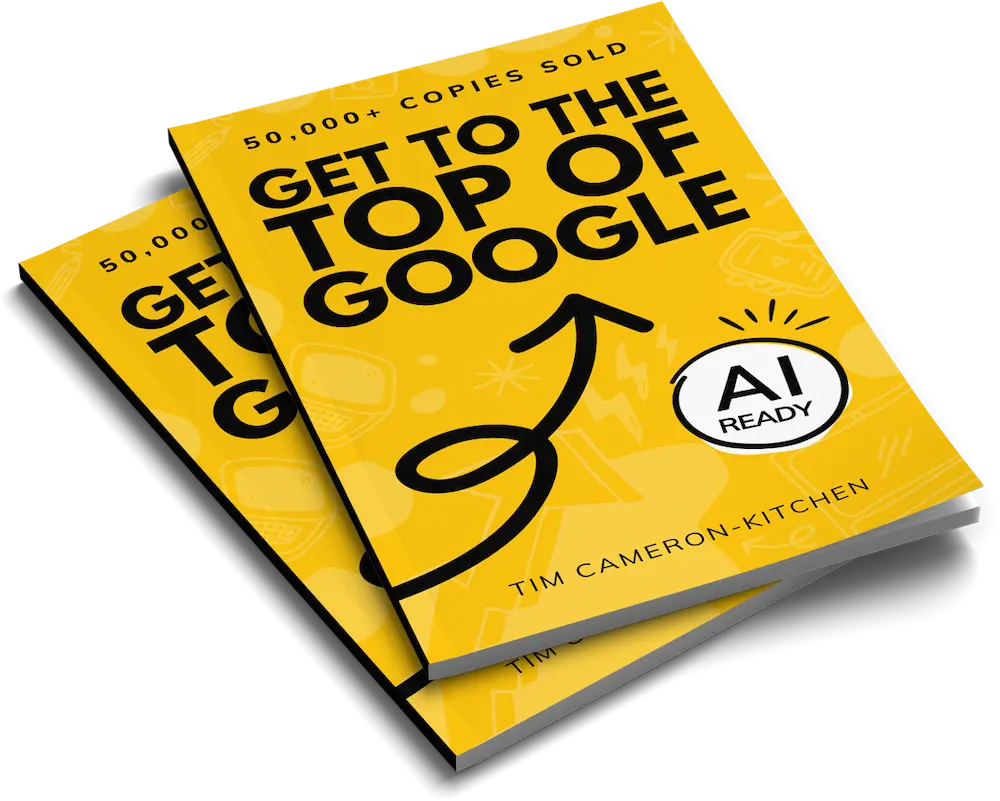
Learn how to get your website to the very top of Google (and turn that traffic into revenue).Get to the top of Google

Smarter, More Intentional Uses of AI Tools in Content Creation
In 2026, we’re entering the smart phase of AI in content marketing.
According to the American Marketing Association, 71% of marketers use generative AI tools weekly. But we’re (thankfully) past the phase of asking ChatGPT to write the entire blog post. Today, the best marketers are using AI to enhance their process — not replace it.
As Abigail Daunton-Johns, Head of Content and Email Marketing at Exposure Ninja, puts it, “People are learning to use generative AI tools better to help them create really quality content.” This includes using AI to:
- Brainstorm and outline content ideas.
- Speed up first drafts.
- Fill in content gaps.
- Repurpose blogs into social snippets.
This isn’t lazy content creation — it’s strategic. It saves time so you can focus on what matters: injecting experience, unique insights, and actual value. The real wins come from marketers who treat AI like a creative partner — not a content vending machine.
Generative AI can help speed up the process, but it’s human insight and lived experience that will turn content from average to impactful. The brands that stand out will be the ones combining AI efficiency with expert perspective and original thought.

Head of Content and Email Marketing
Zero-Click Searches Will Shift Focus to Middle and Bottom-Funnel Content
One of the SEO trends impacting content marketing is the rise in zero-click searches. Google’s AI Overviews now answer many user queries directly on the search engine result page (SERP), allowing users to get the information they need without a single click.
At first, this triggered a wave of panic. But marketers have adapted in 2026.
“You probably don’t want anything that’s so top of funnel that it’s almost obvious,” says Charlie Marchant, CEO at Exposure Ninja. Instead, the focus has shifted to middle- and bottom-of-funnel content — the kind that drives action from users already in decision mode.
That said, top-of-funnel content still plays a key role. “We should still be producing top-of-funnel content because that content has to exist to then appear in the AI search result anyway,” says Abigail Daunton-Johns.
So, what should you do with your time and budget?
- Prioritise middle- and bottom-of-funnel content if you’re aiming for conversions and content marketing ROI. Invest in detailed, expert-led pieces showcasing your value and supporting buying decisions.
- But don’t ditch top-of-funnel content entirely. Use it strategically to build topical authority, rank in AI Overviews, and support your content knowledge base.
Conversational Keywords Will Dominate Search Strategies
Forget stuffing your pages with awkward keywords. In 2026, it’s all about matching how real people type their queries into search engines.
Platforms like ChatGPT, Claude, and Perplexity have changed user expectations. People now ask questions in a more natural, human language. Instead of typing “best pizza restaurants near me,” they can ask more complex, conversational questions like “What’s the best pizza restaurant in Nottingham that offers vegan pizzas and a children’s play area?”
This shift in behaviour is bleeding directly into traditional search engines. Google and Bing are now evolving to better understand natural language, rewarding pages that mirror how users phrase real-world questions.
To stay visible, you’ll need to integrate long-tail, human-first queries into your content.
- Optimise headings and subheadings to reflect conversational phrasing.
- Mix short-tail and long-tail versions of questions within your content to match different search behaviours.
- Use natural, easy-to-read language, prioritising clarity and tone over exact match stuffing.
- Use FAQ sections to target conversational queries and earn featured snippet visibility.
Content Refreshes Will No Longer Be an Afterthought
In 2026, refreshing your content isn’t just good practice — it’s a competitive advantage.
Google’s algorithm now puts serious weight on freshness, authority, and trust. Pages that haven’t been updated in months (or years) are quietly slipping down the rankings, losing traffic to content that’s more relevant, more accurate, and more aligned with what users (and search engines) expect.
“We’re seeing a lot of publications now repurposing all of their content and including expert quotes to bring it in line with E-E-A-T,” says Abigail Daunton-Johns.
Experience, Expertise, Authoritativeness, and Trustworthiness (E-E-A-T) is Google’s framework for evaluating content quality. Originally introduced in 2014 and refined in 2022, it plays a role in how your content performs, especially in YMYL (Your Money or Your Life) sectors like finance, health, or legal.
If you’ve got content that hasn’t been updated in over a year, don’t assume it’s still pulling its weight. Unless it reflects your most current knowledge, includes updated links and stats, and integrates real expert input, it risks being buried by fresher, more relevant alternatives.
Refreshing content actively supports your wider SEO strategy. Your target keywords, internal link structure, and calls to action (CTAs) have likely evolved. Updating your content allows you to align it with your latest goals and ensure every page on your site works as hard as it can to attract and convert traffic.
Long Form Content Is Making a Comeback
Yes, long-form content is back in style, “especially in niche industries where explaining complex topics really matters,” says Abigail Daunton-Johns.
Search engines and users are rewarding detailed, well-researched content. We’re seeing the strongest performance from pillar pages, in-depth guides, and original research reports. These formats showcase genuine expertise and provide comprehensive answers in a single destination. These pages don’t just rank better — they hold attention, build trust, and drive action.
That’s not to say you should only create long blogs. Short-form pieces still grab attention, answer quick queries, and feed social and email channels. The smartest strategies use a mix of short and long-form content — meeting users at every stage of the journey in the format that fits.
Mixed Media Content Will Rule Engagement
2026 is the year we stop treating content as just words.
People don’t all consume information the same way, which is why a one-dimensional content strategy is no longer enough. As Dale Davies, Head of Marketing at Exposure Ninja, explains: “Each person learns in a slightly different way.”
Some people want to skim an article. Others prefer to watch a video or listen to a podcast while they multitask. If your content only exists in one format, you’re unintentionally excluding segments of your audience.
Offering content in multiple formats doesn’t just make it more accessible — it makes it more engaging. When users can choose how they consume your content, whether by reading, watching, or listening, they’re more likely to stick around, absorb the message, and take action.
It also sends powerful engagement signals to Google. Mixed media increases dwell time, encourages interaction, and improves content usability, contributing to stronger SEO performance. For users, it transforms your content from a wall of text into a dynamic experience that’s easier to understand, more memorable, and far more shareable.
Expert-Led Content Is Even More Important
Despite the mass adoption of generative AI tools, trust in AI-generated content is still shaky. In the AMA survey, 46% of marketers expressed concerns about the quality or accuracy of AI-written material.
Users are even more sceptical, especially in industries where misinformation has real consequences. A recent poll found 63% of adult users weren’t confident in the accuracy of health information provided by AI.
As generative AI floods the internet with generic, surface-level content, real expertise is what cuts through. This means showcasing the people behind your content matters more than ever.
Content that includes expert commentary, first-hand experience, author bios, and citations from credible sources will outperform AI-only content in rankings and conversions.
Demand for Video Content Isn’t Slowing Down
Video continues to dominate the content marketing trends in 2026.
According to Wyzowl’s report, 93% of marketers plan to spend the same or more time on video marketing in 2025, and 68% of marketers who don’t currently use video plan to start in 2025.
Why? Because at the end of 2024, 89% of consumers said they wanted to see more videos from brands.
And it’s not just about entertainment. People want to see real faces behind brands. They want transparency, personality, and process. Video helps you show, not just tell, your value. It builds trust faster than a wall of text ever could, and it makes complex ideas easier to explain and remember.
If you’re not already using video, now’s the time to build it into your content strategy. Embed it into blog posts to reinforce key points. Add explainer clips to landing pages to support conversions. Summarise long articles with short-form videos or turn video content into SEO-focused written assets.
Showing up on camera isn’t about going viral — it’s about building credibility, trust, and connection. And that’s exactly what drives action.
Short-form videos, like TikToks, Instagram Reels, and YouTube Shorts, for educational, behind-the-scenes content, case studies, and thought leadership works so, so well.
Head of Content and Email Marketing
Expect to See More Employee-Generated Content
Employee voices are becoming one of the most powerful brand assets in 2026.
As Charlie Marchant points out, “Founder-led brands are already a really big thing.” But this year, it’s not just founders — your team can play a role in building credibility and connection with your customers.
Social platforms are also rewarding personal content. LinkedIn posts from individuals tend to outperform company page posts in reach and engagement.
That’s why smart brands are empowering employees to step into the spotlight. This includes:
- Posting thought leadership and behind-the-scenes content on LinkedIn.
- Hosting or featuring in podcasts to share first-hand expertise
- Appearing in brand videos to humanise messaging.
- Contributing insights, stories, or commentary to blog content.
This shift isn’t about pushing every team member into the spotlight — it’s about tapping into the credibility and relatability they already have.
What These Trends Mean for Your 2026 Content Strategy
The future of content marketing is human-led, AI-assisted, and driven by strategy. If your current approach doesn’t include regular refreshes, expert voices, or a mixed-media strategy, 2026 is the time to change that.
These content marketing trends aren’t just predictions. They’re already shaping the way businesses attract, engage, and convert audiences. The brands seeing the biggest wins this year are the ones embracing AI without losing the human touch and investing in content that’s trustworthy, multi-format, and built for both search engines and people.
If you’re ready to build a scalable, future-proof content marketing strategy, we’re here to help. Request a website and marketing review from our content experts to find out what’s working (and what’s not).
Looking to dive deeper? Read our guide:
Or watch: