
What Is Schema Markup? (And Why You Should Be Using It)


Schema markup is structured data code that tells search engines and AI exactly what your content means, helping them display it more accurately in search results.
For years, schema markup has helped websites stand out in search results by making it easier for search engines to understand exactly what’s on a page.
But with the rise of AI Search tools like Google’s AI Overviews, AI Mode, Perplexity, and ChatGPT, it’s more important than ever. These tools pull answers directly from websites, and schema markup helps them get the facts right.
It might sound technical, but schema markup is easier to use than you think, and the benefits can be huge.
We spoke to Andrew Tuxford, Head of SEO at Exposure Ninja, to break down:
- What is schema markup?
- How it can boost your Search Engine Optimisation (SEO) performance.
- Why it’s essential for AI Search Optimisation.
What Is Schema Markup?
Before we get into schema markup, let’s quickly cover structured data.
Structured data is information arranged in a predictable, machine-friendly format. On the web, it’s a standardised way of describing a page’s content using agreed-upon labels and values.
It’s not the same as your standard webpage text. A human can read “Elite Hair Studio, Birmingham” and instantly know it’s a business name and location. To a search engine bot, that’s just a string of words. Structured data tells the bot “Elite Hair Studio” is the business name and “Birmingham” is the location of the business.
Schema markup is the most widely used vocabulary for structured data online. It was created in collaboration with Google, Microsoft, Yahoo, and Yandex and is maintained at Schema.org. Think of it as a universal “language” (semantic vocabulary) for describing almost anything you can put on a webpage.
There are different formats for adding that vocabulary to a page’s HTML, with JSON-LD being the most common. Visitors won’t see it, but search engines and AI tools will, and they’ll use it to understand exactly what your page contains, its attributes, and how it connects to other known entities.
- Structured data is the concept of machine-readable, organised information.
- Schema markup is the specific vocabulary and format most commonly used to apply that concept to websites.
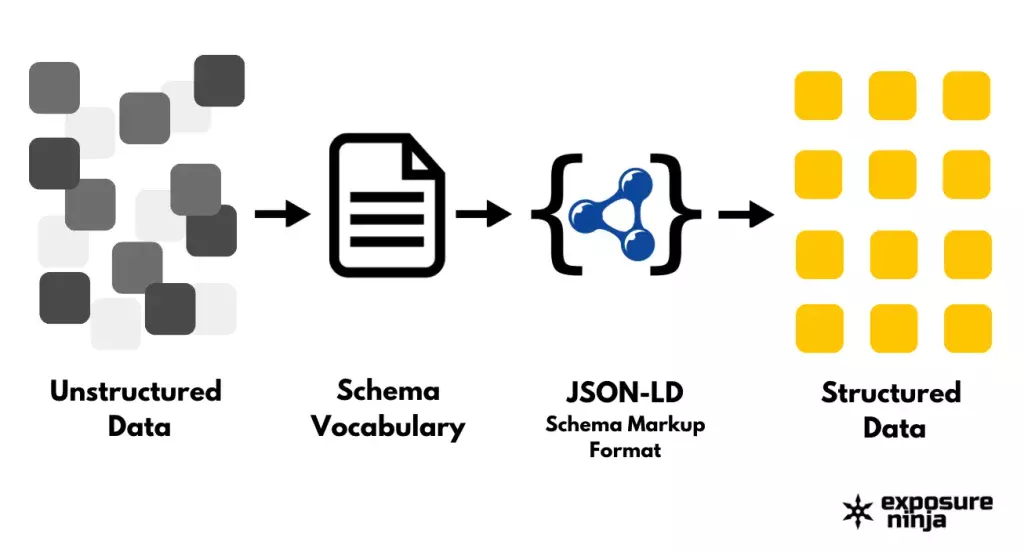
When search engines and AI bots crawl a page, they read the visible content and underlying HTML, then try to interpret meaning from patterns, context, and relationships between words. Without structured data, this process relies heavily on inference, which can lead to partial or incorrect understanding.
Schema markup removes the guesswork from search engine interpretation. Instead of crawling your page and making inferences, search engines can rely on schema to directly identify:
- The page type (product, article, FAQ, event, recipe, etc.)
- Key details such as prices, ratings, or event dates.
- How the content relates to known entities in their knowledge graphs.
Schema markup is behind-the-scenes code that speaks directly to AI and search engine bots. It removes ambiguity, making it crystal clear what a page is about, what it offers, and why it’s relevant.
 Andrew Tuxford
Head of SEO
Andrew Tuxford
Head of SEO
How Structured Data Boosts Your SEO
Schema markup won’t jump your page to position one in the SERPs (search engine results pages), but it does give your SEO strategy an edge by helping search engines understand and present your content more effectively.
Here’s how it works to your advantage:
- Improved Relevance: By clearly labelling your content, schema helps search engines match your pages to the most appropriate search queries, reducing the risk of irrelevant impressions.
- Enhanced Search Listings: Schema powers rich results like review stars, FAQ dropdowns, recipe cards, and event details, making your listings more noticeable and clickable.
- Better Niche Targeting: Schema enables your content to appear for specific, highly targeted searches that might otherwise be missed.
We’ve seen this in action. “One of the clearest examples of schema delivering a measurable SEO win came from a client offering guided tours in the Sahara Desert.
The tours took visitors on multi-day trips, stopping at different landmarks along the way. While the main tour pages mentioned these stops in the text, Google wasn’t always making the connection between the tour and each location, especially for people searching for tours to those specific places.
We added TouristTrip schema to the tour pages. This allowed us to specify the itinerary day by day, mark each stop with its exact location, and link each location to its corresponding Wikipedia page, giving search engines a definitive reference point.
Before the schema, Google wasn’t certain these tours actually visited those sub-locations, so the pages didn’t appear for those searches. After the schema was added, Google could see with certainty that the tours did include those stops and began showing the pages for those queries.
Traffic increased significantly, not just for searches targeting the main destinations, but for searches about the individual places visited along the way,” explains Andrew Tuxford.
That’s the power of schema: ensuring your content is visible and relevant to the right audience.
Schema markup is not a direct ranking factor, but it can impact SEO performance by improving the clarity of the page so bots are more certain about what it covers and provides, and can return it for the right searches.
Andrew Tuxford
Head of SEO
Why Schema Markup Matters for AI-Powered Search
Schema isn’t just an SEO tool anymore; it must be part of your AI Search Optimisation strategy.
In a recent study by Aiso, two fictional websites were tested in ChatGPT:
- One site had comprehensive schema.
- The other had no schema markup.
When ChatGPT was asked for details like company overview, product pricing, CEO background, awards, and contact information, the schema-enhanced site consistently scored higher for accuracy and completeness.
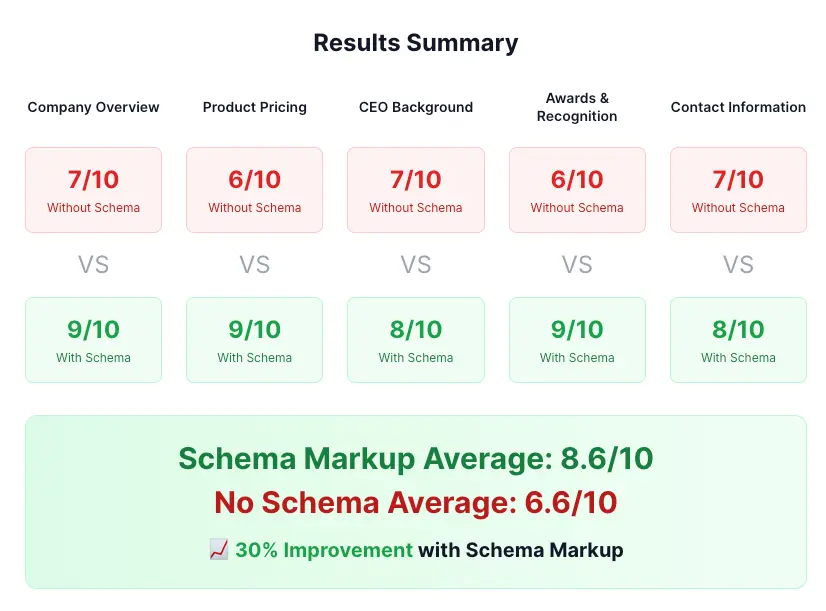
These results aren’t surprising. “AI-powered tools use schema the same way Google does. They read it to understand exactly what a page is about and what it provides. This means less guesswork for the AI bots and much more certainty,” explains Andrew Tuxford.
The key difference is that, instead of displaying your site as a link on a search results page, AI tools can pull your content directly into their answers.
Now, this becomes even more critical with the rise of AI agents, like ChatGPT’s new AI Agent feature. These agents don’t just answer questions; they can perform actions like making purchases or booking appointments.
“For eCommerce, product schema is already hugely important, and with AI agents, it’s going to be even bigger. An AI agent making a purchase will use product schema to understand the details of an item and decide if it’s relevant. It will still read the page too, but product schema will be a major factor in whether your product gets chosen,” says Andrew Tuxford.
When your site has well-structured schema, you make it easier for these AI agents to:
- Find your business in relevant searches.
- Understand your offerings with accuracy.
- Recommend or transact on behalf of the user.
Without schema, you risk being invisible to the next generation of AI-powered shopping tools that could soon be responsible for a significant share of customer decisions and online purchases.
Andrew Tuxford also predicts that schema will evolve to play a bigger role in how AI-powered and conversational search works. “There’s already a schema type called speakable schema, designed for text-to-speech and voice assistants like Alexa. It tells the bot which parts of a page to read out. I can see something similar emerging for AI; schema that specifies exactly which part of your content should be pulled into an AI answer,” he explains.
How to Add Schema Markup to Your Website
Find the Right Schema Markup
Andrew Tuxford recommends starting with Google’s Structured Data documentation, which lists the main schema types Google uses to trigger special features in search results.
“You can click into any of these and get details of what it is, how to add it to your page, and what the rules are. It’s a really useful starting point,” says Andrew Tuxford. This list doesn’t include every schema type out there, but it does cover the ones Google uses to do something specific.
The schema you choose should reflect your business, your content, and your goals, but there are certain types that almost every site should have, like:
- General business schema, like LocalBusiness and Organisation.
- Service schema or product schema.
- FAQ schema so it can appear in the “People Also Ask” section.
- Review schema to highlight your ratings and reviews.
- Article schema for blogs, news posts, or other editorial content.
From there, you can add schema that is specific to your niche. For example:
- Recipe schema for food blogs.
- Event schema for workshops, conferences, or webinars.
- TouristTrip schema for travel and tour operators.
Covering all the relevant schema types for your business makes it easier for search engines and AI tools to understand and accurately present what you offer.
Schema.org also makes it easy to search for and identify the right schema for your specific data requirement. Simply search for the type of data item you’d like to apply to your website, for instance, “contact details,” select the markup returned in the search results, and follow the instructions provided on how to add it to your website’s HTML.
Generate and Add Your Schema Markup
You have three main options for creating schema markup:
- Use Google’s example code. In Google’s Structured Data documentation, click into your chosen schema type and copy the example JSON-LD code. Replace the placeholder information with your own details.
- Use a generator. Tools like Merkle’s Schema Markup Generator let you fill out a form and automatically create the JSON-LD.
- Write it manually. If you’re confident with JSON-LD syntax, you can write your schema from scratch using the documentation on Schema.org.
Google recommends JSON-LD format because it keeps your schema in one clean <script> block, making it easier to read, maintain, and edit. Andrew Tuxford advises keeping it lean: “Don’t get too caught up in adding everything you see, as bloated schema doesn’t help. Only include what’s relevant. That’s the biggest mistake people make after coding errors.”
He also warns against making schema sound like a sales pitch: “Users never see schema. It’s for bots. Overly promotional language in description fields won’t improve rankings. It’s just there to explain the product, service, or content.”
The best place to insert schema is in the <head> section of your page. On WordPress, any plugin that lets you add custom code to the head will work. On custom sites, a developer can add it directly into the page head.
Once it’s in place, schema rarely needs updating unless your details change. For eCommerce, Andrew Tuxford suggests automating it where possible: “If you can set schema to pull values dynamically from your product page, like price or availability, it will always stay accurate without manual edits.”
Testing and Submitting Schema to Google
Validate with Google’s Rich Results Test
It’s a good idea to paste the generated code into Schema.org’s Schema Markup Validator Tool and check that it’s all correct before implementing it on your website. The tool will highlight any broken code and recommend fixes to help you get the best results from your webpage.
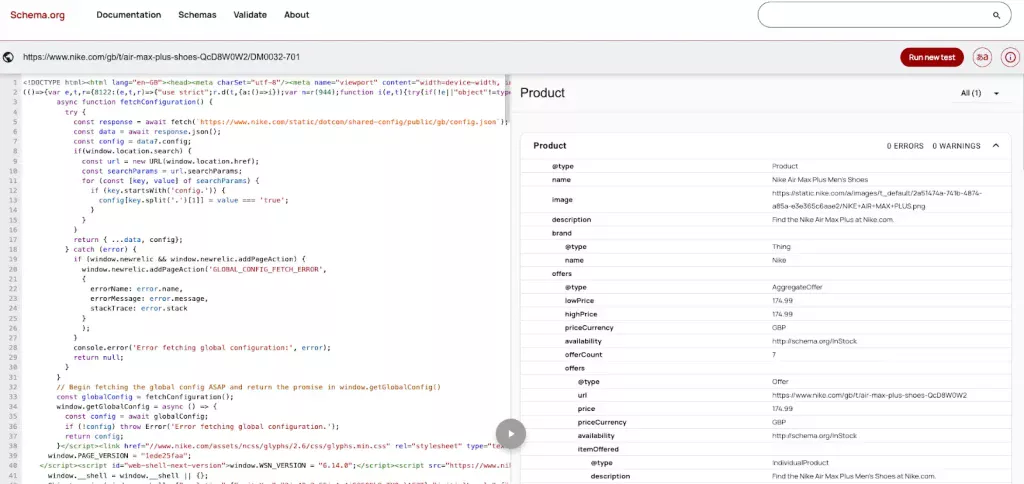
Submit Updated Page to Google Search Console
Once you’ve implemented the marked-up page on your website and are confident it’s working correctly, request a recrawl of your site so that Google can pick up the schema markup as quickly as possible.
Realistically, you shouldn’t expect to see your page ranking better or displaying rich snippets in the search engine results immediately. However, requesting a site recrawl is the quickest way to make these things happen!
You can use the Google Console Help website to find help and advice on submitting your sitemap to Google and requesting a recrawl in just a few simple steps.
Too Technical? Let Our Experts Sort It Out
Schema might be one of the simplest coding languages, but it’s still code. A single missing comma can break it, and a “valid” schema isn’t always an optimal schema.
That’s where we come in. We’ll identify the most valuable schema types for your business, implement them correctly, and ensure they’re working to boost your SEO and your AI Search Strategy.
Request your website and marketing review, and we’ll show you where you can gain the biggest gains.
FAQs
What are the main types of schema markup used for SEO?
Andrew Tuxford recommends: “At a minimum, you want business organisation, your service offering (products or services), FAQs, articles, and reviews to be marked up.” Your industry will dictate additional types, but these apply to almost every business.
How does schema markup improve search engine understanding of content?
As Andrew Tuxford puts it, “Schema markup gives search engines specific, structured data instead of leaving them to guess from your page content. It clearly labels details like your business name, address, and services, so there’s no interpretation needed. This certainty helps them return your page for the most relevant searches.”
How can schema markup influence AI-generated search results?
AI tools pull schema data just like Google. In one study by Aiso, adding schema increased a business’s visibility in ChatGPT’s answers by 30%. The more clearly you feed AI the facts using schema markup, the more often and more accurately you’ll appear in AI-generated answers.
Why is JSON-LD preferred for implementing schema markup?
All formats work, but JSON-LD keeps everything in one tidy block of code. “It’s cleaner, easier to implement yourself, and easier to audit if you need to change something,” says Andrew Tuxford.