How to Learn Marketing

So, you’ve decided you want to learn how to do marketing. There are so many types of marketing, channels, and skills you need — where do you start?
The answer is right here.
If you’re unsure what type of marketer you want to be or where to learn the skills you need to become a marketer, you’ll have a much better idea by the end of this guide.
You’ll learn the importance of product and price, the difference between outbound and inbound, why TOFU isn’t something you eat, and why you may get a higher ROI by learning how to use just one digital marketing channel (rather than several).
If you’re still confused about the TOFU joke, the best place to start your marketing learning is with some of the most popular terms used in marketing.
Key Marketing Terms
The marketing world is full of new terms and snappy acronyms. You don’t need to learn them all right away, but understanding some of the main ones will help you with your marketing learning and help you understand this guide more easily.
- Marketing Channel — what you use to get your message out (for example, direct mailing, social media or email.
- Call-to-Action — a prompt for the reader to act (for example, making a purchase, learning more or requesting a quote). This could be within an ad, on a website or another piece of content.
- Marketing Funnel — the journey consumers take through your marketing before becoming a customer
- Lead Funnel — the journey consumers take to become a lead
- Sales Funnel — the journey consumers take to become a paying customer
- TOFU, MOFU, and BOFU — Top of Funnel, Middle of Funnel and Bottom of Funnel
- AIDA — awareness, interest, desire, action
- Lead Magnet — a free item (physical or digital) or service that is given to consumers in return for contact details
- SEO — search engine optimisation
- CRO — conversion rate optimisation.
[us_page_block id=”10921″ remove_rows=”1″]
How to Learn Marketing
Everyone learns differently, so you won’t likely want to take some of these steps. This is completely fine — learn how you want to learn.
Luckily, there are multiple places where you can learn digital marketing in a way that suits your learning style, including online learning in the form of courses, groups, blogs, videos and more.
If you prefer to learn in person, you can join a course or complete a degree, attend events, read marketing books or become an intern or apprentice; the possibilities are endless!
Learn Marketing Online
Hundreds of online marketing resources are available, including marketing guides like the one you’re reading now, forums, groups and blogs.
Learning marketing online means learning at your own pace, often for free. If you like to use lots of different resources to learn, online learning is probably for you.
Study Marketing Courses
There are plenty of online courses, both free and paid. Some free courses offer paid certification, but you can still access the course content for free.
Depending on your courses, you can get a wider view of marketing as a whole or choose a course that focuses on a specific marketing skill. If you go down the paid route, this could become quite pricey.
You could combine a paid marketing course with free courses focusing on more niche subjects or learn the basics from free courses and spend money to improve your skills in the areas that appeal to you most.
It’s important to note that free online courses are often created by companies who want you to use their tool — Google offers Google Ads courses so that marketers can make the most of the platform and spend their marketing money there, too. Don’t let this deter you — they’re still high quality, but just expect them to sway in favour of the platform that put them together.
Free courses include:
Paid courses include:
Join Marketing Forums and Groups
Marketing forums and groups are a great way to ask questions about marketing or find inspiration from your peers.
These groups and forums can take some time to get used to if you haven’t used them before.
There are often rules to follow, which vary from place to place. When you join, the rules might be shared with you or included in a different part of the forum. Here’s an example of the rules from the Reddit subreddit, r/marketing.

Another piece of etiquette is that before you ask a question in a group or forum, it’s important to use the search function to check if someone has asked it before. These spaces can get clogged up with users asking the same questions repeatedly, and those who run the group, as well as the people in the group, can become annoyed.
Suppose you want to get recommendations on the best software to use to help you with your copywriting. If you type “software” into the Reddit search bar while in the r/copywriting subreddit, you can see where people have asked a similar question or where they have made recommendations.
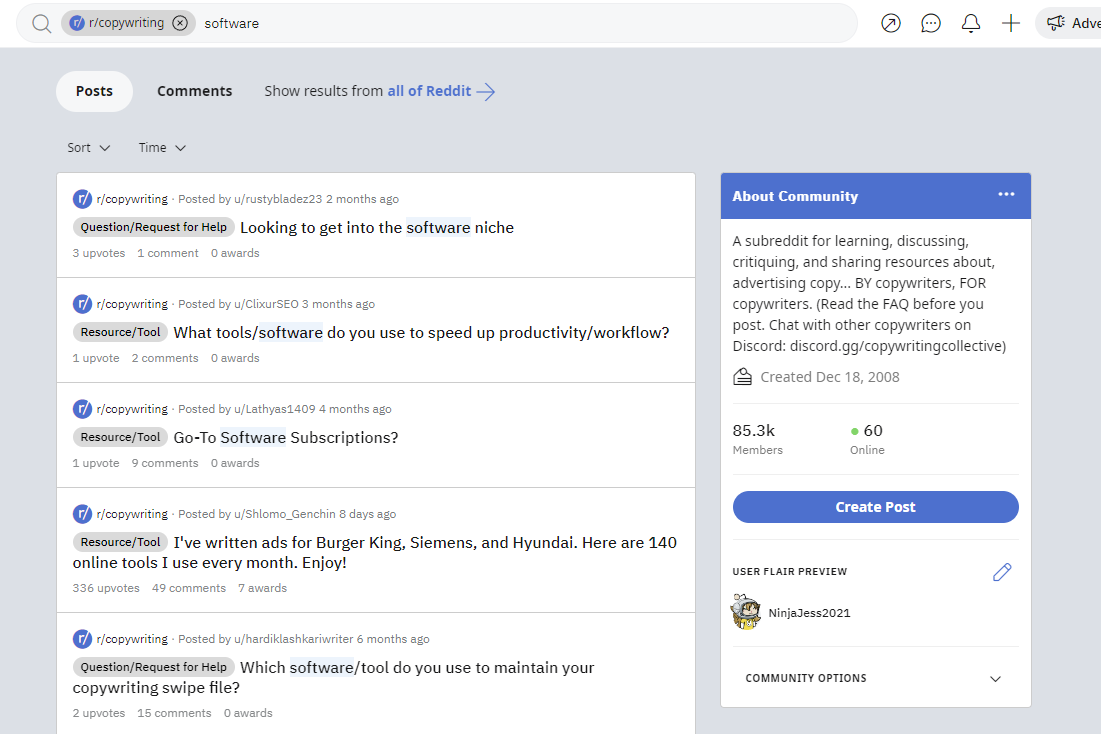
This saves you from waiting for an answer to your question and from annoying other people in the forum or group. This doesn’t mean you shouldn’t ask questions, but just make sure it hasn’t been asked 100 times before.
Some marketing groups include:
Popular marketing forums include:
[us_page_block id=”10921″ remove_rows=”1″]
Read Marketing Blogs
Marketing blogs are a great way to get up-to-date news and insights into the marketing industry. Many of these blogs are written by marketing professionals who have years of experience in the marketing world. Many of them have a built-in search function to easily find the topics you want to read about.
Not only do marketing blogs share educational content, but they also share news and potentially more personal insights into the marketing world based on the writer’s own experience.
It’s worth looking at a few different blogs to see which one appeals to you the most.
Some of our favourite blogs include:
- Digital Marketing Institute blog
- Exposure Ninja’s Digital Marketing blog
- Copyblogger
- Smart Insights blog
- Search Engine Journal.
Watch YouTube Videos about Marketing
YouTube is a fantastic place to learn about many skills, especially marketing. If you want to see a visual demonstration of how a tool works or see a marketer in action, YouTube is the place to go.
As with blogs, you may need to watch a few different YouTube channels before you find one you enjoy watching.
Some of our favourites are:
And, of course, The Exposure Ninja YouTube Channel (we might be biased, but over 47,000 subscribers can’t be wrong!)
Learn Marketing In-Person
If you’d prefer to learn marketing in person or combine online and in-person learning, you can do this in several ways. You can attend events, become an apprentice or intern, study courses in person, read marketing books and more.
Attend Events
From low-key meet-ups to huge conferences, plenty of marketing events are held globally.
- Find a local marketing group on Meetup
- Find events on Eventbrite
- Attend a marketing conference, such as Brighton SEO, DigiMarCon or the B2B Marketing Expo.
At local meet-ups, you can connect with other marketing professionals in person and learn more about the industry. At bigger events and conferences, you can attend talks about areas of marketing you’re interested in learning about and talks that cover other aspects of working in marketing.

Example schedule from the Brighton SEO conference.
Become an Apprentice or Intern
Many businesses offer apprenticeships or internships for young marketers.
According to the UK Government, an apprenticeship is “a paid job where the employee learns and gains valuable experiences”, and alongside the job, apprentices spend 20% of their work time completing classroom-based learning.
Internships are slightly different to apprenticeships — there’s no element of studying involved if you become an intern.
The easiest way to find an internship or apprenticeship near you is to search “marketing internship near me” and see what comes up. You may also want to keep a list of companies you’d like to apprentice or intern with and check their website for upcoming opportunities.
Read Marketing Books
If you’re the type of person who learns through reading, plenty of marketing books are out there to help you learn marketing.
Some of our favourites include:
The best way to learn marketing is a combination of all the above methods. There’s no single or best way to learn marketing — it’s all about what works for you.
Speaking to the team at Exposure Ninja, we discovered that everyone learnt their marketing skills differently.
I jumped right into freelance work with no experience in marketing. I could string a sentence together, so I decided to try my hand at freelance writing, which is when I started reading blogs online about keywords and the basics of SEO. Then I found Exposure Ninja, which is where I’ve learnt everything else (PR, more SEO, strategy, analysing data, etc.). Essentially it’s all been about trial and error, figuring out things as I went along and not being afraid to give it a go”.
— Hannah Whitehouse, Senior Content Marketer at Exposure Ninja
[I learnt marketing] by recruiting brilliant marketers! Seriously, I learnt so much by speaking to candidates and learning about their experiences. Since then, by being immersed in campaigns and learning from our specialists as much as possible, and following recommended podcasts and videos. And a MASSIVE amount of trial, error and asking questions!”
— Lucy Thornber, Account Manager at Exposure Ninja
Now you’ve found some places you can study marketing, you’ll need to get some practice in.
[us_page_block id=”12282″ remove_rows=”1″]
Practice
Marketing is all about getting your “reps” in — you’ll likely go through a lot of trial and error before you find a strategy that works for you.
The best way to grow your skills is by putting your learning to use. Create test campaigns, analyse the results, improve your next campaign and repeat. Now is the time to make mistakes and learn from them.
You’ll likely need to change or adapt your methods throughout your career, so you’ll be learning and practising marketing forever – even experienced marketers are practising daily by testing new ideas, experimenting with new trends and growing their skills.
Starting a blog is one way you can practise your new skills. Depending on how far you take it, your blog will help you learn content creation, copywriting, design, backlinking, SEO and more. Since you are your own client, it doesn’t matter if you make mistakes — the more you make now, the better.
Another way you can practise your marketing skills is by starting social media accounts based on one topic or running alongside your blog if you go down that route. It will help you get to grips with the ever-changing algorithms and mean you can test many different ideas to see what works.
If you’d like to get more hands-on experience with marketing, you can reach out to a local charity to see if they’d benefit from your marketing skills. As a volunteer, you’ll likely have more flexibility than a full-time role, but you’ll still have guidelines and restrictions to work to, teaching you how to adapt your skills to an individual company.
Once you’ve got some practice, you may decide to go for a marketing certification.
Certifications and Qualifications
Getting marketing certifications adds a sense of credibility to all your learning and will potentially help you find a job in marketing.
You’ll likely get a certification as part of paid courses, in person or online. Some free courses also offer certification.
When looking at the different marketing certifications out there, it’s worth considering the following:
- The type of marketing you want to get certified in
- The level that your marketing skills are at
- Your budget.
If you’re looking for free online certifications, some of the most popular are from Microsoft, Google, HubSpot and Semrush. A related course accompanies all these certifications. These free certifications are well-known and respected in the industry but may not hold as much weight as paid certifications.
These platforms offer other free marketing courses that don’t result in certification but are still helpful in expanding your skills.
If you’re looking to go after a paid certification, the most well-known are from the Digital Marketing Institute, Online Marketing Certified Professionals, Hootsuite, Meta, The Chartered Institute of Marketing and the Interactive Advertising Bureau.
Read our detailed guide on How to Choose the Best Marketing Certification for You.
One of the best ways to find out about the best certifications is to ask other marketers — which brings us to our next way to learn marketing.
Grow Your Network
Connecting with and meeting other marketers is a great way to grow your skills.
Having other marketers around you allows you to ask questions, find out more about the marketing industry and make genuine friends with the same interests or career goals as you.
Don’t be afraid to reach out to marketers who are more experienced than you — they were in your position once, and they know how it feels to be new to the marketing world.
You can meet other marketers online, on sites like LinkedIn or in online groups and forums. There are also lots of opportunities to meet other marketers in person at local meet-ups or large conferences.
If your marketing studies take you to a college or university, you’re guaranteed to meet other marketers while you’re studying.
Keep Learning and Improving
The world of marketing is constantly evolving. There are new platforms, trends and technologies appearing every day. Don’t be afraid of algorithm changes or realising something you learnt a couple of months ago is now outdated — instead, learn to adapt and innovate to keep up with the changes.
An essential aspect of creativity is not being afraid to fail.”
— Edwin Land, LIFE magazine (27 October 1972)
[us_page_block id=”10921″ remove_rows=”1″]
Important Marketing Skills
Every area of marketing requires different skills. Some skills you’ll already have, some you may need to learn or work on, and some you may not want to learn at all, depending on how much you decide to specialise as a marketer.
Communication Skills
Marketing is all about communication. Communication skills are the cornerstone of any marketer’s skill set.
First, you must communicate your brand’s message and why people should buy from you.
Once they convert, you need to communicate with them after purchase — think email communication confirming delivery times, social media channels being used for complaints, customers needing assistance once their product arrives…the list goes on.
Then, you want to keep in touch to ensure they become a repeat customer.
According to Masterclass’ Guide to Effective Communication, the four most important skills you need to develop to improve your communication are your:
- Listening skills
- Empathy
- Nonverbal communication
- Teamwork.
In marketing specifically, you also need to be persuasive and able to communicate ideas both verbally and in writing.
How to Learn Communication Skills
Like any skill, communication can be learned — even if you’re an introvert. We promise.
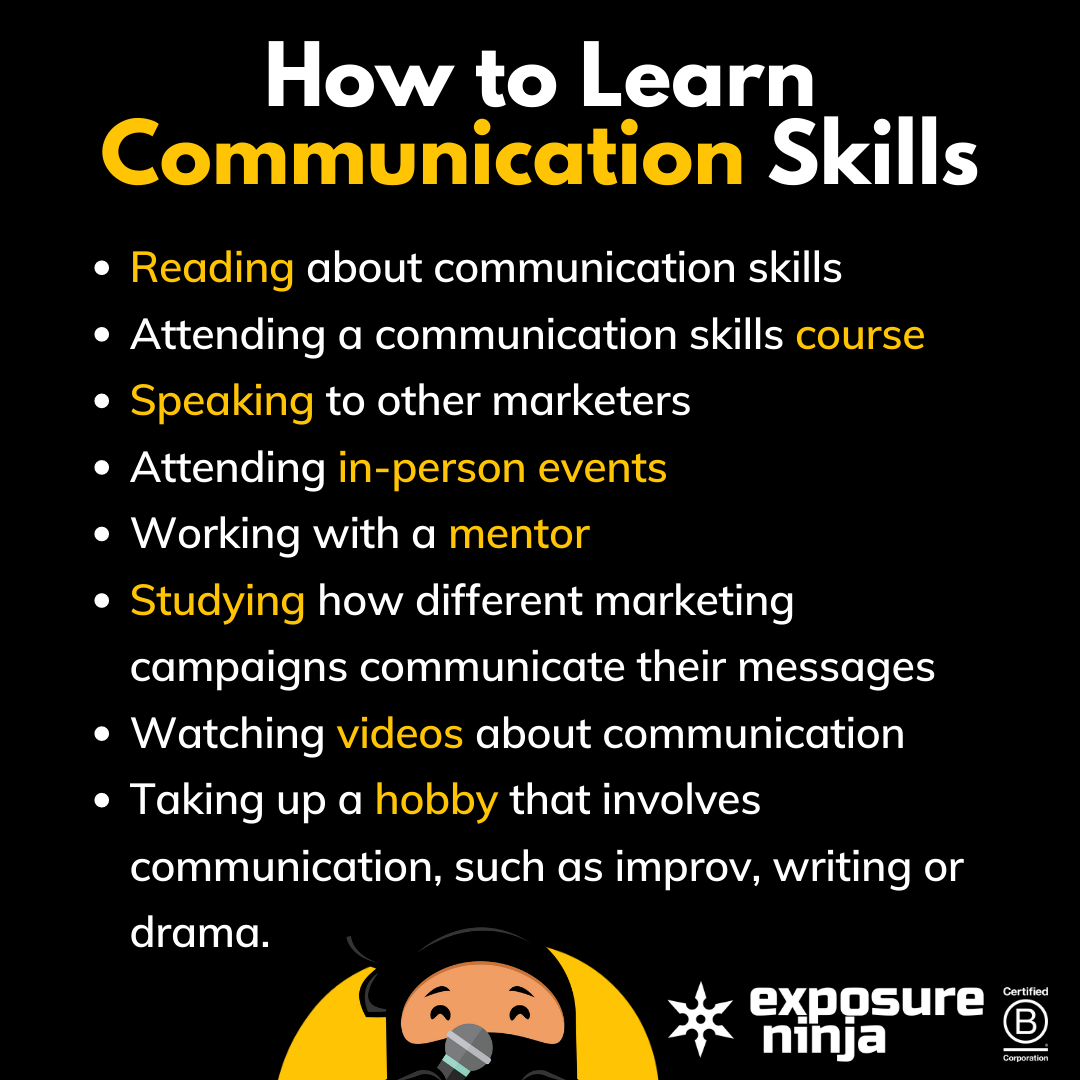
Ways you can learn communication include:
- Reading about communication skills
- Attending a communication skills course
- Speaking to other marketers
- Attending in-person events
- Working with a mentor
- Studying how different marketing campaigns communicate their messages
- Watching videos about communication
- Taking up a hobby that involves communication, such as improv, writing or drama.
This video shares 12 ways you can improve your communication skills and covers active listening, body language and what you say.
This video focuses on sales communication and is a few years old but still useful to marketers. It explains different ways to communicate the same message and how to improve your communication.
Practising with real people is the best way to improve your communication skills. These skills will help you in your day-to-day marketing career and working with others.
Planning Skills
Marketing is all about planning. You need a solid marketing strategy laid out in advance to put everything together for a successful campaign.
Why is planning important to marketing in particular? There are plenty of reasons.
First, marketing campaigns need to be planned ahead of time. Your industry will likely promote different products at different times of the year or have busy and quiet seasons. Preparing for and around these times and seasonalities is a far better way to do your marketing than just doing whatever, whenever, and hoping for the best.
Your planning skills will also need to extend to the people who need to be involved with the campaign. You may need a designer to be more involved with one campaign over another or need the help of a website developer to set up landing pages on your website.
If you choose a multi-channel approach, you need to plan how these channels will work together and how the same message should be adapted for different channels.
Marketing is already fast-paced — don’t make it worse with a lack of planning.
Important planning skills in marketing include:
- Organisation
- Evaluation and analysis
- Research
- Discipline
- Drive and self-development
- Goal-setting.
These skills work together to ensure you know the limits of your marketing campaign, plan accordingly and set realistic goals for said campaign.
At Exposure Ninja, we use a few different tools to help us plan campaigns, including Teamwork and G-Suite. You can make your project planning easier by using marketing planning tools, but remember, the tools are just that — tools. They can’t do all the planning for you.
How to Learn Planning Skills
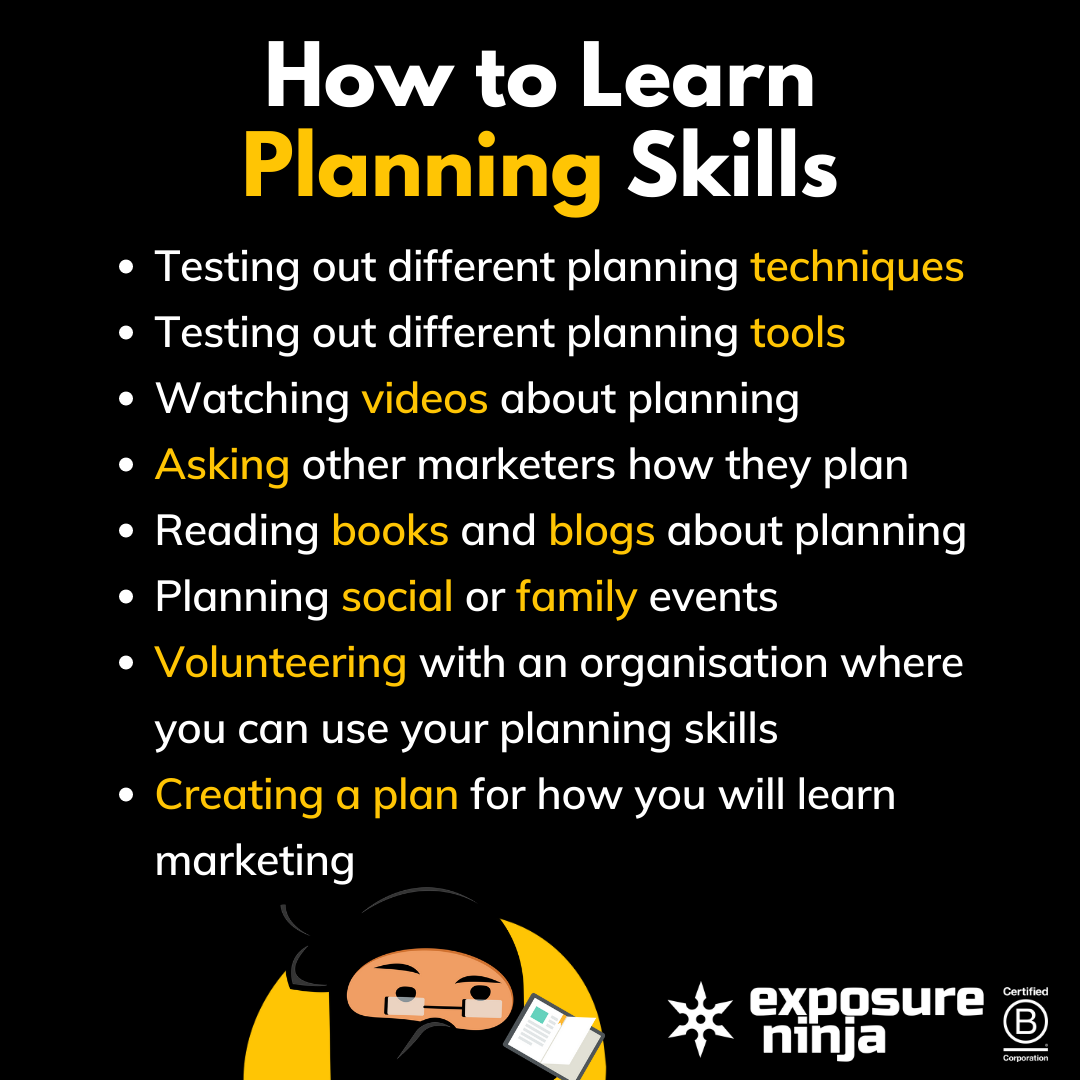
You likely already have some planning skills, even if you think you’re not good at it. Some other ways you can improve your planning skills are:
- Testing out different planning techniques
- Testing out different planning tools
- Watching videos about planning
- Asking other marketers how they plan different aspects of their role
- Reading books and blogs about planning
- Planning social or family events
- Volunteering with an organisation where you can use your planning skills
- Creating a plan for how you will learn marketing.
As with other skills, planning takes time to learn. As there are so many different ways to plan, it takes some time to figure out what works best for you. Some people prefer to write everything down in a physical diary, whereas some prefer to use paid tools online. It’s all about what works for you.
This video covers some time management principles that will help you build a good foundation to stack your other planning skills on top of.
If you’ve always struggled with planning, all is not lost. You may have to approach planning differently and play into your strengths and weaknesses.
If you’d like to be in a leadership or management role in the future, then you should also consider how your planning methods will integrate with a wider team — if you only plan on paper, then you’ll need a way to share this plan with your team.
Writing Skills
Nearly all aspects of marketing use writing skills, including blogs, press releases, emails, policy writing, creative briefs and much more.
These skills include:
- Persuasive writing — helping you persuade consumers to buy your product or service
- Informational writing — to explain and describe your product or service
- Formal writing — for press releases, whitepapers and policy documents
- Informal writing — for communicating with consumers.
Different marketing channels also need different skills. How you write an informational article will differ from how you write a caption for a social media post. In marketing, you’ll need to be able to write lots of different types of content, including:
- Website copy
- Blog articles
- Brochures and flyers
- Ad copy
- Brand guidelines
- Product descriptions
- Social media posts
- Emails and newsletters
- Reports
- Case studies
- Press releases
- Presentations
- User guides and manuals
- eBooks
- and more.
This is a long list, but it still doesn’t cover all the different types of writing you may need to do in a marketing role.
How to Learn Writing Skills
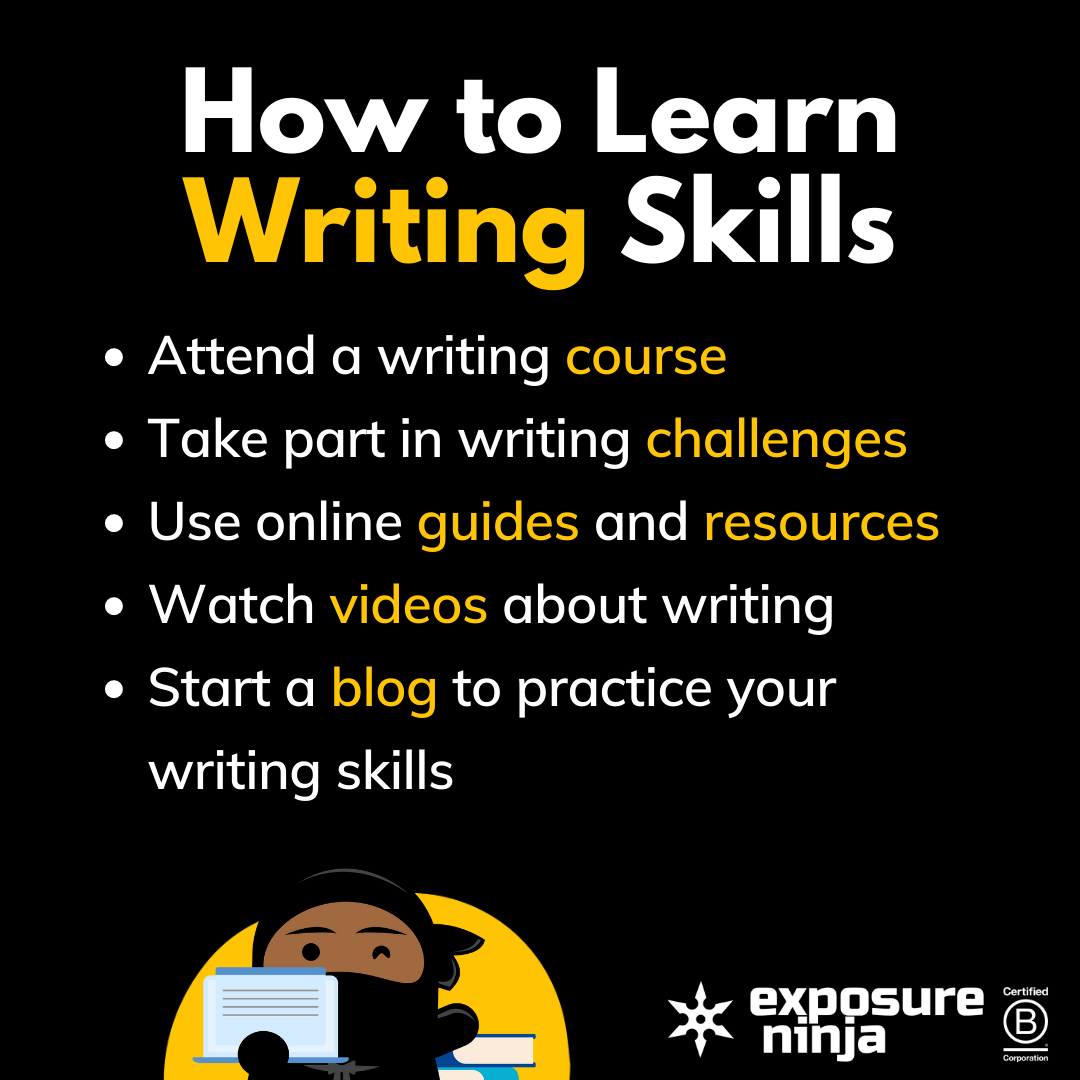
There are plenty of ways to learn copywriting, and practising your writing can often be done from the comfort of your own home.
- Attend a writing course (online or in-person)
- Take part in writing challenges
- Use online guides and resources
- Watch videos about writing
- Start a blog to practise your writing skills.
This video tells you everything you need to know about copywriting, or, as one commenter said, “I feel like you just turned a year’s worth of content into seven minutes.”
Design Skills
Design skills in a list of marketing skills may come as a surprise to you, but understanding which elements of marketing involve design and the design process behind each one will help you become a better marketer, even if you don’t go down the design route.
Areas of marketing that use design are:
- Websites and landing pages
- Emails
- Social media
- Branding
- Digital ads
- Print and publications
- UX design
- Slides (Powerpoint, Google Slides, etc).
How to Learn Design Skills
You can learn design skills in a multitude of places, especially online.
- Study design courses (online or in-person)
- Get familiar with the design principles
- Watch videos on design
- Connect with other designers
- Look for inspiration and study designs you like
- Study designer’s work on websites like Behance and Instagram.

When it comes to design, you’ll want to start with the fundamentals and then explore different areas that interest you, such as website design or brochure design.
Even if you don’t want to become a designer, it’s important to understand the design process so you can work with designers more effectively when communicating ideas to a designer or giving feedback.
This video explains the fundamentals of design with lots of visual examples.
Public Relations Skills
If you go down the PR marketing route, there are multiple public relations skills you need, including:
- Communication
- Writing
- Interpersonal skills
- Presentation skills
- Planning
- Creativity and initiative.
In PR, you need to come up with newsworthy, interesting stories about your brand, pitch them to publications and follow through on the creativity displayed in your pitch.
How to Learn PR Skills
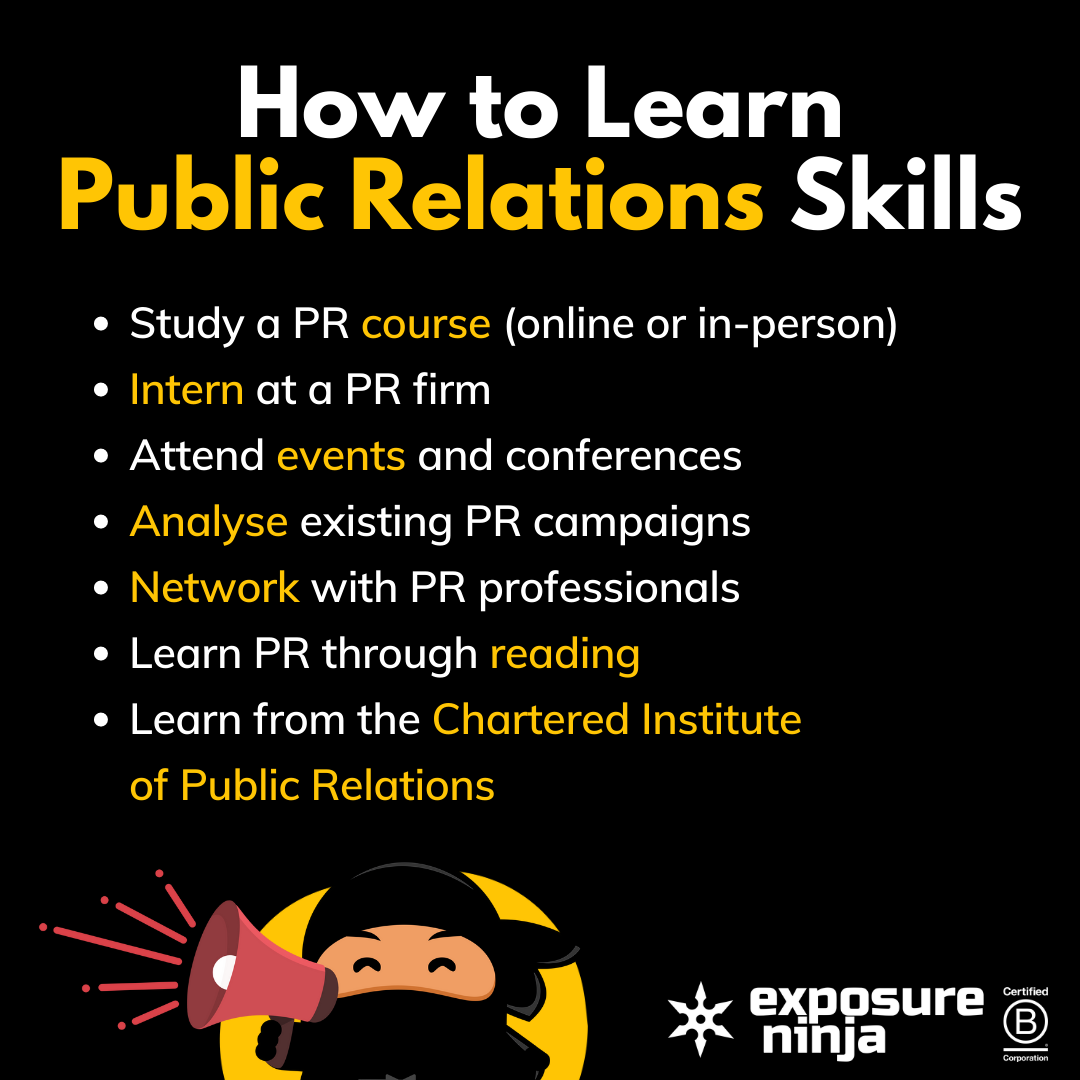
There are several ways you can learn PR skills. The best way to learn these skills is by practising and studying other digital PR campaigns.
- Study a PR course (online or in-person)
- Learn from the Chartered Institute of Public Relations
- Intern at a PR firm
- Attend events and conferences
- Analyse existing PR campaigns (good and bad)
- Network with PR professionals
- Learn PR through reading.
Technical Skills
Although marketing involves a lot of creative skills, you also need some technical skills.
These skills range from analysing the data behind a campaign to uploading content to a website.
Even if you don’t understand every technical aspect of a website, it’s essential to have a basic understanding so you can communicate your marketing needs to the people with the skills needed to make your changes.
The areas of marketing you need technical skills for include the following:
- Analytics Tools (such as Google Analytics)
- Content Management Systems (CMS)
- Image and file management
- Search engine optimisation
- Web or app development
- UX design
- Database management
- HTML, CSS and other coding languages
- A/B testing.
How to Learn Technical Skills
There’s a wide range of technical marketing skills, and it’s highly unlikely that any course will cover them all.
It’s best to focus on one at a time and look up resources for each individual area. Some areas, such as web development, will need much more hands-on experience than others.
- Online or in-person courses
- Online guides
- Video tutorials
- Hands-on experience as an intern or on personal projects.
Sales Skills
As a marketer, you essentially have a sales role, just more behind the scenes. It’s your job as a marketer to help move consumers down the sales funnel towards a purchase. Some of the sales skills you need as a marketer are:
- Persuasive writing
- Presentations and pitching
- Interpersonal skills
- Problem-solving
- Creativity.
How to Learn Sales Skills
There are certain sales principles that you can learn, but it mostly comes down to practice. You can study sales techniques, read about sales strategies and watch videos about sales. Ways you can improve your sales skills include:
- Studying a sales-focused course
- Reading books on sales techniques
- Watch videos about sales
- Practice sales writing.
You could even join a debate group or spend a few months interning with a sales team to help you understand the ins and outs of the sales process and how they communicate with customers. As a result, the way you market to customers will improve.
[us_page_block id=”10921″ remove_rows=”1″]
Soft Skills
Also known as interpersonal skills, soft skills help you interact with others in your workplace. Even if you decide to become a freelance marketer, these skills are important.
- Flexibility
- Spoken and written communication
- SMART analysis
- Emotional intelligence
- Objectivity
- Time management
- Giving and receiving criticism
- Teamwork and collaboration
- Multitasking
- Decision making
- Organisation
- Attention to detail
- Problem solving.
You don’t need all these skills, but a combination of these will help you communicate more effectively with potential customers, team members and clients.
How to Learn Soft Skills
Choose a few soft skills you know you have and some you’d like to have. Once you have this list, use it to research resources that will help you learn to advance these skills. You can do this via the usual channels — reading, watching, studying, or through more unique channels.
Unique ways to learn soft skills include:
- Picking up a new hobby
- Volunteering
- Taking part in local events
- Joining a local sports team
- Doing activities that engage your brain (puzzles, quizzes, etc.).
So, how do these activities help? Let’s take joining a sports team, for example. You’ll need to learn to be part of a team, make in-the-moment decisions, deal with conflict, plan strategies and more. You can then transfer all these skills to a career in marketing.
Finance Skills
Marketers need financial skills. Why? Every aspect of marketing has a cost, whether that’s a physical cost, such as paying for digital ads, getting brochures printed, or the cost of time spent on a project. You’ll need to budget for the following:
- Paid media (adverts, PPC)
- Campaigns
- Events and conferences
- Physical marketing materials (brochures, leaflets)
- Outbound costs (such as direct mailing postage)
- Marketing tools.
How to Learn Finance Skills
You can learn the finance skills you need for marketing by creating mock/test budgets, looking for advice from other marketers or researching different marketing budget techniques online.
You can learn finance skills by:
- Creating test marketing budgets
- Speaking to other marketers
- Watching videos explaining marketing budgets
- Learning how to use a spreadsheet program such as Excel.
Management Skills
As you progress through your marketing career, you may want to manage your own team. As a manager, there are certain skills you will need, including:
- Planning
- Organising
- Delegating
- Co-ordinating.
Being a marketing manager means you need a wide knowledge of marketing and the skills to get the best from your team. As with other skills, management skills can be learnt.
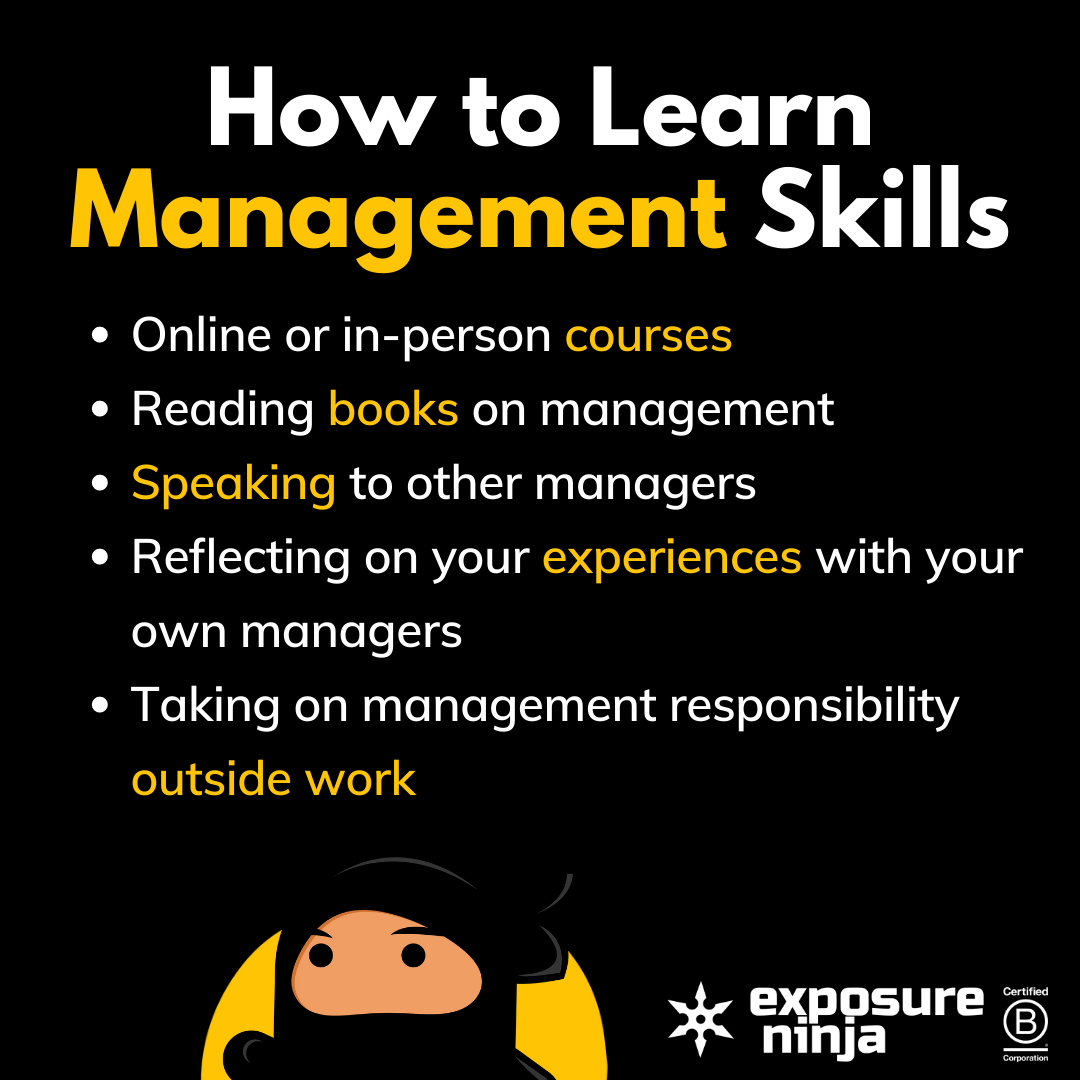
How to Learn Management Skills
When you become a manager, it’s important to remember that other people will be relying on you. It would be wise to take part in an in-person or online course to teach you some management basics to ensure you give your team the best chance at success.
- Other ways you can learn management skills are:
- Reading books on management
- Speaking to other managers
- Reflecting on your experiences with your own managers and identifying what you’d like to replicate or remove in your own management role.
- Taking on management responsibility outside work.
When taking on management roles outside of work, you should look for opportunities to step up in situations you normally wouldn’t, and ask for feedback from those around you.
If you volunteer in your free time, look for opportunities to take on more responsibility or take new volunteers under your wing. If you always avoid helping to plan the family holiday, then take the lead this time around.
These might sound basic, but they’ll help you build these skills in a comfortable environment that’s hopefully slower-paced than a work environment.
[us_page_block id=”10921″ remove_rows=”1″]
Leadership Skills
Many marketing leadership skills cross over with soft skills. Leadership is just as much about being able to work with people as it is about your marketing skills. Skills that are crucial for leaders include:
- Visioning
- Inspiring
- Coaching
- Team-building.
As a leader, you want to ensure your team can work at their best. In marketing, this often involves making sure they can flourish creatively, too.
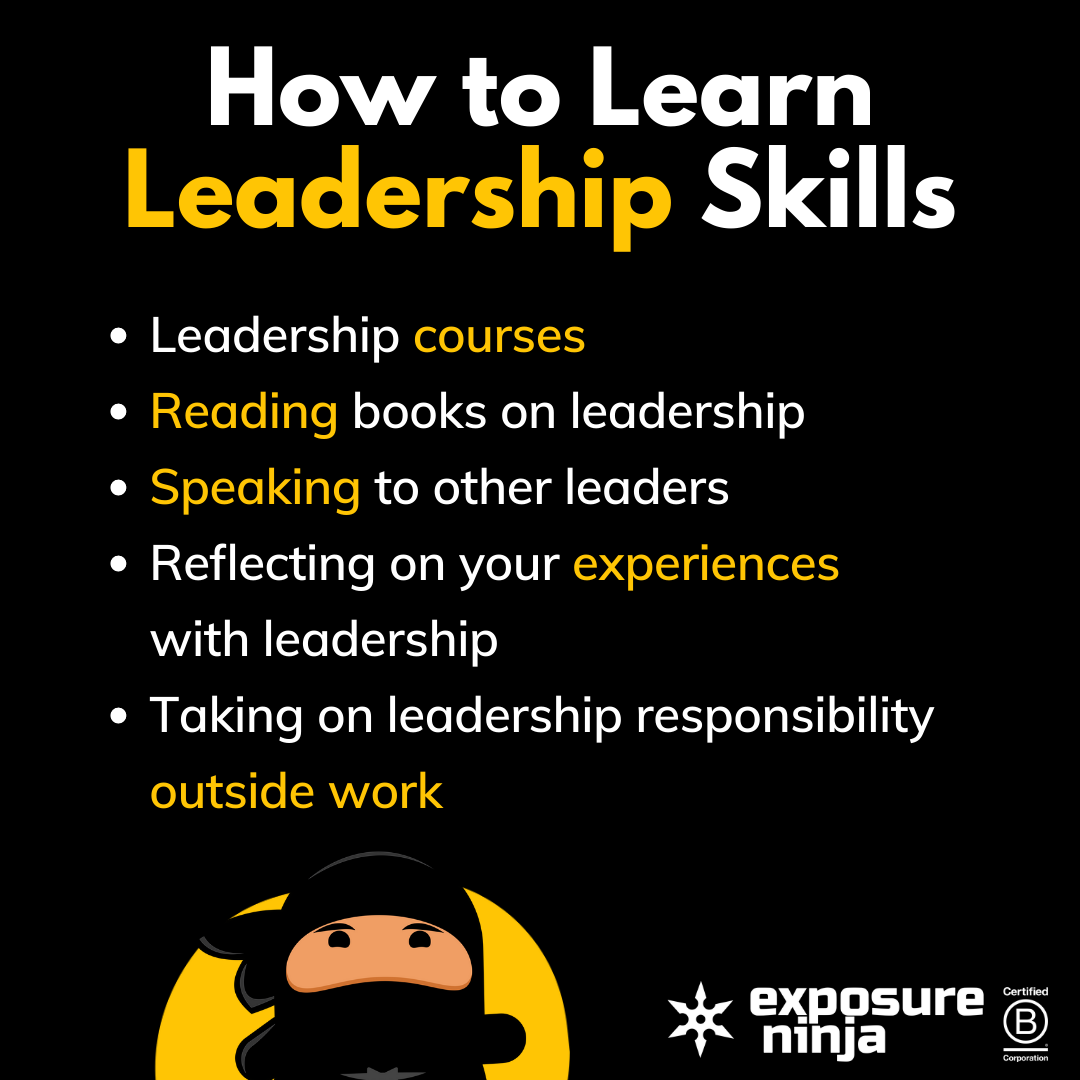
How to Learn Leadership Skills
As with management, leadership courses can be invaluable when leading a team. Other ways you can learn leadership skills are similar to management:
- Reading books on leadership
- Speaking to other leaders
- Reflecting on your experiences with leadership and identifying what you’d like to replicate or remove in your own leadership role.
- Taking on leadership responsibility outside work.
It’s important to note that you can learn all marketing skills on the job, too. You may find that you have many skills in one area that help you get a job, but as your career develops, you need to focus on new skill sets. In any good marketing role, you should learn and develop your skills daily.
Now you know what it entails to learn marketing, how to make the most of your learning and how to develop individual skill sets to help shape your marketing career.
What’s Next?
- Get to grips with how you can create a ninja content strategy.
- Learn more about email marketing and how email automation works.
- Find out how you can learn SEO completely free.