Digital Marketing for SaaS Companies: 8 Proven Strategies

The SaaS industry is growing fast , 2026 estimates from major research firms range from roughly $375 billion (Fortune Business Insights) to $435 billion (Mordor Intelligence), depending on methodology and market definition. As the industry grows, so do the number of SaaS products and businesses. So how can you set your business apart from the crowd, and how can you compete with industry leaders like Adobe, Salesforce and Dropbox?
It’s completely possible for you to make your mark in the SaaS industry by supporting your product with an excellent and strategic marketing strategy.
We’ll be covering the best tactics you can use to promote your SaaS company in 2026, including:
- Creating an in-depth content marketing strategy
- Harnessing the power of free trials
- Optimising your website for SEO
- Turning your website into a conversion machine
- Hitting your audience with a top-notch email marketing campaign.
- Appearing in AI search tools like ChatGPT, Perplexity and Google’s AI Overviews
- Running paid advertising for scalable acquisition
- Building visibility through review sites, integrations and partners
Don’t worry if this sounds like a lot. You don’t have to start doing all eight of these right away. Decide which are most important to you and work through them in priority order. The table in our recap suggests where to start, depending on your stage.
What Is Digital Marketing for SaaS?
Digital marketing for SaaS covers every online channel a software company uses to win and keep customers: content, SEO, free trials, email, AI search, paid ads, review sites and partnerships.
What makes it different from traditional B2B marketing is the subscription model. A one-off sale ends at the signature, but a SaaS customer can cancel next month. That means your marketing has to do more than generate leads. It has to bring in people who’ll convert from a trial, stay, and upgrade over time, which is why metrics like trial-to-paid conversion and net revenue retention matter as much as lead volume. We cover those metrics later in this guide.
Before You Start: Define Your Ideal Customer and Positioning
Every channel in this guide works better when you know exactly who you’re selling to. Before you spend on content, SEO or ads, write down:
- Your ideal customer profile (ICP): the type of company that gets the most value from your software, by industry, size and the problem it’s trying to solve.
- Your buyer personas: the people involved in the decision, such as the day-to-day user, the budget holder and anyone who signs off on security or IT. Each has different questions.
- Your positioning: what you do, who it’s for and why it’s better than the alternatives, including spreadsheets or doing nothing.
- Your offer: how people start using your product, whether that’s a free trial, a freemium plan or a demo.
This gives every strategy below a clear target. It’s also what stops you naming your product something nobody searches for, as you’ll see in Strategy 1.
Strategy 1: Content Marketing That Builds Authority Through the Buyer Journey
It’s important to remember that as a SaaS company, you’re servicing a certain industry. The people in this industry might not know they need your software just yet, but they will likely be asking questions related to your product and industry.
Getting them onto your website via these types of questions is a great way to expose them to your software.
Let’s take monday.com, for example. For years, it called its product a “Work OS” (it now calls itself an “AI work platform”). That sounds really cool, but are people searching for the term “Work OS”?
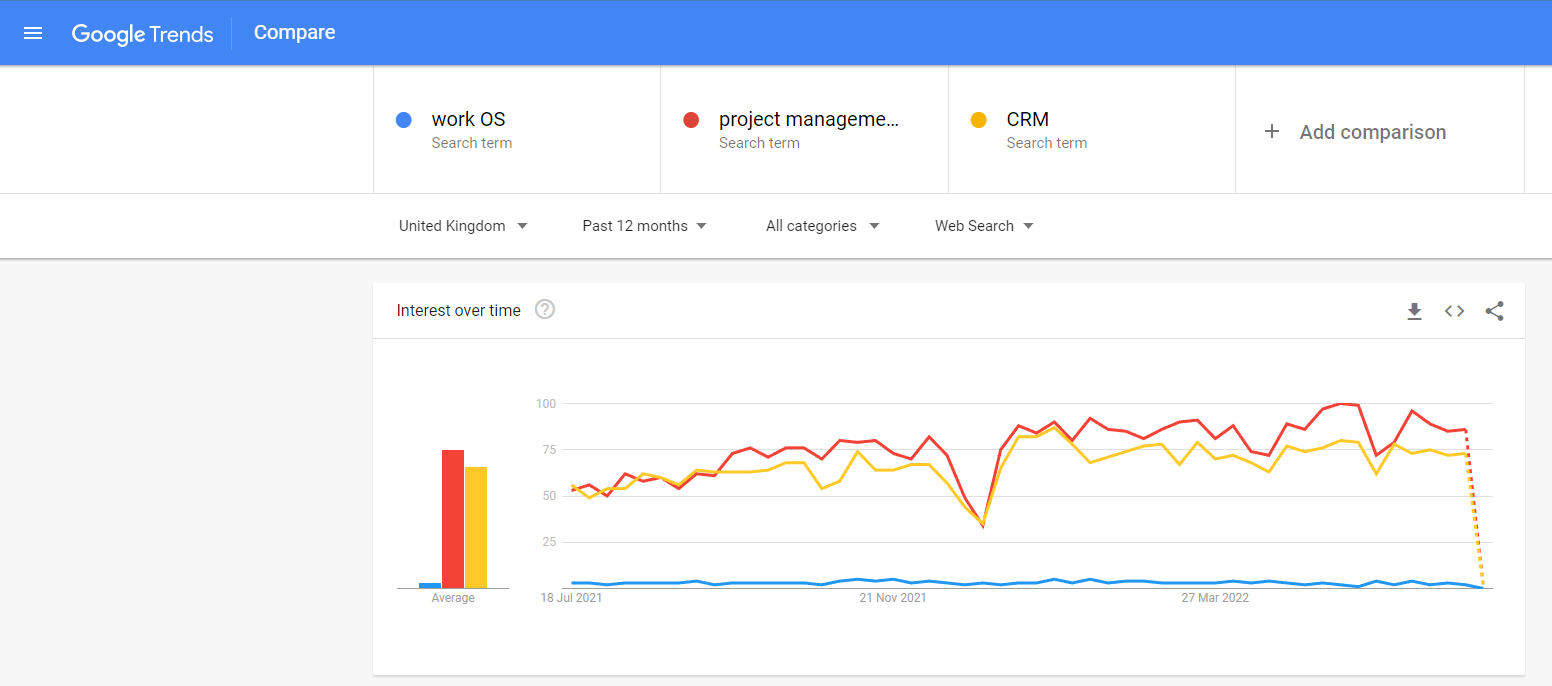
No, they’re not. But they are searching for terms related to the service monday.com offers : project management tools and CRM systems.
So how does Monday get customers when it calls its product a name that no-one is searching for?
It does this using content marketing.
Monday created a complete guide to project management, which it can use to bring in traffic from search terms such as “project management guide“.
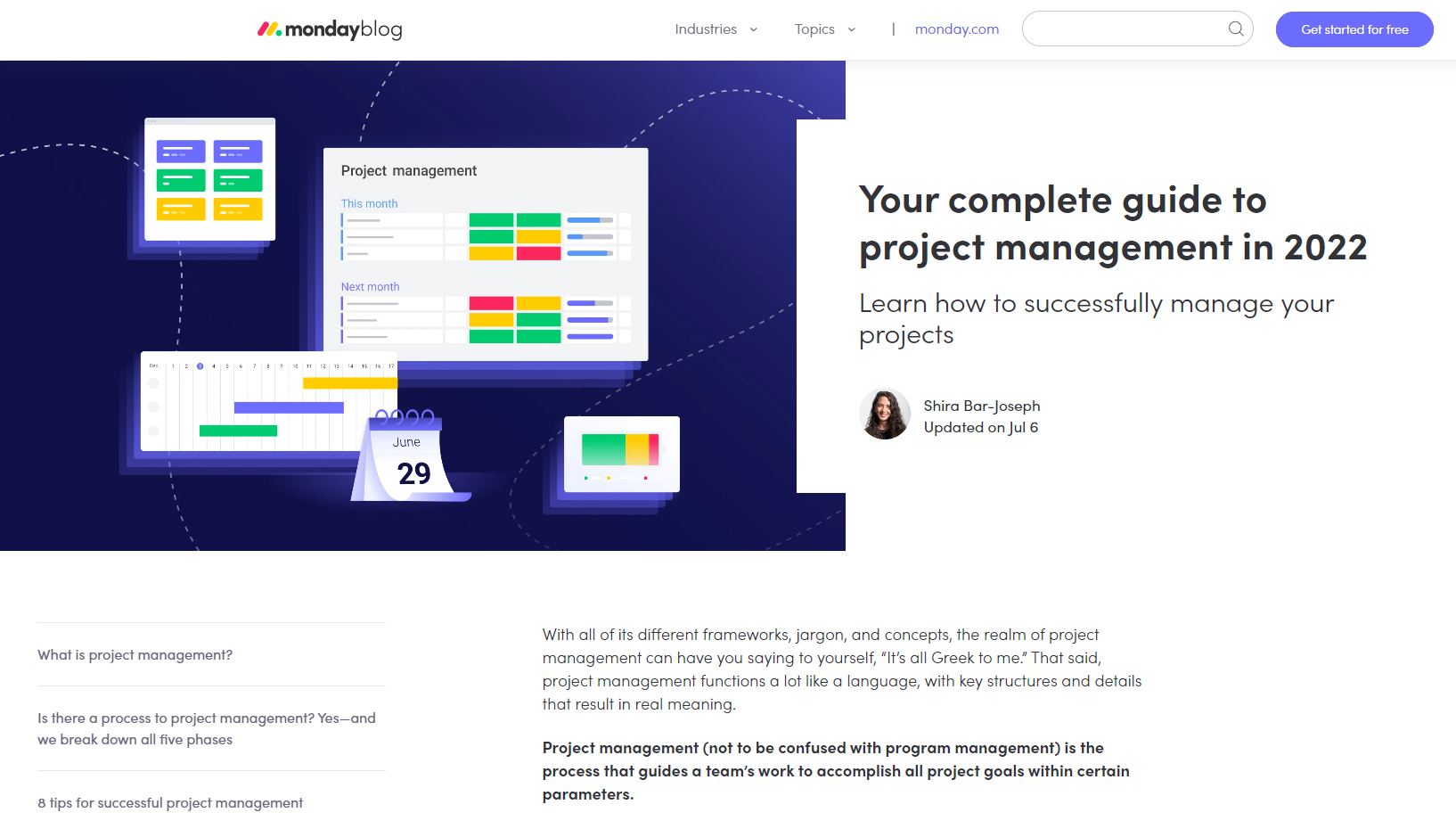
Not only is this guide useful, but it also gives Monday the chance to pitch the project management aspect of its “Work OS“.
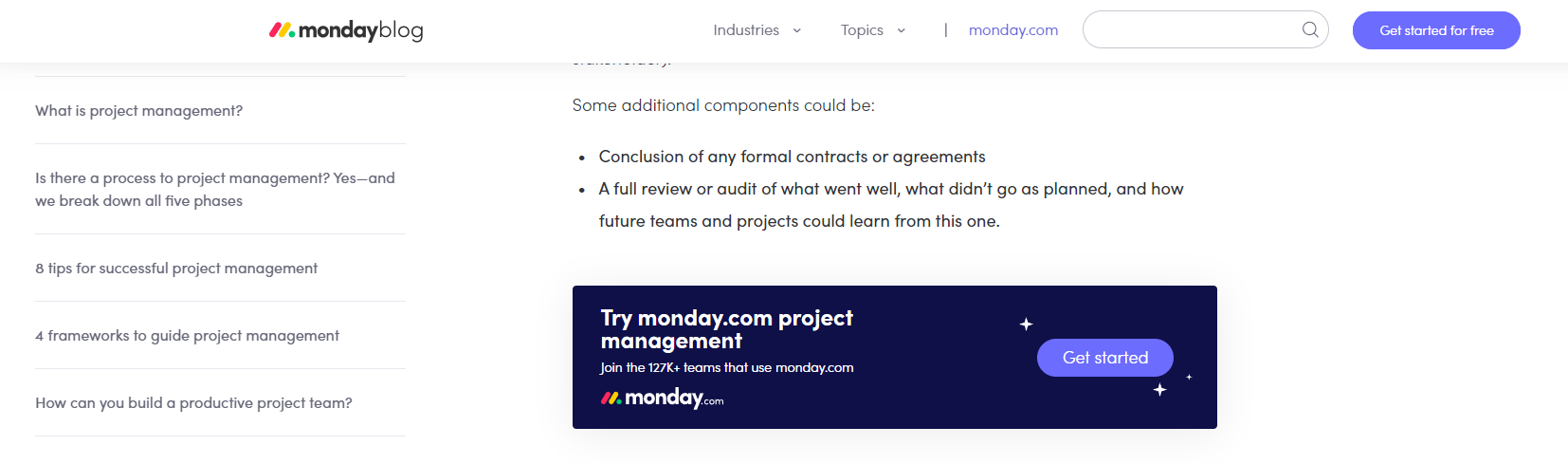
It includes calls-to-action (CTAs) throughout the guide, letting readers know that if they decide they want to use project management software, Monday offers this service.
It has blogs and guides focusing on different aspects of its business, bringing in people who might not know what it offers but are in the market for its products.
It’s important when creating your content marketing strategy to really consider whether your ideal customers will know what to search for when searching for the software you offer.
If you want to call your product a different name, such as Monday’s “Work OS“, you need to remember that most people won’t be searching for that. Make sure you have enough blog content that ranks on Google on your website so your customers can find you. Maybe in a few years, everyone will be searching for a “Work OS“, but right now, that’s not the case.
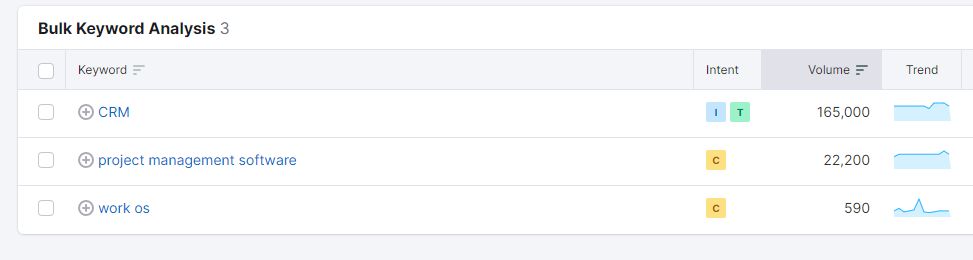
You can use a keyword tool like Semrush* or Moz’s Keyword Explorer tool to check the search volume of different keywords relating to your business.
In the US, for example, “CRM” gets around 165,000 searches a month and “project management software” around 550,000, while “work OS” gets around 1,600 (Semrush, October 2026).
SaaS companies also have the challenge of making customers aware they have a problem that needs solving, or that there’s an easier way of doing things. You know that your software will make their lives easier, but they might be clueless.
Let’s use Dropbox as an example.
Their main offering is file storage. In a world that is becoming more digital, many businesses have adopted flexible working or the work-from-home model, and people may not have access to a server when working from home.
At this stage, they want to move files around but don’t know that Dropbox exists. They search Google for “document sharer“, and Dropbox serves them with this page:
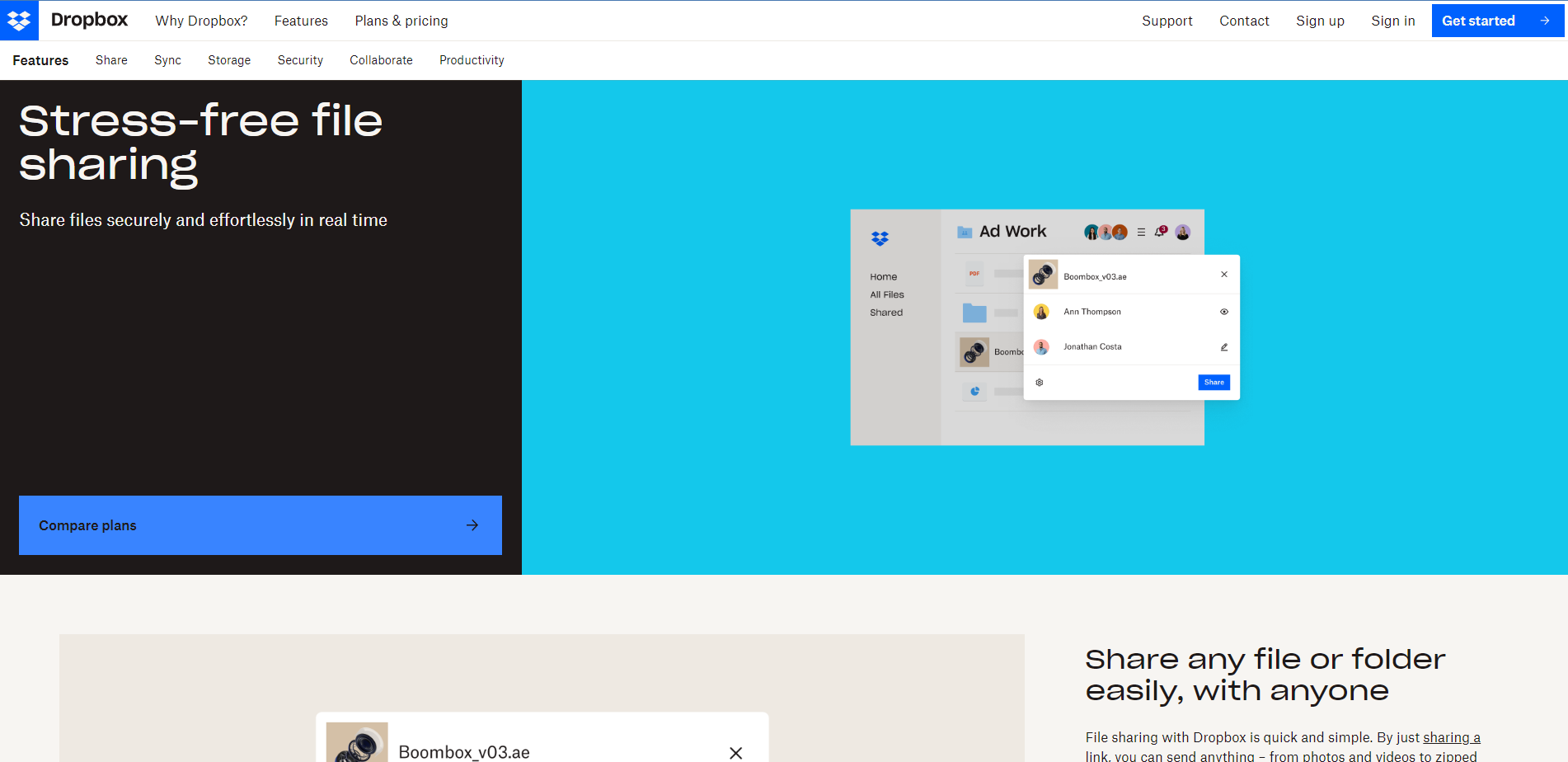
They’re now aware they can get “stress-free file sharing” from Dropbox. With a well-optimised page, Dropbox now has a new customer.
(This Dropbox page isn’t particularly well optimised for sales, but we’ll cover how to ensure your website is optimised for conversions later in this guide.)
There are so many different types of SaaS companies out there that it would be impossible to list every topic you could cover for your own SaaS company.
We can, however, share a few examples of blog post topics to inspire your informational content.
- What is a CRM?
- What’s the best accounting software?
- How to manage a team
- Should I use a CMS for my small business?
- Which is the top HR software?
- [Product] vs [Competitor]: which one should you choose in 2026?
- [Product] alternatives: 7 tools worth considering
We can also teach you to do killer keyword research to ensure you know exactly what your customers are searching for, and how you can get them on your website.
A note on content format for 2026: bottom-of-funnel comparison content (“[Product] vs [Competitor]”, “[Product] alternatives”) is now the highest-converting SaaS content type, alongside integration/use-case pages (“[Product] + [Integration]”) and customer success stories structured to win featured snippets. Building these formats into your content plan alongside the informational topics above will do more for pipeline than informational content alone.
Strategy 2: Free Trials and Freemium for Product-Led Growth
Free trials are your super-power as a SaaS company.
Your customers will likely want to spend a bit of time with your product before committing to purchase, and a no-obligation, no-credit-card-required free trial is the perfect way to go.
But isn’t half the point of a free trial to get customer details so you can follow up with them later?
Of course it is. But you can do that without requiring their card details, and follow up with them without their phone number.
You want to make your free trial process as low friction as possible. Limit the information you ask for when someone is signing up for your free trial.
Once they’ve registered, you can send a follow-up email asking if they’d like someone to talk them through it. This is a much better way to get your customer on the phone than calling randomly when they might not have time for you.
If they take you up on this call, you have the opportunity to show your software off to its full potential and give them a more tailored experience based on their job role and industry.
If they turn down the call, it could be they want to experience your software for themselves, and ask questions at a later date. Send follow-up emails throughout the free trial asking how they are getting on, and if they have any questions.
Free trials are only half the picture in 2026. Product-led growth (PLG) , where the product itself, not a sales team, drives acquisition, conversion, and expansion , has become table stakes. Most SaaS companies now offer trials, freemium tiers, or self-service options as standard. The businesses winning in 2026 pair PLG with sales-assisted intelligence: using product usage data to flag high-intent trial users for a well-timed, well-informed sales touch, rather than relying on pure self-serve or pure sales-led motions alone.
Bonus: How to Reduce Trial-to-Paid Churn
You can offer an additional incentive to free trial users by offering a discount once their trial ends. It’s worth putting a deadline on this offer so they are more willing to convert sooner. For example, “Get 25% off your first year” if they purchase within 30 days of their trial ending.
Strategy 3: SEO for SaaS to Capture High-Intent Buyers Before Competitors
To get potential customers to your website, you need to have a good SEO strategy in place. This will help you get free, organic traffic from search engines and, when done well, can result in a steady flow of traffic for years to come.
Search engine optimisation helps your website appear in Google’s search results. If you create high-quality content, whether that’s well-designed landing pages or detailed guides, you’ll have a better chance of reaching the top of Google.
Google’s algorithms are complex and change by the hour, but there are some tactics you can use to give yourself the best chance of ranking.
How to Do Keyword Research for SaaS
As discussed in the content marketing section , keyword research is extremely important.
It’s vital to target keywords in the industry that your software is for, as well as to use common terms your ideal customers are searching for.
If you describe your project management software as a “productivity powerhouse“, that’s nice, but no one will be searching for that when looking for a project management software.
Step 1. Make a list of topics related to your software. If you offer accounting software you already have a keyword to start with : “accounting software“.
You can then expand on this, depending on the more niche aspects of your business. For example, “accounting software for small businesses“.
You may also come up with some keywords with different intent.
“Buy accounting software” shows purchase intent. They’re ready to buy.
“Top 10 accounting software in 2026” shows commercial intent. They’re comparing products similar to yours.
“What is accounting software” shows informational intent. They want to learn more about products similar to yours.
It’s tempting to only focus on purchase-intent keywords, but most of your traffic will come through informational searches. It’s how you handle those search queries that will improve your chances of converting that visitor.
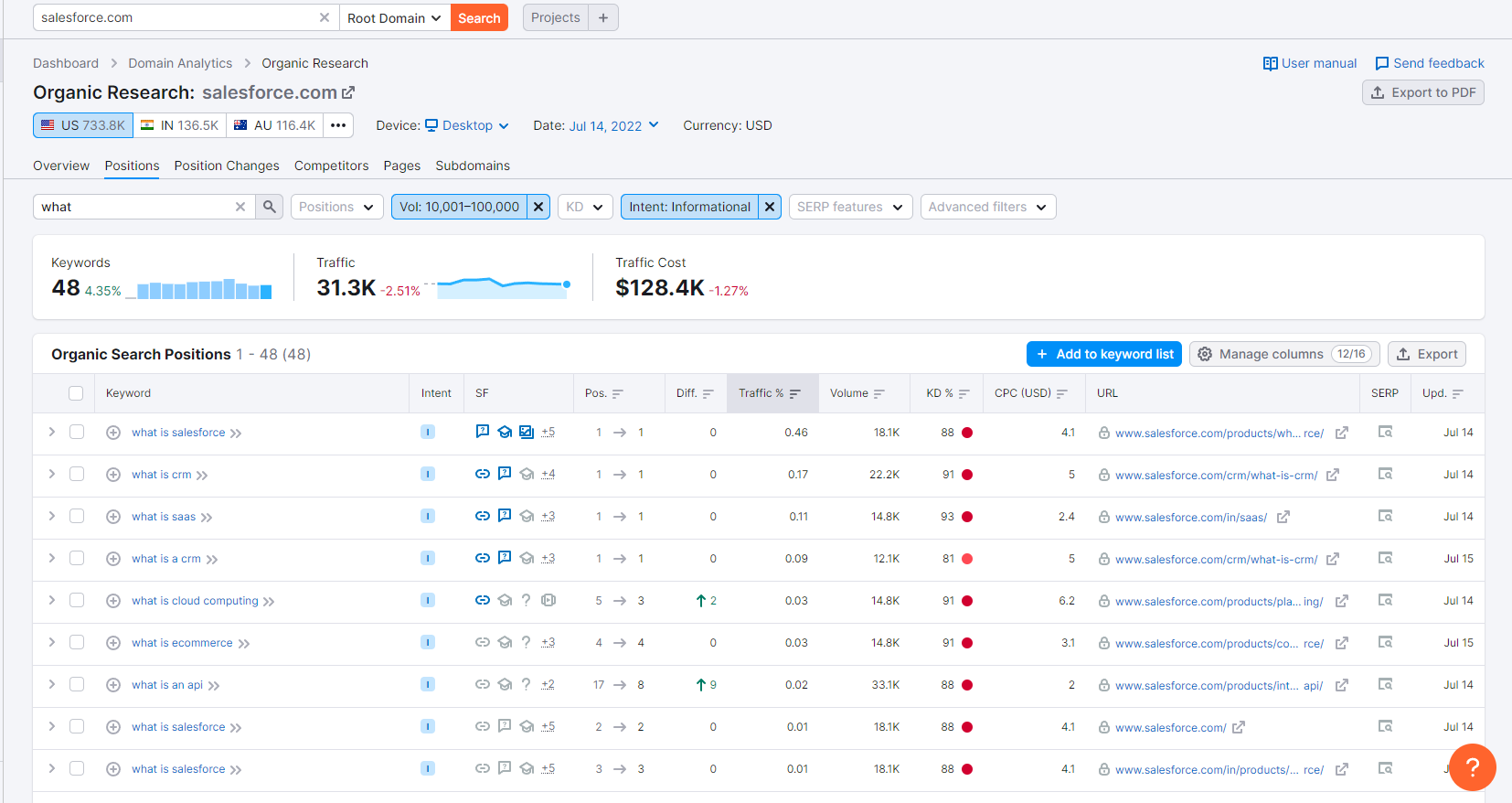
Step 2. Find keywords your site is already ranking for. If you have a site set up already, you can use a tool such as Semrush* to see which terms you are ranking for. If you don’t have a site just yet, or you feel like your existing one needs an overhaul, why not request a free, no-obligation quote from our SaaS website development team?
This will give you an idea of the terms people search for when they land on your website.
Note: you can filter your organic keywords to see the types of questions searchers are asking when they land on your website. For this search, we filtered by informational keywords with a search volume of between 10,000 and 100,000, that include the term “what”.
Step 3. Find keywords your competitors are ranking for. Again, you can do this easily using a tool like Semrush. Input your competitor’s website URL, and the tool will bring up a list of keywords your competitor is ranking for, as well as the pages that are ranking for those keywords.
Pay close attention to the type of content that is ranking. If they are ranking for a guide, you’ll want to create a better, informative guide based on that keyword. If a product page is ranking, you’ll want to optimise a product page for that keyword.
This is a super simple way of doing keyword research. If you want to learn to do keyword research like a pro, read our keyword research guide.
How to Create SEO Content That Captures SaaS Buyer Intent
As discussed earlier, your content marketing strategy is a key element of SEO. When it comes to SaaS digital marketing, you want to share lots of detailed guides on your product and the industry your product serves. We’ve previously taken a SaaS company from $0 to a $33 million exit using the power of content.
You can use your keyword research as a springboard for this. Often, longer keywords work well for long-form content, such as a blog or guide. It makes more sense to create a guide on “how to improve team productivity” than awkwardly fitting that keyword onto a product page.
As well as the keyword research techniques used above, you can also use tools such as Also Asked or Answer the Public to see the questions your customers are asking around a keyword.
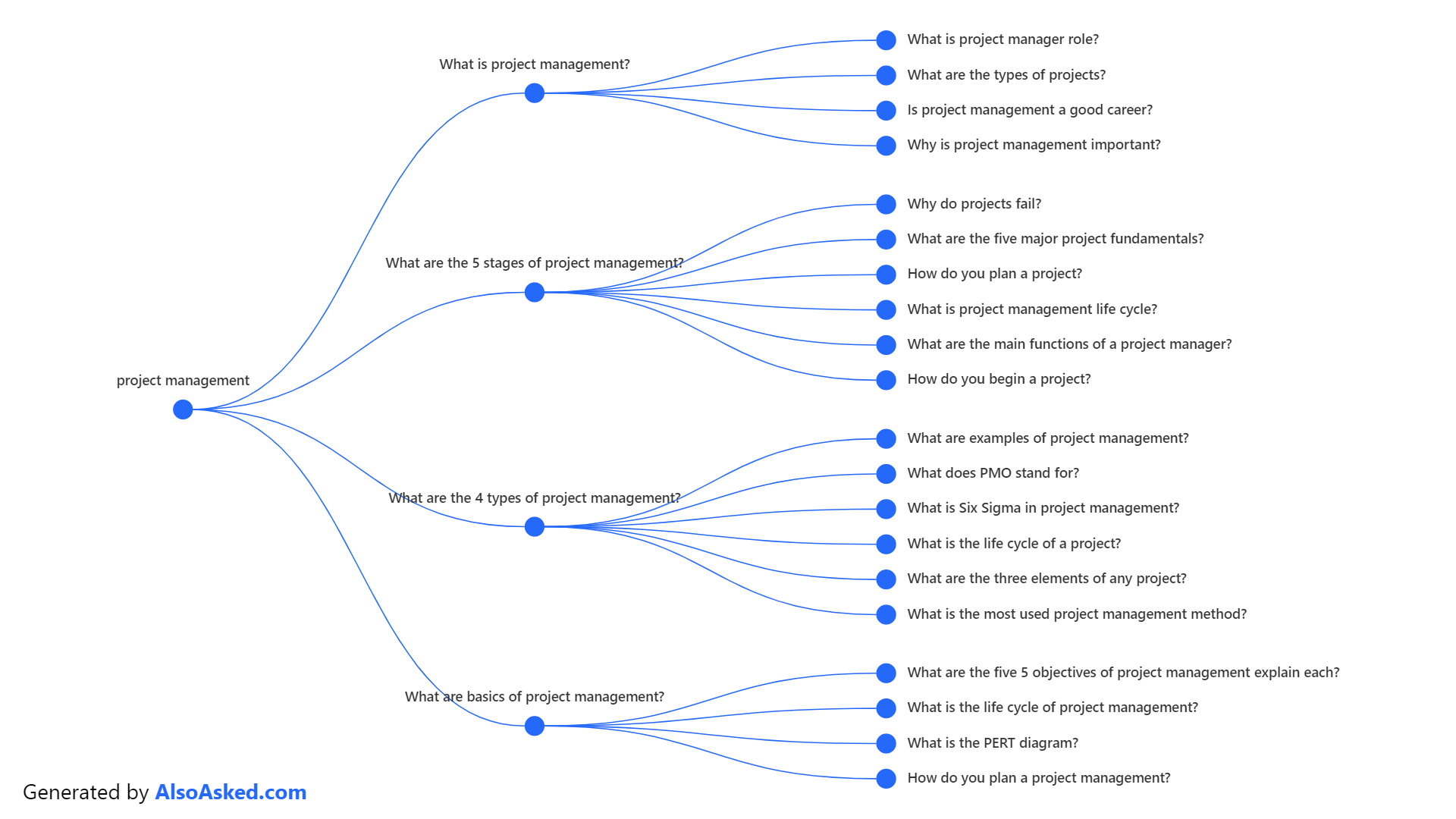
You can then use these questions, or a variation of them, to form a basis for a blog or guide.
By searching the term “project management” on Also Asked, we already have a lot of blog titles to work with, including:
- What is project management?
- What are the five stages of project management?
- What are the four types of project management?
- What are the basics of project management?
- Why is project management important?
- Why do projects fail?
By targeting the questions your ideal customers are actually asking, there’s a higher chance of getting them onto your website and converting them into a loyal customer.
Strategy 4: Website Conversion Optimisation to Turn SaaS Traffic Into Trials
Your website is your most powerful sales-person. You don’t want potential customers to land on your site, get confused about what you offer, and then leave, never to be seen again.
Here are some common mistakes we see on SaaS websites and how to fix them.
Mistake 1. A vague header with something like “Simplify your life” or “Streamline your business“.
Don’t talk in riddles. Tell your customer exactly what it is you sell.
How do you fix this?
“The world’s most powerful accounting software” or “Project management software for small businesses” works far better. Your visitor can gather from that one line what your software does and whether it’s the type of software they are looking for.
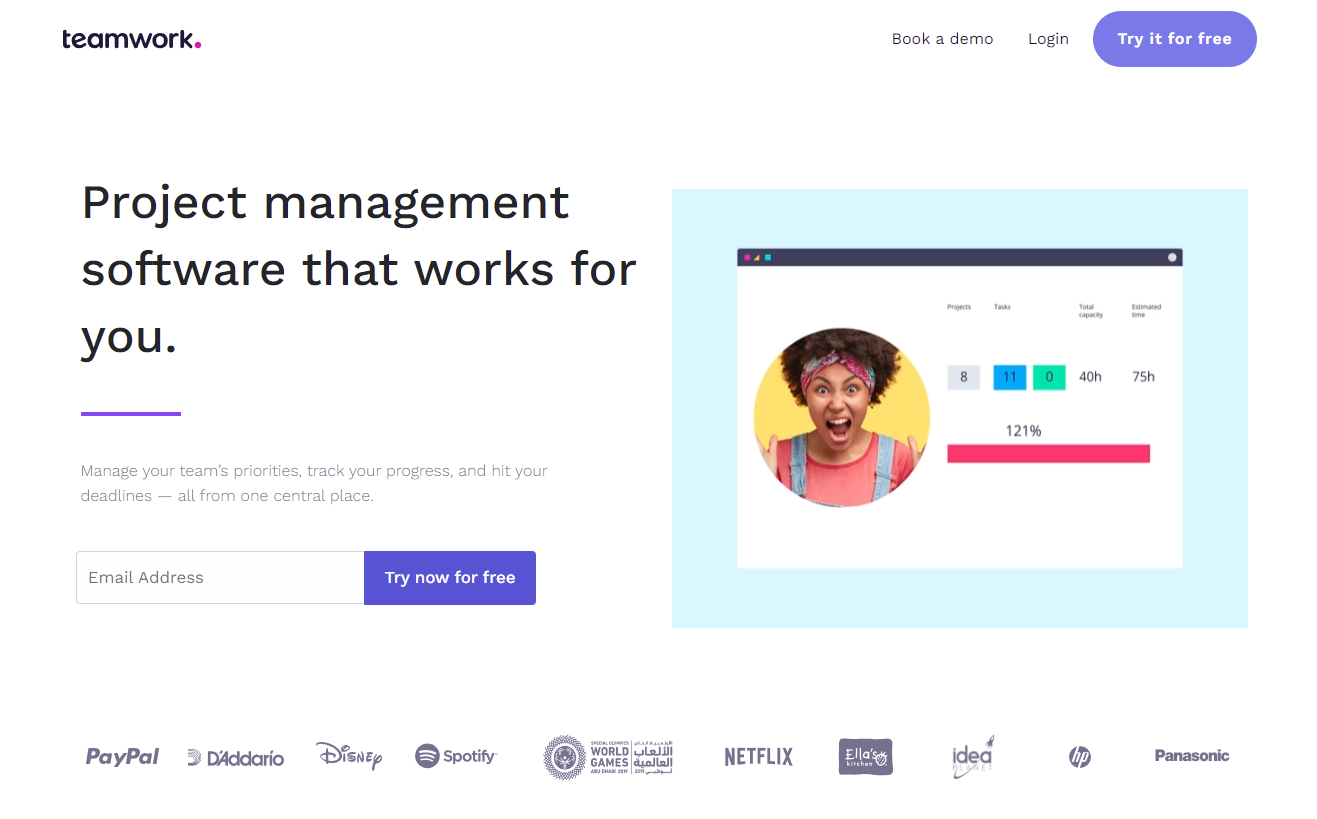
Here’s an example of a good header from Teamwork. Right away, you know they provide project management software.
Mistake 2. Too much choice. It’s great that you offer multiple package options for businesses of all sizes, different industries, and budgets…but if you present them all at once, people will get confused.
It’s a known fact that humans find it harder to make a choice when there are too many choices in front of them.
How do you fix this?
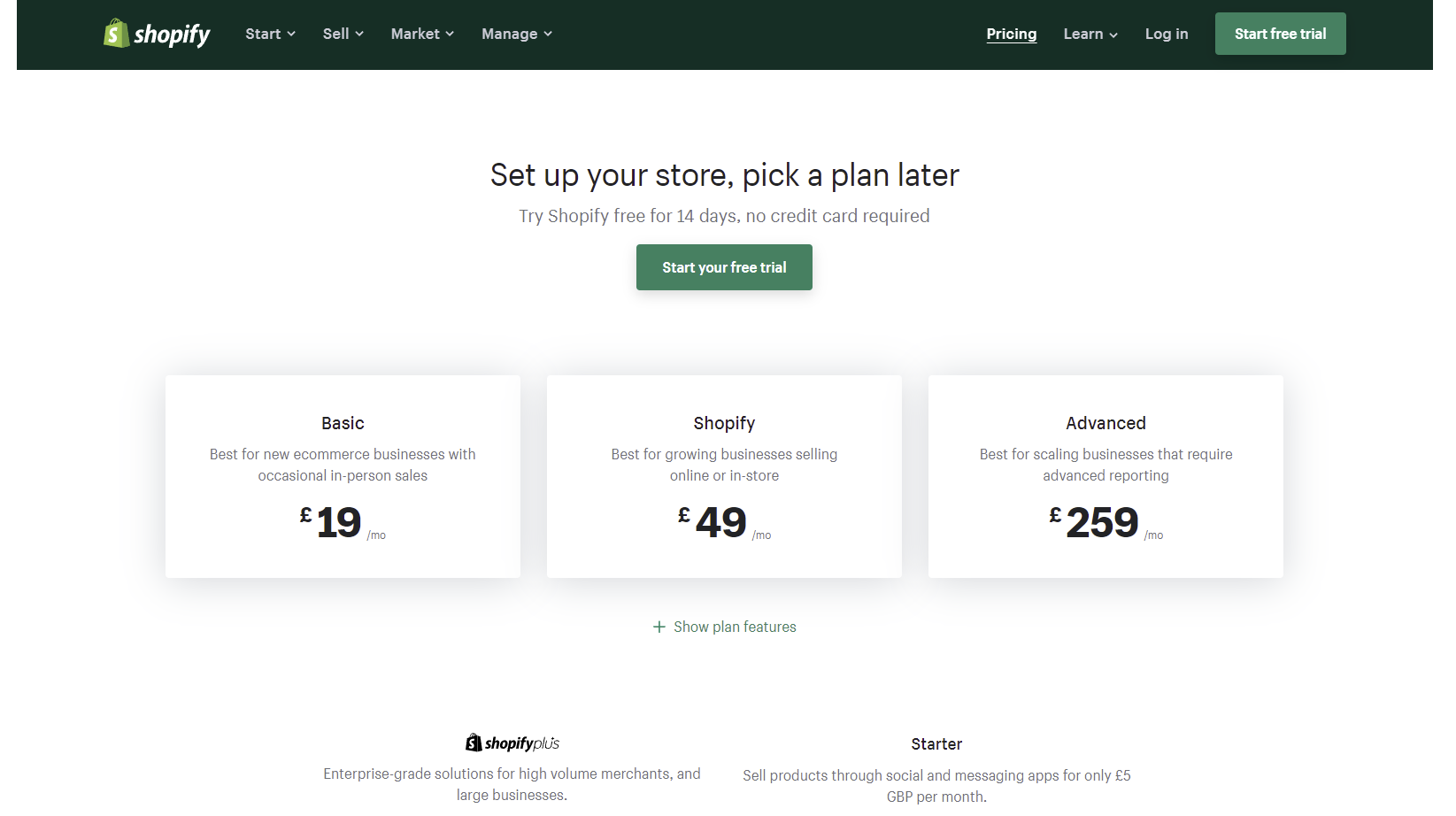
Let’s say you offer six different packages for businesses. See if you can cut this down to three : one for small businesses, one for medium and one for large. You can have a fourth option offering a tailored solution for larger businesses too.
Shopify keeps its pricing page simple, with three main plans (Basic, Grow and Advanced) and a separate Plus plan for larger businesses.
Mistake 3. Website “innovation“. We totally get this. You’re a tech company, and you want to show that off on your website. But don’t let this become a barrier to your customer converting. If they have to search for your contact details because you wanted to put them in a quirky place, or they don’t understand how to navigate your site, you’ll lose a customer.
How do you fix this?
Look at other SaaS websites and see how they have laid things out. You can also look at successful sites in other industries for inspiration. Across nearly all industries, certain elements will be in the same place, such as contact details often being in the top right corner of the site.
Testing your site with people is important too. Ask people to use your site and tell you how easy it was. If you notice a pattern of complaints beginning to emerge, it’s likely time to make adjustments to your site.
Mistake 4. A pricing page that raises more questions than it answers.
Your pricing page is often one of the last pages people visit before they sign up. If they can’t tell what’s included, who each plan is for or what happens when the trial ends, they’ll leave to compare you with someone clearer.
How do you fix this?
Say who each plan is for, list what’s included in plain language, and be upfront about billing, contract length and cancellation. Add a short FAQ to the page to answer common objections, such as data migration, onboarding and security.
Mistake 5. A demo or sign-up flow with too many steps.
Every extra form field or page between “Book a demo” and an actual demo is a chance for someone to give up.
How do you fix this?
Ask only for the information you need at that stage. Let people choose a demo time on the same page, and send trial users straight into the product after sign-up rather than to a “check your inbox” screen.
Mistake 6. No social proof near the decision.
Buyers want reassurance that companies like theirs already use and like your software, and they want it at the moment they’re deciding.
How do you fix this?
Put customer logos, ratings from review sites and short case studies next to your pricing and sign-up buttons, not just on a separate testimonials page. Only use reviews, ratings and results you can verify (see Strategy 8 for how to build them).
If you’d like help finding where your site loses trial sign-ups, our conversion rate optimisation team can help.
Strategy 5: Email Marketing to Nurture Trials and Reduce SaaS Churn
As a SaaS company, you have a huge opportunity : you can offer regular advice and insights on the industry that your software is for.
This means you can run regular email marketing campaigns to your email subscribers on topics in your industry. If your mailing list offers value, more people will want to join.
We covered earlier how you can get emails by offering a free trial of your software, but there are potential customers who won’t be ready for a free trial just yet.
You can encourage them to join your mailing list, but please, call it anything other than a mailing list.
Tell them what they will actually get. If your newsletter is a weekly five-minute read all about productivity hacks, make that clear from the start.
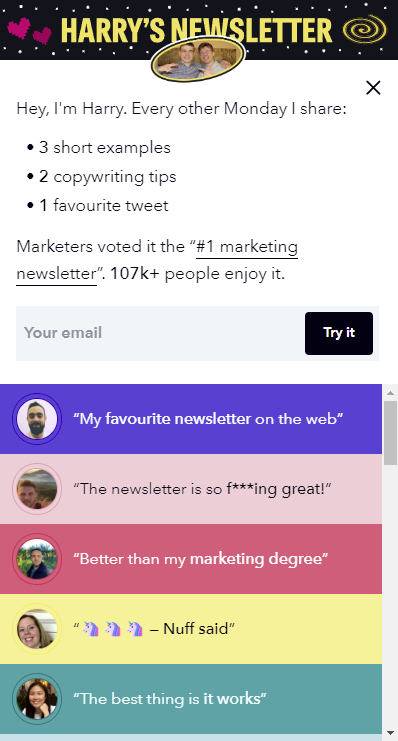
Example from marketingexamples.com
The purpose of this mailing list is to keep your company name in people’s inboxes, and their minds and to cultivate them into making a purchase. In your emails, you can include information about your software and how it can make their lives easier. Just don’t overdo it. Remember, it’s a useful newsletter, not a sales pitch.
Make sure everyone on your list has opted in to receive marketing emails. In the UK, that’s a requirement under PECR and UK GDPR, and it keeps your list engaged.
You can automate your email marketing to give your subscribers a more personal experience. You can use email automation to send subscribers information about the topics they’re interested in.
A well-timed automated sequence (welcome, trial nudges, and a churn-reduction flow for lapsing customers) is often the single highest-ROI email programme a SaaS company can build. See EN’s email marketing service for how to set up the trial nurture sequences and churn-reduction campaigns that directly affect SaaS retention.
Strategy 6: AI Search Optimisation for ChatGPT, Perplexity and AI Overviews
In 2024, Gartner predicted that traditional search engine volume would drop 25% by 2026 as AI chatbots and other virtual agents took over more queries. Gartner hasn’t published a review of that forecast, and the data so far is mixed, partly because Google has adapted with its own AI Overviews and AI Mode. Regardless of exactly how the volume shifts, SaaS buyers increasingly research software in ChatGPT and Perplexity before ever visiting a vendor’s website , asking things like “what’s the best CRM for SMBs?” or “Salesforce alternatives for startups”. If your SaaS company isn’t visible in these answers, you’re invisible for a growing share of the buying journey, regardless of how well you rank in traditional Google results.
Appearing in AI-generated answers means structuring your content so AI models can easily extract and cite it: clear, direct answers near the top of a page, well-labelled comparison tables, and consistent, well-linked schema markup. Being mentioned on review sites and in third-party comparisons helps too (see Strategy 8). See EN’s AI Search Optimisation service and our guide to generative engine optimisation for a full breakdown of how to get there.
Strategy 7: Paid Advertising for SaaS With Google Ads and LinkedIn Ads
Organic strategies take time to compound. Paid advertising is what fills the gap while they do, and for SaaS companies it’s particularly effective on high-intent comparison queries such as “[competitor] vs [product]” or “[product] alternative” . These are searches from people who are actively evaluating options right now. Google Ads and LinkedIn Ads are the standard acquisition channels for B2B SaaS, letting you target by job title, company size, and industry as well as by keyword.
Paid and organic aren’t a choice between one or the other. The comparison and alternative content recommended in Strategy 1 above works for both: it earns organic rankings over time and gives you a strong landing page to send paid traffic to today. See EN’s PPC service , our paid acquisition channel for capturing SaaS buyers at the exact moment they’re comparing solutions.
Strategy 8: Review Sites, Integrations and Partner Marketing
SaaS buyers rarely take a vendor’s word for it. Before they book a demo, many check review sites, look at which tools your product connects to, and ask peers for recommendations. That makes your visibility on other people’s platforms a channel in its own right.
Review Sites
Make sure you’re listed on the review platforms your buyers use, such as G2, Capterra and TrustRadius, with an up-to-date profile, screenshots and pricing. Then ask happy customers for reviews at natural moments, such as after onboarding or a renewal.
Keep it genuine. In the UK, the Digital Markets, Competition and Consumers Act 2024 bans fake reviews, and any review you’ve incentivised, with a discount or gift card for example, must be clearly disclosed. Don’t ask only your happiest customers, or hide the negative reviews.
Review sites can also appear as sources in AI-generated answers about software, so a strong profile supports Strategy 6 too.
Integration Marketplaces
If your product integrates with platforms like Salesforce, HubSpot, Slack or Shopify, list it in their app marketplaces. People browsing those marketplaces already use the platform and are looking for tools that fit with it. Pair each listing with an integration page on your own site (“[Product] + [Integration]”), as covered in Strategy 1.
Partner Marketing
Agencies, consultants and complementary software companies already have your buyers’ trust. A partner or referral programme, co-hosted webinars and joint content can bring you warm introductions that ads can’t. Start with two or three partners whose customers match your ideal customer profile, rather than a large programme you can’t support.
SaaS Marketing KPIs: The Metrics That Actually Matter
Generic marketing advice rarely mentions the metrics that actually decide whether a SaaS marketing strategy is working. These are the four every SaaS founder or CMO should track:
Customer Acquisition Cost (CAC) and CAC payback period
What it costs to acquire a customer, and how many months of revenue it takes to earn that cost back. After surveying nearly 5,000 software companies over nine years, the team behind the High Alpha SaaS Benchmarks report (formerly OpenView’s) found CAC payback period and net revenue retention to be the two strongest predictors of long-term, profitable growth. In the 2025 report, companies with high NRR and a short CAC payback period averaged 71% growth, against 10% for those with low NRR and a long payback period. If your CAC is climbing faster than your revenue per customer, it’s a signal to prioritise higher-converting channels (like the comparison content in Strategy 1) over broad-based spend.
LTV:CAC ratio
Customer lifetime value divided by acquisition cost. A ratio of 3:1 or higher is the widely cited benchmark (the 2024 median came in around 3.6:1), though context matters. A lower ratio with a fast payback period and strong retention can be a healthier business than a higher ratio with slow payback and weak retention.
Net Revenue Retention (NRR)
The revenue you retain and expand from existing customers, independent of new sales. Benchmarks vary by stage: roughly 100-120% is typical for earlier-stage SaaS companies, while 120%+ is considered a strong performance benchmark for more established growth-stage businesses. NRR below 100% means you’re losing more revenue to churn and downgrades than you’re gaining from existing customers. That’s a problem no amount of new customer acquisition can fully offset.
Trial-to-paid conversion rate
The percentage of free trial or freemium users who convert to paying customers. If this sits below around 5%, it’s usually a sign that acquisition is bringing in the wrong audience rather than that the product itself is weak. It’s worth revisiting the targeting in Strategies 1, 6, and 7 above before changing the product. See EN’s analytics service , our analytics service for setting up the CAC, LTV:CAC, and trial-to-paid tracking that makes SaaS marketing measurable.
Recap: Digital Marketing for SaaS Companies
This isn’t an exhaustive list of every tactic you can use in your SaaS marketing strategy, but these are the ones we know to get you the best results when done right. You don’t have to do them all at once. Pick the one you believe will have the biggest impact on your business and start there.
If conversions are low, you’ll want to start with conversion optimisation.
If you’re getting conversions but struggling to get visitors to your site, SEO may be the best place to start.
Let’s check in again with all eight marketing strategies:
- Creating an in-depth content marketing strategy
- Harnessing the power of free trials
- Optimising your website for SEO
- Turning your website into a conversion machine with conversion rate optimisation
- Hitting your audience with a top-notch email marketing campaign.
- Appearing in AI search tools like ChatGPT, Perplexity, and Google AI Overviews
- Running paid advertising for scalable acquisition
- Building visibility through review sites, integrations and partners
Where to Start: By SaaS Stage
| Stage | What it looks like | Where to start |
| Pre-product-market fit | You’re still finding out who your best customers are | Ideal customer profile and positioning, founder-led content, talking to customers, and a simple trial or demo flow |
| Early growth | You have a clear ideal customer and a product people pay for | SEO and content, a low-friction free trial, email nurture and onboarding, and conversion optimisation |
| Scale | You have proven channels and budget to grow them | Paid search and LinkedIn, AI search optimisation, review sites and partner programmes, and retention and expansion campaigns |
These are starting points, not rules. Your traffic and conversion rate tell you more than your stage does, as covered above.
Not sure where your SaaS company stands? Book a consultation and we’ll look at where you appear in Google and AI search, and show you what’s worth doing first.
What to Read Next
- Want to track your progress with Google Analytics? Set yourself up for success with our beginners guide to Google Analytics 4.
- Learn how to tailor your sales journey to your customer and create a fully optimised website sales funnel.
- Set your automated email campaign up for success by watching this webinar.
Digital Marketing for SaaS FAQs
What digital marketing channels work best for SaaS companies?
The most effective channels are content marketing, SEO, free trials or freemium offers, email marketing, AI search optimisation, review sites and partnerships, and paid advertising (Google Ads and LinkedIn Ads) , used together rather than in isolation.
How is SaaS marketing different from traditional B2B marketing?
SaaS marketing centres on retention economics, not just acquisition volume. Metrics like NRR, LTV:CAC, and trial-to-paid conversion matter as much as lead volume, because SaaS revenue depends on customers staying and expanding, not just signing up once.
What are the most important KPIs for SaaS marketing?
Customer Acquisition Cost (CAC) and CAC payback period, LTV:CAC ratio, Net Revenue Retention (NRR), and trial-to-paid conversion rate are the four metrics that most directly reflect whether a SaaS marketing strategy is working.
What is product-led growth and how does it affect SaaS marketing?
Product-led growth (PLG) is a strategy where the product itself (through free trials, freemium tiers, or self-service onboarding) drives acquisition and conversion, rather than a sales team. In 2026, most SaaS companies pair PLG with sales-assisted intelligence for high-intent users.
How long does SaaS SEO take to show results?
SEO is a long-term channel, typically taking several months to a year to show significant organic traffic gains, though comparison and alternative content can rank faster due to lower competition and clearer buyer intent.
Should SaaS companies use Google Ads or SEO first?
It depends on your conversion rate. If your website already converts well but lacks traffic, SEO (or paid ads for a faster result) should come first. If traffic exists but conversions are low, fix website conversion optimisation before investing further in acquisition.
*Some links within this article are affiliate links which Exposure Ninja receives a fee for promoting (these links are not sponsored). Exposure Ninja only promotes services we already use within our marketing stack.