Results-Backed Tips to Create High-Converting Content


Are you pouring effort into content that gets clicks but doesn’t drive real results? We share our top 5 tips on how to create content that converts, backed by client campaigns.
Creating high-converting content is not about publishing more. It’s about building every piece with a clear purpose: to attract the right audience, guide them through their decision-making process, and lead them to take meaningful action.
We’ll share our top 5 tips for creating content that converts, backed by the same content marketing strategies we’ve used to drive:
- A 395% ROI for The Ordinary.
- Over 11,000 qualified leads for DSLD Mortgage.
- 288% increase in organic revenue for Golf Course Lawn Store.
5 Proven Ways to Create Content That Converts
Include Clear, Compelling CTAs
High-quality content attracts visitors, but most will leave without converting if they don’t have a clear next step.
This was a key turning point in our work with Personal Injury Law Firm. When they first partnered with us, their existing content was poorly written, thin, and lacked credibility. We rebuilt the content with E-E-A-T in mind and centred our approach around real client questions.
This soon started bringing in traffic, but conversions from the blog remained low. We then performed a Conversion Rate Optimisation (CRO) audit to identify what was missing. We quickly realised there were no clear pathways for users to take the next step.
To address this, we introduced clear and strategically placed calls to action (CTAs) throughout the site’s blog content, including sidebar enquiry forms and sticky contact buttons.
These weren’t pushy sales messages, but helpful next steps that matched the reader’s intent. Visitors who came looking for legal advice found exactly what they needed: expert information and an easy way to get help.
As a result, direct blog-to-call conversions increased by 125% over a three-month period. In the following three months, blog conversions increased by 144%.
Key Takeaway: Whether it’s making a purchase, booking a consultation, or starting a free trial, make the path to conversion crystal clear. A converting CTA can be the difference between informing and driving leads or sales.
Simplify Product Choices
When customers are unfamiliar with a product category, too many options can quickly lead to decision fatigue. Instead of feeling informed, they feel overwhelmed and often leave without buying.
Your content’s job is to build confidence and make the path to purchase as clear as possible.
This is exactly what we did in our award-winning campaign with the Golf Course Lawn Store.
The site sells a wide range of premium lawn care products. For customers new to lawn care, the sheer number of options could be daunting. Choosing between fertilisers, fungicides, and weed control options isn’t always straightforward, especially when seasonal timing adds another layer of complexity.
We tackled this by simplifying the decision-making process through content. We created a comprehensive knowledge base built around high-intent, informational search queries. Each piece of content included relevant product recommendations and explained not just what to buy, but why and when. Seasonal guides helped customers choose the right products for the right time of year, driving significant traffic even during seasonal slumps.
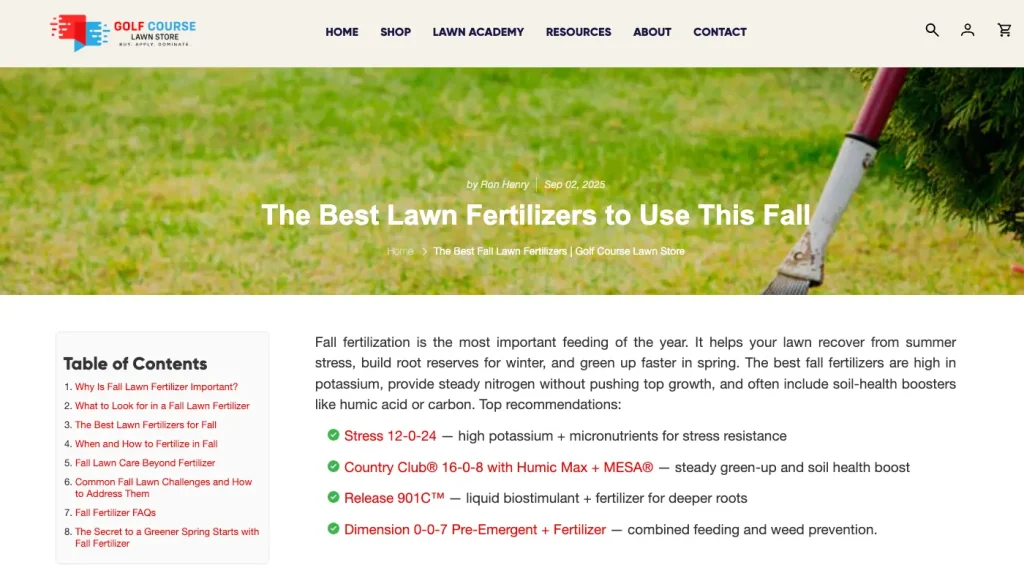
We also embedded Ron Henry’s YouTube videos to provide expert guidance in an engaging and easy-to-understand format. This helped users feel more confident in their decisions and positioned Golf Course Lawn Store as a trusted authority — something large competitors like Amazon can’t easily replicate.
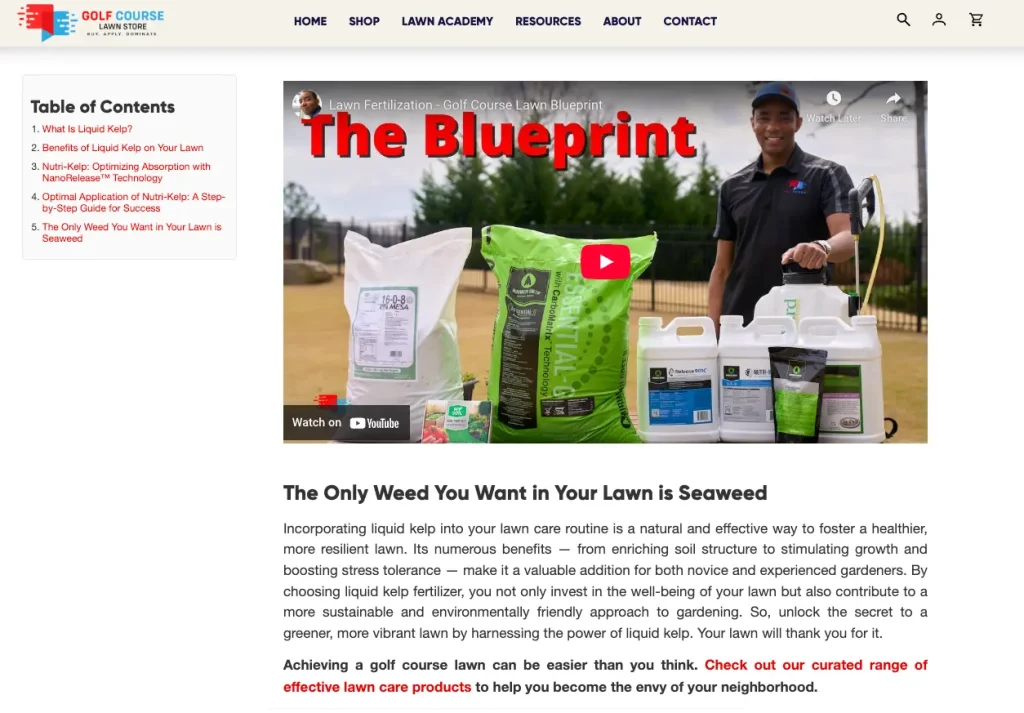
The results speak for themselves. Golf Course Lawn Store began outranking Amazon, achieved a 149% year-on-year (YoY) increase in organic traffic, and drove a 940% spike in peak-season traffic. Most importantly, this strategy contributed to a 288% increase in organic revenue, showing how helpful content can truly drive sales.
Key Takeaway: Clear, expert-backed content builds trust and simplifies decision-making, helping users feel confident about what to choose. The easier you make that choice, the more likely they are to convert.
Tailor Content to Your Target Audience
Content that tries to speak to everyone ends up resonating with no one. If your messaging doesn’t match your audience’s needs or buying stage, it won’t inspire action.
This guided our email marketing strategy for Age Care Bathrooms. Their audience includes people in urgent need of mobility-friendly bathrooms and those planning for future adaptations. These groups require different messages, different timing, and different CTAs.
We introduced segmented sign-up forms that asked new subscribers what interests them most. Based on their answers, we funnelled users into automated email sequences tailored to their interests and buying readiness. Each workflow delivered helpful, relevant content and moved contacts toward the next step of booking a call.
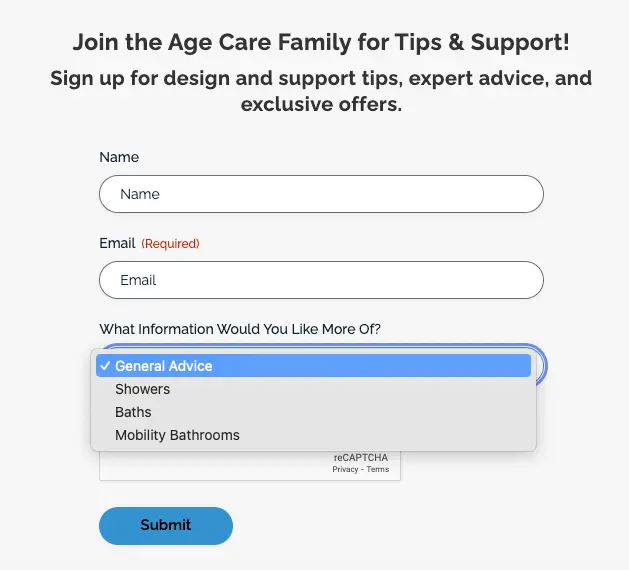
On top of this, we launched regular email newsletters to nurture ongoing interest and build trust. After testing bi-weekly emails with strong engagement, we moved to weekly sends, consistently delivering value without overwhelming the audience.
This combination of segmentation, automation, and consistent communication helped generate 529 high-intent leads and a 127% increase in email-driven revenue, all while reducing manual workload and making their CRM work smarter.
Key Takeaway: The more relevant your content, the more effective it becomes. Use segmentation and automation to deliver the right message to the right person at the right time and reinforce that connection through consistent, value-driven emails.
Make Shopping Seamless
Content is one of the best ways to drive brand awareness, build trust, and establish authority. But that doesn’t mean it can’t also drive sales.
We proved this with The Ordinary. Before partnering with us, their content strategy was primarily brand-led, focused on product launches and internal marketing priorities. While that supported awareness, it didn’t always translate into performance.
We shifted the focus to performance-led content. This meant aligning content with search intent, prioritising high-converting topics, and optimising for rankings that matched what customers were actually searching for. The blog became a tool not just for education, but for bringing in high-intent traffic that could convert.
From there, we focused on turning that traffic into revenue. We embedded add-to-cart functionality directly within blog content, improved product signposting, and created clear conversion paths throughout each article. The goal was to remove friction and make it easy for readers to go from learning to buying.
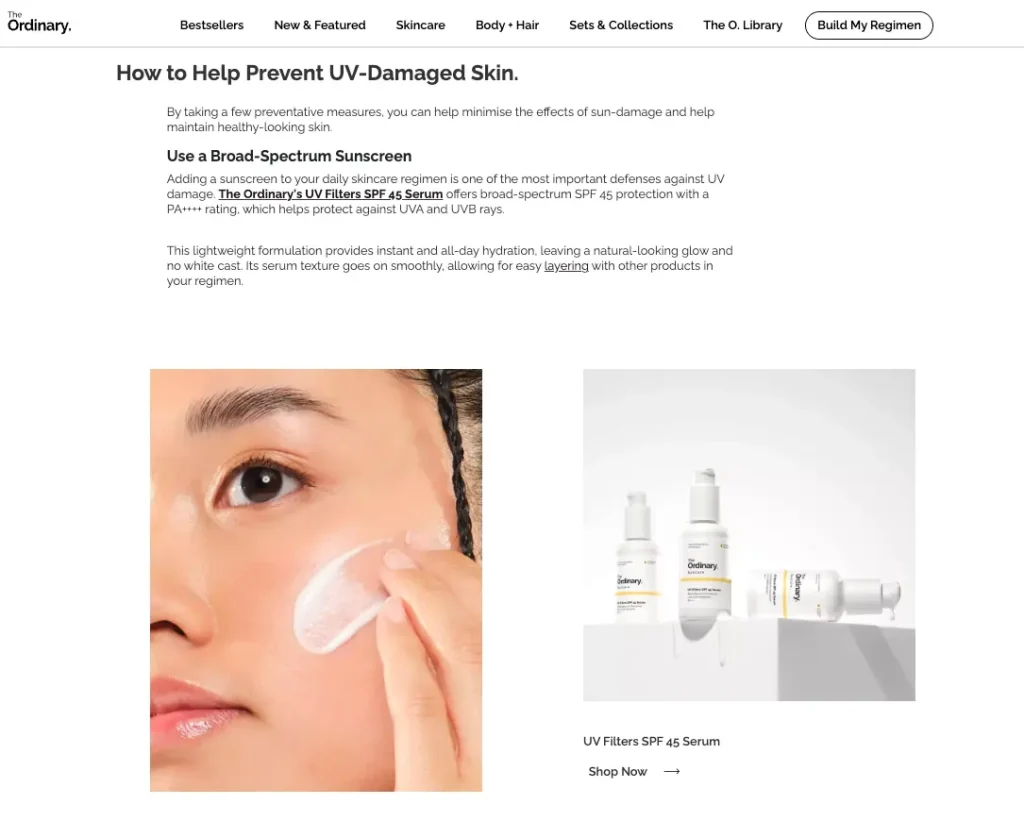
Transitioning to performance-led content boosted blog sessions by 555%, and more importantly, blog-driven revenue increased by 451%.
Key Takeaway: Great content shouldn’t stop at awareness. If it’s not helping people buy, it’s not doing its full job. Build content that informs, reassures, and removes friction from the path to purchase.
Create Custom Tools That Drive Action
Interactive content often converts better than static content, but the best results come from tools that solve real problems for your audience.
That’s exactly what we built for DSLD Mortgage. We developed a suite of custom tools tailored to the mortgage process, including a Refinance Calculator, BAH Calculator, and USDA Eligibility Map.
These tools answered high-intent search queries, increased time on site, and became some of the most clicked elements across the website. The USDA Map alone ranked in the top 10 on Google, competing with federal government sites, and brought in a steady stream of qualified leads.
But engagement was only the first step. Each tool was paired with context-specific CTAs. If a visitor was eligible, they were offered a free consultation immediately. If they weren’t, they were guided to alternative loan products or educational content — keeping them in the funnel and connected to a solution.
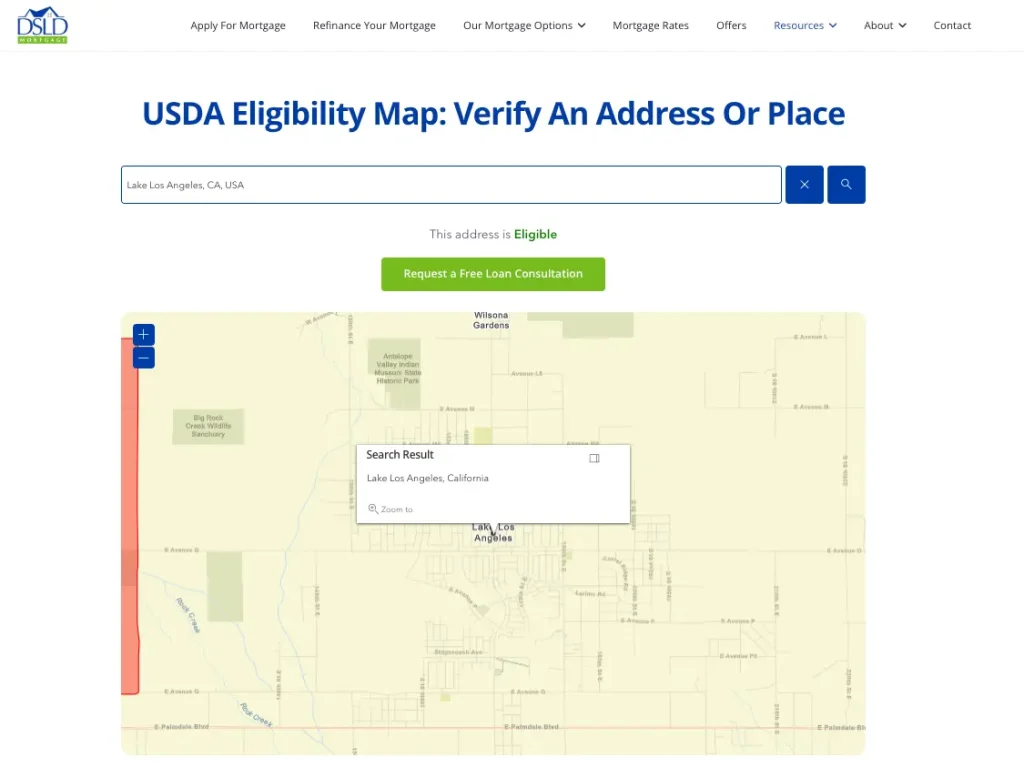
By combining usability, utility, and Search Engine Optimisation (SEO) value, these tools didn’t just improve user experience. They played a key role in converting traffic into over 11,000 qualified leads in the first 12 months.
Key Takeaway: Give your audience something they can use. Tools that solve real problems drive engagement, improve rankings, and guide users toward action, turning passive interest into measurable results.
Don’t Just Drive Traffic. Create Content That Converts
Traffic is great. But if your content isn’t turning visitors into leads or sales, you’re leaving money on the table.
Creating content that converts is about understanding what drives action in your market, then building content that matches that intent. The businesses seeing real results combine smart content strategy with ongoing optimisation.
High-converting content includes:
- Clear calls to action that tell visitors exactly what to do next.
- Simplified choices that remove friction and build confidence.
- Targeted messaging that speaks directly to the right audience.
- Seamless user journeys that guide users naturally toward conversion.
- Interactive tools that solve problems and drive action.
Want content that delivers more than just clicks? Our content marketing team builds strategies that turn traffic into measurable growth. Request a website and marketing review to find out where we can improve your content conversions.
FAQs
How do I measure my content conversion rate?
Track specific actions, such as form submissions, downloads, or purchases, that originate from each piece of content. Use Google Analytics 4 (GA4) to set up conversion tracking and monitor which content drives the most valuable actions. Calculate the conversion rate by dividing conversions by total visitors to that content.
What is a good conversion rate for content?
Content conversion rates vary significantly by industry and content type, but 2-5% is generally considered a good benchmark. Focus less on benchmarks and more on improving your own performance each month.
Is long-form or short-form content better for conversions?
Long-form content typically converts better because it builds trust, demonstrates expertise, and has more opportunities for strategic CTAs. However, the key is matching content length to user intent, as someone looking for a quick answer needs different content than someone researching a major purchase. Quality and relevance matter more than word count.