What Is Brand Positioning and Why Does It Matter for Your Business?


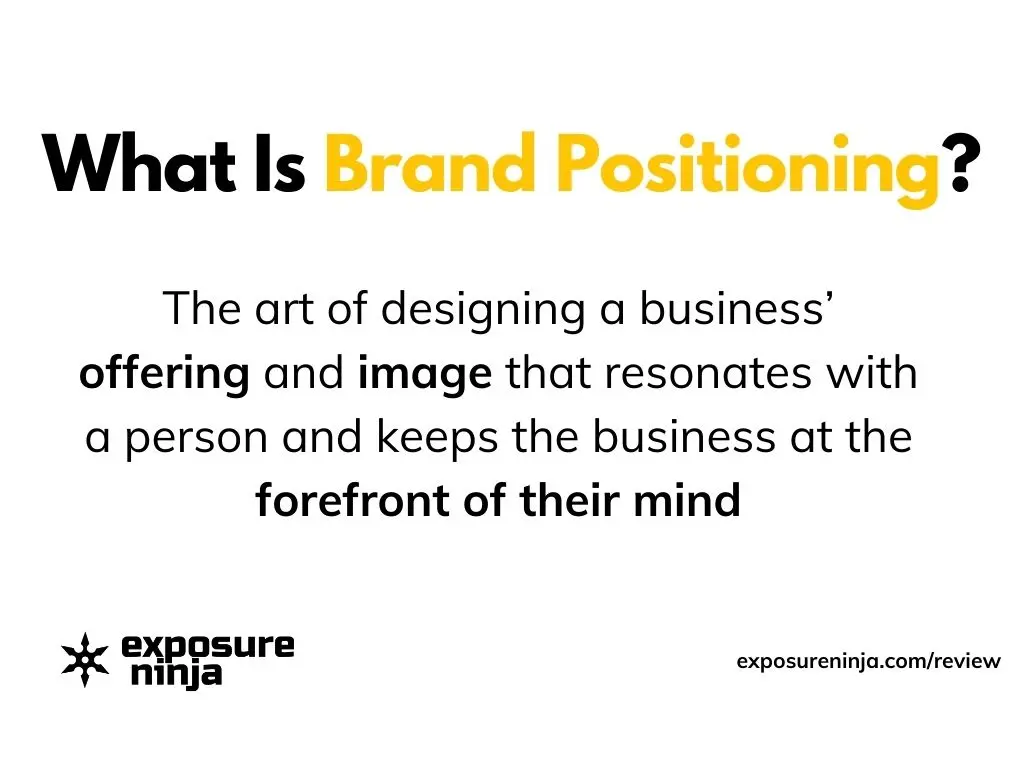
Brand positioning is how people see and feel about your brand. It’s what sets you apart and why customers choose you instead of your competition.
What’s the first thing that comes to mind when you think about Ford? A dependable, affordable car brand. Now, think about Tesla. Innovation and sustainability, right?
Here’s the thing: both brands sell cars but appeal to entirely different markets. Why? Because of their brand positioning.
Companies like Ford and Tesla, as well as other household names like Uber, Google, and Dove, have mastered the art of carving a distinct space in their industries and their customers’ minds.
But positioning isn’t just for industry giants. It’s important for every type and size of business.
Brand Positioning Is All About Your Brand, Not You
Brand positioning sets your brand apart from competitors and earns you a place in your customers’ minds.
That sounds impressive, but what does it actually look like?
Take Patagonia, for example. They’re not just another outdoor clothing brand. Their focus on sustainability and environmental activism makes them the go-to choice for eco-conscious adventurers. Their position — backed up with consistent messaging and their Activism in Action — makes their brand resonate with their audience.
Positioning isn’t just another marketing strategy. It’s how your customers see, remember, and connect with your brand.
Importantly, positioning is less about where you think your brand belongs and more about matching this belief with your customers’ beliefs.
- Does your customer view you as the best quality provider?
- Does the everyday customer relate to you?
- Do they think of you as a brand they want to shop from regularly?
- Are you building a brand everybody talks about but few can afford?
Why Your Brand Position Matters
Whether you value the marketing term brand positioning or not, as a marketer, you’ll inevitably engage in the act.
You control brand positioning each time you promote a service or product. Brand positioning includes targeting a particular group of people, using specific language, and selecting certain visuals to communicate a brand message.
Nail it, and you’ll stand out in a crowded market. Miss the mark, and you’ll blend in with the noise.
In 2026, this matters more than ever. As AI-driven content saturates every channel, from search results to social feeds, only brands with a clear, consistently expressed position get noticed and remembered. When prospects search in ChatGPT, Perplexity, or Google’s AI Overviews, it’s the most authoritative and recognisable brand in a category that tends to get cited. Unclear positioning risks being invisible in both traditional and AI-generated search results.
Differentiation
Positioning is what gives you that all-important USP (Unique Selling Point). It’s what differentiates you from your closest competitors.
Consider Adidas and Nike, who it’s fair to say “hang around the same streets”, or keep a close position to each other. Yet positioning activities — spanning from marketing to product development — allow both brands to scoop up a slice of the pie.
While Nike is increasingly focused on performance, Adidas focuses on play.
Connection
Brand positioning involves making your ideal customer feel as though your products and advertising are tailor-made for them.
It’s the equivalent of Cupid making a perfect match between buyer and brand.
A strong position creates a powerful emotional connection. It’s why people choose Patagonia for its commitment to sustainability and adventure or why Lush is loved for its fun, ethical approach to beauty. When your brand resonates on an emotional level, customers don’t just buy — they buy time and time again because they believe in your brand.
Commercial Impact: How Brand Positioning Affects Revenue
The long and short of it is effective positioning generates more sales.
If you do a good job of positioning your brand with a certain audience, you’ll be more likely to engage the right people — or at least some of the right people.
Those who fail to think about positioning are usually non-committal.
These brands don’t identify a niche or even a major audience to strike a chord with and ultimately fail to attract anybody in an ever-expanding marketplace.
Remember, in this competitive era, brands need to be an exact match for a customer, or another brand will take your place.
The Three C’s of Brand Positioning
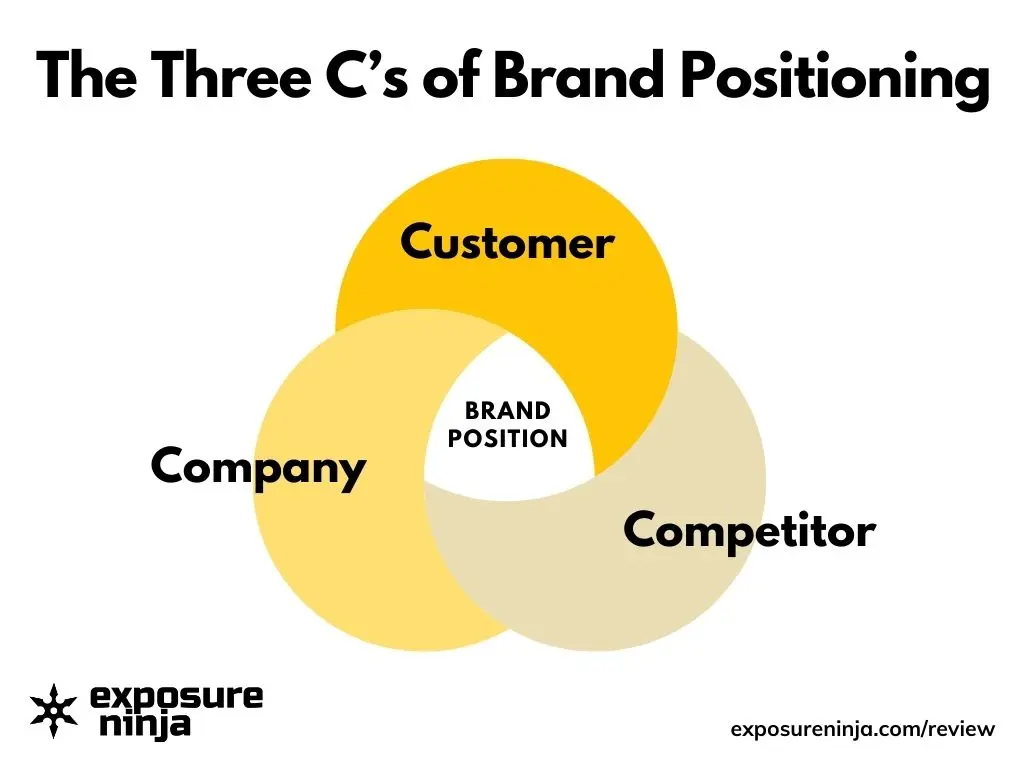
Company, customer, and competitor — the trinity of brand positioning. Focus on these core elements, and you’re on the right track to establishing your brand’s position.
- Company: Start with your company. What makes you special? Highlight your strengths, values, and the benefits only you can offer.
- Customer: Next, focus on your customer. What do they want, need, and care about? Your positioning should feel like it was made just for them.
- Competitor: Then, look at your competitors. What are they doing well, and, importantly, where are they falling short? That’s your chance to stand out.
Nail these three, and your brand will be exactly where it should be: ahead of the competition.
Popular Brand Positioning Strategies
Different brands take different routes to stand out. You need to find what resonates with your offerings and your target audience.
Price Positioning
Price positioning is all about where your brand sits on the affordability scale.
Think Aldi and Primark. These brands emphasise low prices, making them the go-to for budget-conscious shoppers.
Quality Positioning
Quality positioning focuses on offering premium products that justify higher price tags.
Luxury brands like Rolex and Chanel thrive on this strategy, appealing to customers who want the best of the best, no matter the price tag.
Convenience Positioning
Convenience positioning is about making life easier for your customer, whether that’s through speed, accessibility, or removing friction from the buying process.
Amazon Prime and Deliveroo both built their entire brand around convenience, being the fastest or easiest option wins loyalty even when it isn’t the cheapest.
Niche/Specialist Positioning
Niche positioning means narrowing your focus to serve one specific audience or problem better than any generalist competitor could.
Specialist insurers, boutique law firms, and single-category retailers all use this approach, depth of expertise becomes the differentiator instead of breadth of offering.
Purpose/Values Positioning
Purpose or values positioning centres your brand on what it stands for, not just what it sells.
Patagonia’s environmental activism and Dove’s stance on realistic beauty standards (both mentioned above) are strong examples, this only works if the values are genuinely lived out, not just marketed.
Service Quality Positioning
Service quality positioning competes on the experience of being a customer, responsiveness, support, and how problems get resolved.
This works particularly well for B2B and subscription businesses, where the relationship matters as much as the product itself.
Innovation Positioning
Innovation positioning claims the ground of being first, newest, or most forward-thinking in a category.
Tesla (mentioned at the top of this guide) is the clearest example, its entire position rests on being ahead of traditional car makers on technology.
Using a Brand Positioning Map to Find Your Space
A brand positioning map is a simple two-axis grid that plots your brand and your competitors against two dimensions that matter to your customers, for example price versus quality, or traditional versus innovative. Mapping where competitors sit shows you the gaps, the spaces nobody else has claimed, which are often the easiest place for a smaller brand to build a distinctive position.
How to Successfully Position Your Brand
Let’s be clear. There’s no right time to look at your brand position — and it’s never too late to start or change.
Large corporations frequently make decisions like this as a response to industry change and consumer behaviour.
You’ll have noticed that McDonald’s decor has been revamped since the ’90s to become as mature as a hamburger and fries can get. Kids parties and Ronald McDonald sightings are much less prevalent with technology and muted colours in place.
This action resulted from McDonald’s changing its brand position as fast food eating habits altered. Now, McDonald’s positions itself as a go-to for affordable food for all ages. The focus turned to attracting the parents of the kids that McDonald’s advertisements once aimed to please.
The act of positioning is moldable, allowing you to constantly redefine what it means to shop with your brand.
With that said, some things will never change. Brand positioning is always influenced by the customer and what your current competitors are failing to deliver.
Step 1: Thoroughly Understand Your Audience
The key to positioning your brand is selecting the right neighbourhood — that is the right group of people to market to.
Not only will this narrow down your list of direct competitors, but it will also give your marketing efforts much more guidance.
You’ll have more time to worry about the markets that matter and spend less time trying to keep a watchful eye — well, on everything.
Should you be chasing the customers populating affluent areas like Manhattan and Chelsea? Or, is your brand a more modest personality that could feasibly attract punters in every major town and city across the country?
Once you’ve found the right target audience, you can speak their language. When your brand speaks their language, it stops being just another option and becomes their solution.
Step 2: Assess Your Competitors
Take a good, hard look at your competition. What makes them more or less appealing than your brand?
Do they offer free delivery while you charge? Are their customer service reviews filled with complaints you can solve?
By strategically spying on the competition, you can identify opportunities to do things differently — and better.
Step 3: Develop Your Unique Value Proposition (UVP)
Your UVP (Unique Value Proposition ) is where your audience’s wants, needs, and values meet what your competitors aren’t offering. It’s the sweet spot that makes your brand stand out.
Think of it as the heart of your brand position. It’s the “why” behind customers picking you over anyone else.
Take Innocent Drinks. Their UVP isn’t about selling smoothies and juices made from fresh fruit and veggies. Their promise is to be both good to you and the planet with sustainable sourcing, no-nonsense ingredients, and transparency.
Their UVP taps into their audience’s desire for accessible, healthy drink options. They also sideline their competitors by positioning themselves as an ethical, trustworthy choice.
A UVP isn’t just a tagline. It’s your brand’s promise, showing customers exactly why you’re their best choice. Get it right and back it up with consistent actions and messaging, and you’ll draw customers to your brand time and time again.
Step 4: Create Your Brand Positioning Statement
Guide your brand with a clear and powerful positioning statement. It’s a simple summary of how you solve a problem for a specific market better than your competitors.
It needs to be brief, memorable, and true — no fluff, no overpromising, and definitely no jargon.
Need some help? Try this template, but make sure to tweak it until it feels authentic:
“For [your target audience], [your brand name] offers [what makes you different] because [how it benefits your audience]”
Step 5: Align Your Positioning with Your Messaging and Actions
Now it’s time to bring your positioning statement to life through every interaction, message, and action your audience experiences.
Let’s say your promise is speed.
- Your website copy should have phrases like “fast delivery” or “time-saving solutions.”
- Your delivery service must actually be quick, with no exceptions.
- Your customer support should respond promptly.
- Your social media posts can showcase behind-the-scenes glimpses of how you deliver so fast.
Every touchpoint should reinforce your promise. Deliver this consistently, and your audience will believe in your brand. Belief can turn into loyalty, and loyalty fuels lasting success.
Brands Nailing Their Positioning (and Backing It up with Their Messaging)
Dove
Dove celebrates real beauty in all its diversity. This brand position isn’t just talk — it’s backed up by bold and timely campaigns like their recent Keep Beauty Real, which calls out the unrealistic beauty standards perpetuated by AI image generators.
Scrub Daddy
If you’ve ever scrolled through cleaning influencers’ content, you’ve probably seen a happy, smiling sponge gliding across your screen. That’s Scrub Daddy — America’s favourite sponge. Scrub Daddy positions itself as a fun, effective, and versatile cleaning solution, and it backs this up with social proof in the form of user-generated content (UGC).
Airbnb
You know your brand position is rock-solid when your name becomes a verb. Airbnb has done just that. Their Get an AirBnB ad campaign drives home their core promise—spacious, private accommodations that offer more freedom than your typical hotel stay.
Align Your Marketing to Successfully Grow Your Brand Position
Positioning is all about defining what makes your brand unique, owning your space in the market, and connecting with your audience.
To achieve a strong position, you need to:
- Know your audience.
- Identify what sets you apart from competitors.
- Deliver your promise consistently through your messaging, actions, and customer experience.
But even the best brand position won’t work without the right marketing. Your campaigns, website, social posts, emails, and ads should all shout your positioning. Align every part of your marketing with your brand promise, and you’ll stand out — and grow.
It’s time to put your marketing to work. Request a free website and marketing review to see how your current setup backs up your positioning.
Want to learn more about the importance of brand positioning in your marketing strategy? Check out our in-depth guides:
Applying the positioning strategy framework in this guide to define and express your brand’s market position, our branding service — and our Brand Accelerator programme specifically — is the fastest route from unclear positioning to a defined, marketable brand identity. In 2026, your brand positioning also directly determines which AI platforms cite your brand as an authority in your category, see our GEO strategy guide for more. Once your positioning statement is defined, our content marketing service translates it into consistent, on-brand content at scale. B2B brand positioning requires different signals from B2C, particularly around trust, authority, and professional credibility, our B2B sector expertise covers this in depth.
FAQs
What are the 3 C’s of brand positioning?
The three C’s are customer, competitor, and company. Focus on your customers’ needs, differentiate from competitors, and leverage your company’s strengths to define your brand’s unique spot in the market.
What is in a brand positioning statement?
A positioning statement includes your target audience, the value you provide, and the unique qualities that differentiate your brand. It’s a concise summary of why customers should choose you.
What is the difference between branding and positioning?
Branding is the unique identity of a business, including visuals, tone, and messaging. Positioning is about carving out a place for your brand in your customers’ minds.