Working with YouTube Influencers Just Got 10x EASIER

Picture this: you’re scrolling through your Google Ads dashboard, wrestling with yet another underperforming campaign, when you spot something that makes you do a double-take. Right there, nestled within your familiar interface, is a direct pipeline to YouTube’s most engaging creators — complete with audience analytics, partnership tools, and campaign integration that actually works.
This isn’t some distant marketing fantasy. This is Google’s Creator Partnership Hub, and it’s transforming how businesses collaborate with YouTube influencers, and early Beta adopters are already capitalising on opportunities that seemed impossible just months ago.
The days of manually hunting down creators, negotiating through endless email chains, and cobbling together analytics from multiple platforms are ending. What’s replacing them is a streamlined system that makes influencer partnerships as straightforward as setting up a standard AdWords campaign.
Executive Summary
Google’s Creator Partnership Hub represents a seismic shift in influencer marketing accessibility. Announced at Google Marketing Live in May 2025, this platform integration allows advertisers to discover, partner with, and promote content creators directly within Google Ads — without the complexity and fragmentation that has historically plagued influencer campaigns.
Key advantages include:
- Seamless integration with existing Google Ads campaigns (Performance Max, Demand Gen, YouTube)
- Direct access to creator audiences and organic analytics
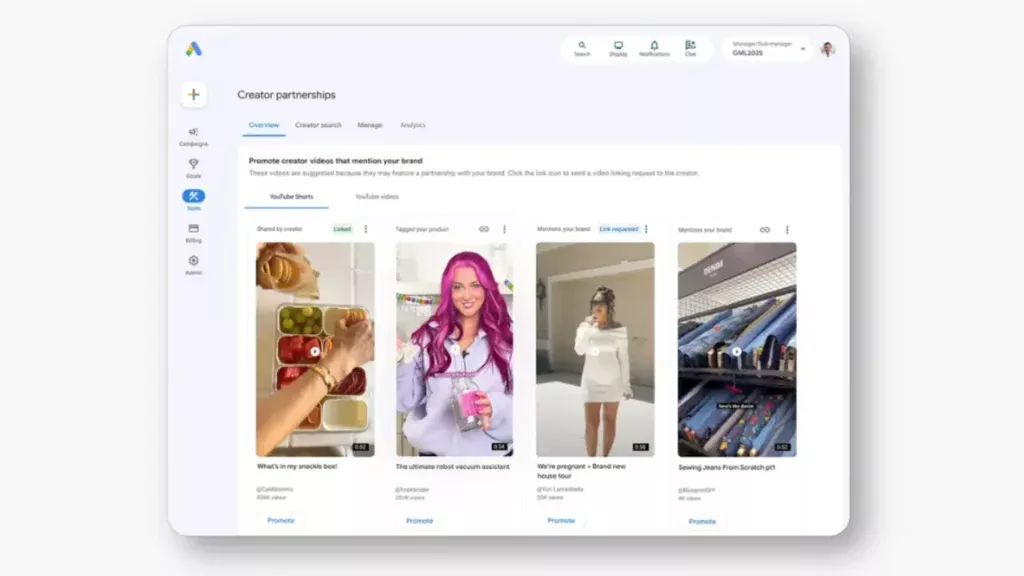
- Automated discovery of relevant creators based on brand mentions and audience alignment
- Unified campaign management eliminates the need for separate platforms
- Enhanced targeting through creator audience segmentation
The platform works by connecting your brand with creators who are already mentioning your products or services. Then, you can promote their content while gaining access to previously unavailable audience data. This creates a compound effect: Your paid promotion amplifies organic creator content while simultaneously building custom audiences for future campaigns.
For marketing leaders managing substantial advertising budgets, this represents both an immediate tactical opportunity and a strategic advantage that will compound over time.
The Creator Partnership Revolution: What’s Actually Changed
From Fragmentation to Integration
The traditional influencer marketing workflow has been a masterclass in inefficiency. Marketing teams would source creators through third-party platforms, negotiate contracts via email, receive content files, manually upload assets to advertising platforms, and then attempt to piece together performance data from multiple disconnected sources.
Google’s Creator Partnership Hub eliminates this fragmentation entirely.
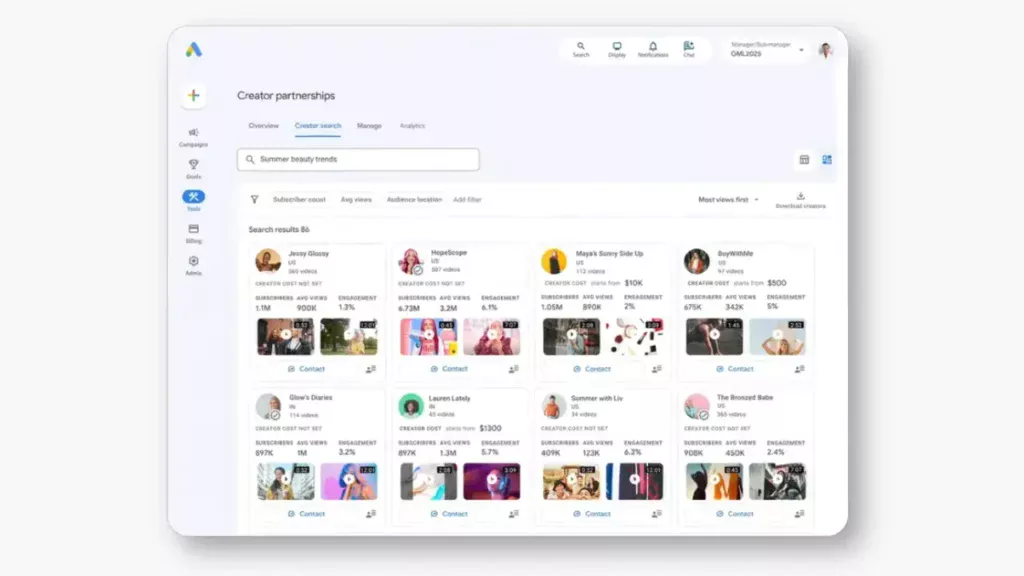
The platform operates through YouTube’s algorithm, which identifies videos mentioning brand names and surfaces them within Google Ads interface. When you access the Creator Partnership section, you’re presented with a curated selection of creators whose content aligns with your brand — complete with engagement metrics, audience demographics, and partnership availability.
Here’s how the streamlined process works:
- Discovery: Browse recommended creators based on your brand mentions and audience alignment
- Brief submission: Create partnership proposals directly within the platform
- Negotiation: Handle contracts and deliverables through YouTube’s BrandConnect
- Campaign integration: Link approved creator content to your Google Ads campaigns
- Performance tracking: Access both organic and paid analytics in one dashboard
The Analytics Advantage
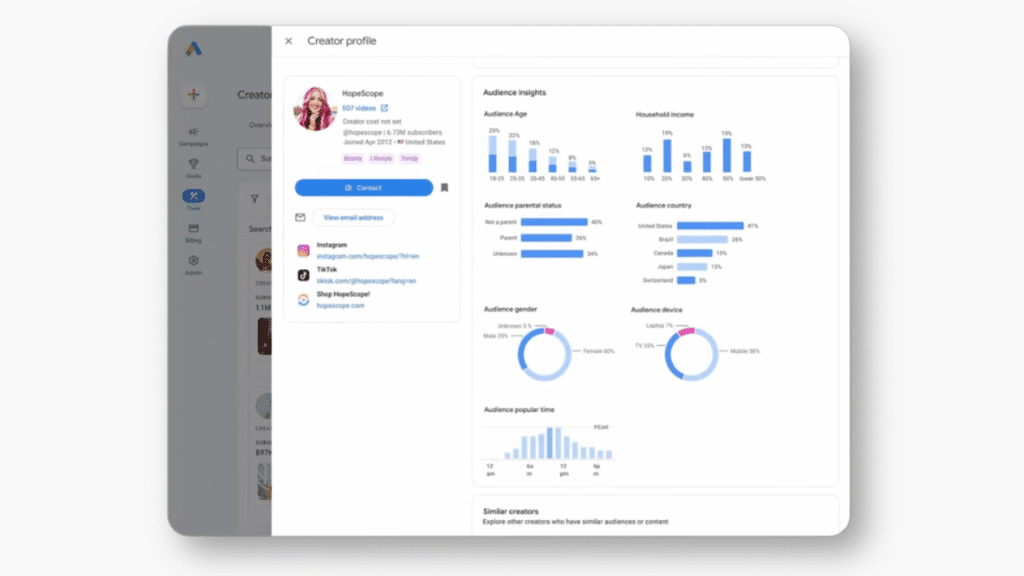
Perhaps the most significant advancement is access to creator audience data that was previously impossible to obtain. When you partner with a creator through the platform, you gain insight into their followers, viewers, and engagement patterns — data you can then segment into custom audiences for your broader marketing efforts.
This creates a multiplier effect. Your initial creator partnership doesn’t just deliver the immediate campaign results; it provides audience intelligence that informs future targeting across all your Google Ads campaigns.
Why This Matters More Than You Think
The Generational Shift in Search Behaviour
Understanding why Google developed this platform requires recognising the fundamental changes in how different generations consume information and make purchasing decisions.
Gen Z (ages 10-28) represents the most video-centric generation in history. Research indicates that 90% watch YouTube at least weekly, and they’re massive consumers of short-form, snackable video content. For this demographic, video isn’t just entertainment — it’s their primary research method for everything from product comparisons to service recommendations.
Millennials (ages 29-44) demonstrate similarly high video consumption rates, though their behaviour often combines video research with traditional text-based investigation.
Gen X and Boomers show lower baseline video consumption, but this is rapidly increasing as platforms become more accessible and content becomes more diverse.
Google recognises these trends and is positioning YouTube content to appear more prominently across search results — not just in traditional video results, but within AI overviews, featured snippets, and even large language model responses.
%E2%80%9CWe’re we’re moving away from where we use keywords as a starting point, and geting more of a choice of prospective audience we can prospect instead.”
 Rebecca Pilkington
Head of PPC
Rebecca Pilkington
Head of PPC
The Strategic Imperative
This isn’t simply about adding another marketing channel. Google owns YouTube, and they have every incentive to keep searches within their ecosystem for as long as possible. By making YouTube content more discoverable and actionable, they’re creating a competitive moat that extends far beyond traditional search results.
For businesses, this creates both an opportunity and a necessity. Companies that establish strong creator partnerships now will benefit from increased visibility as Google continues prioritising video content across their platforms.
Beyond E-commerce: Creator Partnerships for Every Business Model
B2B Applications That Actually Work
The immediate assumption is that creator partnerships only work for consumer brands — fitness supplements, fashion, travel, and similar sectors where visual demonstrations drive purchasing decisions. This assumption dramatically underestimates the opportunity.
Service-based businesses can leverage creator partnerships through customer success stories, behind-the-scenes content, and educational materials that demonstrate expertise and build trust.
B2B companies have perhaps the greatest untapped opportunity. Consider these applications:
- Software demonstrations: Real users showing how platforms solve actual business problems
- Case study content: Customers explaining measurable business impact
- Educational series: Industry experts breaking down complex topics
- Feature tutorials: Practical applications that potential customers can immediately visualise
The key insight is that B2B doesn’t have to mean “boring to boring.” Companies like ClickUp have demonstrated that business software can create engaging, entertaining content that still delivers educational value.
Trust Signals in High-Stakes Decisions
For expensive services — bathroom installations, real estate, financial planning — creator partnerships function as sophisticated trust signals. When potential customers see real people sharing genuine experiences, it reduces perceived risk and accelerates decision-making.
This is particularly powerful for industries where customers typically rely on word-of-mouth recommendations. Creator partnerships essentially scale personal referrals through targeted advertising.
The Technical Implementation: What You Need to Know
Budget Considerations
One of the most compelling aspects of the Creator Partnership Hub is how it integrates with existing campaign budgets. You don’t need separate budget allocation for influencer partnerships — the content can be incorporated into current Performance Max (PMax) campaigns, Demand Gen campaigns, or standalone YouTube campaigns.
The only additional cost is the creator partnership fee, which you negotiate directly through YouTube’s BrandConnect platform. This can range from modest fees for nano-influencers to substantial investments for established creators, but the pricing is transparent and negotiable.
Campaign Integration Options
PMax Enhancement: Add creator content to existing Performance Max campaigns to improve quality scores and reach broader audiences.
Demand Gen Integration: Incorporate creator videos into demand generation campaigns targeting awareness and consideration phases.
Standalone YouTube Campaigns: Create dedicated campaigns focusing entirely on creator content amplification.
Audience Development: Use creator partnerships primarily for audience building, then retarget these custom audiences through other campaigns.
Quality Score Benefits
Google actively rewards advertisers who incorporate video content into their campaigns. PMax campaigns without video content typically receive “average” or “good” quality scores, whilst campaigns including video achieve “excellent” ratings — resulting in improved reach and lower costs.
This creates a compound benefit where creator partnerships not only provide new audience access but also improve the performance of your existing campaigns.
The Competitive Advantage Window
First-Mover Benefits
The Creator Partnership Hub is currently in beta, which means adoption is limited and competition for creator attention is lower than it will be once the platform becomes widely available.
Early adopters can establish relationships with high-quality creators before demand increases and pricing becomes more competitive. They can also develop internal expertise and processes whilst the learning curve is manageable.
Cross-Platform Amplification
Content created through YouTube partnerships doesn’t need to remain confined to Google’s ecosystem. The same creator content can likely be repurposed across Meta advertising, LinkedIn campaigns, email marketing, and website integration.
This creates significant economies of scale where a single creator partnership can fuel multiple marketing channels, dramatically improving return on investment.
Long-term Relationship Building
The platform facilitates ongoing partnerships rather than one-off transactions. Successful collaborations can evolve into ambassador relationships, providing consistent content creation and audience access over extended periods.
Practical Implementation Strategies
Creator Selection Criteria
The most successful creator partnerships prioritise audience alignment over vanity metrics. A creator with 10,000 highly engaged followers in your exact niche will typically deliver superior results to one with 100,000 passive followers across diverse demographics.
Key factors to evaluate:
- Engagement quality — audiences that actively comment, share, and respond
- Content style alignment — natural tone that complements your brand values
- Niche authority — industry experts often generate more credible endorsements than professional influencers
Content Briefing Best Practices
Successful partnerships begin with a comprehensive briefing that balances direction with creative freedom. Provide context about your business objectives and explain how the creator partnership fits into your broader marketing strategy.
The most effective approach involves providing guidelines rather than scripts. Creators understand their audiences far better than you do, and their authentic voice is precisely what makes their content valuable.
Essential briefing elements:
- Clear success metrics — awareness, consideration, conversions, or audience building
- Technical requirements — specifications needed for campaign integration
- Creative boundaries — brand guidelines without restricting authentic expression
Performance Optimisation
The Creator Partnership Hub’s analytics capabilities enable sophisticated optimisation strategies that extend far beyond immediate campaign performance. Use creator audience data to build custom audiences for retargeting campaigns — this audience intelligence often proves more valuable than the initial creator content itself.
Optimisation tactics:
- Systematic experimentation with different creator styles and approaches
- Multi-campaign testing across PMax, Demand Gen, and standalone YouTube campaigns
- Comprehensive attribution tracking both direct conversions and long-term audience development
Next Steps
- Audit Current Campaigns: Review existing Google Ads campaigns to identify where creator content could enhance performance
- Research Relevant Creators: Begin identifying creators in your industry or adjacent sectors who align with your brand values
- Set Testing Budget: Allocate a portion of your advertising budget specifically for creator partnership experimentation
- Develop Content Guidelines: Create briefing templates that balance brand requirements with creative freedom
- Establish Success Metrics: Define how you’ll measure both immediate campaign performance and long-term audience development
- Request Beta Access: Contact your Google Ads representative to inquire about Creator Partnership Hub availability
- Plan Cross-Platform Strategy: Consider how creator content can be leveraged across multiple marketing channels
In Conclusion
The Creator Partnership Hub represents more than a new advertising feature — it signals Google’s commitment to visual, creator-driven content as the future of search and discovery.
For marketing leaders, this creates both an immediate tactical opportunity and a strategic imperative. Companies that establish creator partnerships now will benefit from reduced competition, lower costs, and early access to audience intelligence that will inform broader marketing strategies.
The question isn’t whether creator partnerships will become essential to digital marketing success — it’s whether you’ll establish your advantage whilst the opportunity window remains wide open.
The businesses that thrive in this new environment will be those that recognise creator partnerships not as an additional marketing channel, but as a fundamental shift in how customers discover, research, and choose products and services.
Your competitors are likely still focused on traditional search optimisation and standard display advertising. Whilst they’re fighting yesterday’s battles, you can be building tomorrow’s competitive advantages.
Watch This Next
This shift toward integrated video partnerships represents part of Google’s broader evolution toward AI-powered search experiences.
In a recent episode of the Dojo, Charlie and Dale explored how AI Search visitors are already converting 4.4x better than traditional search users, suggesting fundamental changes in how people discover and evaluate businesses online.
Watch the episode below or listen to the audio versions instead: