Is AI Replacing Google for Beauty Shoppers?

Something has quietly shifted in the way people shop for beauty products — and the numbers are starting to catch up with the reality.
Your customers are no longer opening Google, typing “best moisturiser for dry skin,” scrolling through ten blue links and picking one. Increasingly, they’re asking ChatGPT. They’re talking to Gemini. They’re getting product recommendations from AI platforms that don’t show ads, don’t have infinite scroll, and — critically — don’t always show your brand.
For marketing leaders in the beauty and cosmetics sector, this creates an urgent question: are you visible where your customers are actually searching? And if not, what happens to the part of your funnel you can’t see?
This article draws on the findings from our recent AI Search: The New Shelf Space for Beauty Brands report, discussed with Charlie Marchant, CEO of Exposure Ninja, to give you a clear picture of what’s changing, why it matters, and what to do about it.
Executive Summary
- The global beauty and cosmetics sector is valued at over $450 billion — and AI is reshaping how consumers search and buy within it.
- 37% of beauty consumers are already using AI platforms (ChatGPT, Gemini, Perplexity and others) to search for products.
- 27% of UK shoppers are already making purchases via AI agents — autonomously, without human input.
- 80% of shoppers abandon traditional Google searches in this sector because they can’t find specific enough answers.
- AI Overviews now appear on 36% of beauty-related queries, often above organic results — a different challenge to ChatGPT visibility, requiring a different strategy.
- The beauty sector is proving economically resilient — UK beauty spending rose from £291 in 2024 to £324 in 2025 — driven in part by the “lipstick effect.”
- Agentic AI shoppers — those who delegate purchasing entirely to AI — are projected to account for 10–20% of US e-commerce purchases by 2030.
- The most important action right now: understand where your AI traffic and conversions are already coming from, then build a strategy around the products and categories where you most need to win.
Why Are Beauty Shoppers Moving to AI Search?
Beauty is personal. That’s always been true — but it’s now the central reason AI search is accelerating in this sector faster than almost any other.
When someone is trying to build a skincare routine, manage a specific curl pattern, or find a retinol that won’t irritate sensitive skin, generic search results are genuinely unhelpful. They require the shopper to do all the filtering themselves — reading ten different articles, cross-referencing ingredient lists, trying to work out which advice applies to their specific situation.
The data reflects how badly this is failing shoppers. Around 80% of people abandon searches when using traditional Google results in this category because they simply can’t find the specific answers they need. That’s not a minor friction point. That’s most of your potential customers walking away unsatisfied from an information source your brand may have spent years trying to rank in.
AI platforms solve this differently. They take a question — even a complex, personal one — and synthesise an answer that feels tailored. As Charlie, explains: “I use ChatGPT for almost all searches that I personally do relating to this sector — for things like skincare, haircare, colour analysis. ChatGPT is basically my bible when it comes to everything in this sector.”
What’s accelerating this isn’t just the technology. It’s the behaviour that was already there. The most forward-thinking brands in beauty understood years ago that personalisation was the competitive edge. The Ordinary built its reputation in part on a regimen builder — a tool that asks about your skin type, your concerns, and your existing routine before recommending a single product. Only Curls does the same for hair, walking customers through curl pattern, porosity and hydration levels before suggesting a product stack.
For these brands, personalisation wasn’t a gimmick. It was a response to a real problem: too many products, too many shoppers who didn’t know where to start. AI search is, in many ways, that same idea at scale — but happening outside your website, without you in the room.
There’s one more factor worth noting. AI recommendations don’t replace brand familiarity — they interact with it. When a shopper asks ChatGPT for a moisturiser recommendation and it returns five options, they’re more likely to choose the brand they already recognise from a friend, a family member or previous experience. Visibility in AI search is partly a brand awareness play, not just a performance channel.
How Do AI Overviews Fit Into the Picture?
Not all AI search is the same — and this distinction matters for how you allocate resource.
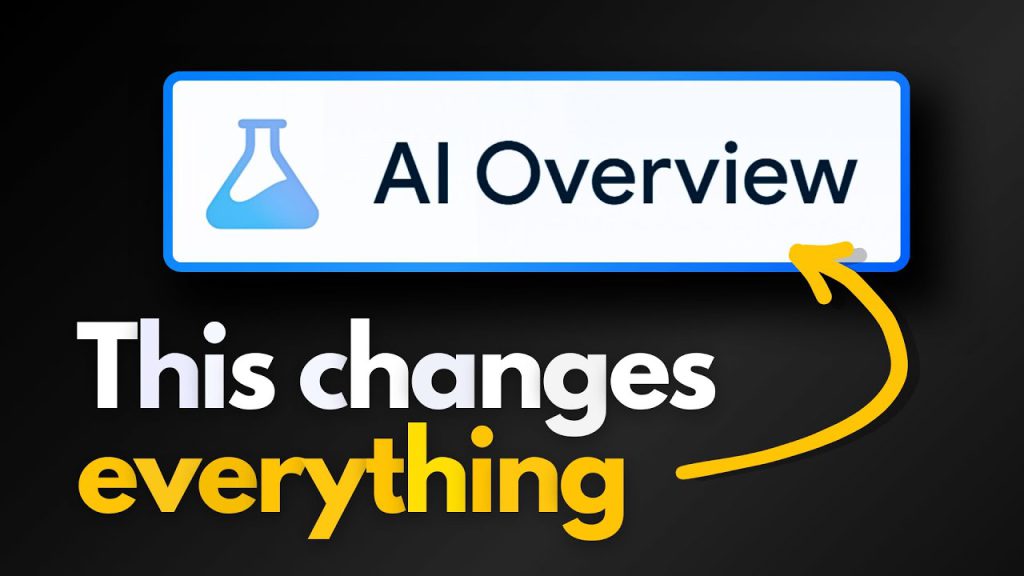
ChatGPT, Gemini, and Perplexity are standalone AI platforms. AI Overviews are something different: the AI-generated summaries that appear at the top of Google’s own search results page, above the organic rankings you’ve spent years building.
AI Overviews now appear on approximately 36% of beauty-related search queries. That’s a significant share — and because they sit above the traditional organic results, appearing in them can be more commercially valuable than ranking number one organically for the same term.
The business case is strengthening. Data from the beauty sector shows that 45% of marketers reported an increase in traffic after their brand appeared in AI Overviews. In a category where shoppers are actively trying to solve problems — comparing products, understanding ingredients, building routines — AI Overviews that surface a recognisable brand, often alongside product images, create meaningful brand stickiness.
Optimising for AI Overviews is, however, a distinct workstream. It’s not the same as optimising for ChatGPT, and it shouldn’t be treated as such. Charlie puts it clearly: “It is really a project to decide which keywords show AI Overviews that are relevant to you — which ones have the commercial intent you want to show up for, or are part of the top of funnel that leads buyers through to actually purchase what you sell.”
A useful starting point: if you already hold a position between one and ten organically for a keyword, you’re significantly more likely to also appear in the AI Overview for that term. That makes your existing SEO rankings a meaningful lever for AI Overview visibility — not a replacement strategy, but a foundation to build from.
Where Should Beauty Brands Focus Their Budget?
Here’s the budget question that every marketing leader in this sector is quietly wrestling with: do you invest in owning the customer journey on your own site — through tools like regimen builders and product quizzes — or do you invest in getting your brand recommended by AI platforms you don’t control?
The honest answer is: it depends on where you are right now.
If you’re a brand with a large, complex product range and high website traffic, a regimen builder or quiz is a genuine asset. It reduces overwhelm, captures first-party data, enables segmented email marketing, and keeps the entire customer journey — including the recommendation — on your terms. The secondary benefits are substantial: seasonal SPF reminder emails, subscription nudges for retinol replenishment, personalised follow-up sequences based on skin type. The Ordinary and Only Curls built these tools because they had hundreds of products and needed to funnel customers through intelligently.
But if you’re a mid-market brand competing against a player that already has a well-established regimen builder, trying to outbuild them on your own website is unlikely to be the highest-return use of your budget. As Charlie explains: “If you are competing with a brand like The Ordinary and they’ve already got a huge regimen builder, and you are more of a mid-market player than a global player, it’s going to be very difficult to knock them off with something like that on your own website.”
In that scenario, your higher-leverage investment is likely AI search visibility — getting your hero products recommended by ChatGPT and Gemini, and appearing in the lists on high-authority publications that those platforms draw from when making recommendations.
There’s a simpler version of this decision for brands with a small, clearly differentiated product range. If you have five hero products that are obviously distinct — different audiences, different use cases, clearly communicated — you may not need a quiz at all. Clear navigation, well-structured product descriptions, and a strong AI search presence may do more for your business than building complex on-site tools.
The underlying question is: are you at the stage where you need more customers arriving at your site, or at the stage where you need to convert and retain the ones already there? The answer shapes everything.
And the floor-level non-negotiable, regardless of business size: “If you’re not in the recommendations, you’re not pushing any traffic through from those sites. You’re not getting referral traffic from ChatGPT or Gemini, and you’re not covering that part of the top of the funnel — of those 37%, that’s for now.”
Why Does Omnichannel Still Matter?
If you’ve been reading this as a purely digital story, it’s worth stepping back — because the data tells a more complicated picture of how beauty shoppers actually behave.
20% of shoppers currently avoid buying beauty products online because they find product descriptions confusing. That’s one in five potential customers who would rather not buy from you digitally — not because they don’t want the product, but because your content hasn’t answered their questions well enough.
Even more striking: 29% of shoppers visit a physical store specifically to get information they couldn’t find online. They’re going into Boots or Superdrug not because they prefer in-store shopping, but because they need to read the label on the bottle to find what your website should have already told them.
This represents a significant, fixable leak in your funnel. The brands winning in AI search are winning in part because their product content is comprehensive, specific, and structured for the way AI platforms extract and surface information. That same content improvement directly benefits your e-commerce conversion rate and reduces the number of customers who walk past your shelf at a physical retailer without buying.
The channels are not separate. AI search, traditional SEO, product descriptions, email marketing, and in-store purchases all influence each other. A customer who discovers your brand through a ChatGPT recommendation, reads your product page, decides they want to try before they buy, and then walks into Superdrug already knowing what they’re looking for — that’s a conversion journey that started online and ended in store. Both channels got credit for something that began with AI visibility.
As Charlie puts it: “These AIs are basically acting as super researchers — cross-referencing what the brand says about itself, what your website claims about itself, with third-party sources, with what people are saying on Reddit, with what medical journals might have published.” The implication is clear: every piece of content you put into the world about your products — on your site, on third-party publications, on review platforms — feeds into how AI represents your brand to a potential customer.
Is the Beauty Sector Worth Investing in Right Now?
Given the current economic climate — tariff uncertainty, cost-of-living pressure, cautious consumer sentiment — it’s a fair question to ask whether beauty is a category where investment still makes sense.
The data suggests yes, and the reason is structural rather than cyclical.
Average UK beauty spending rose from £291 per year in 2024 to £324 in 2025. That’s an increase during a period of real economic pressure — not despite it, but arguably because of it. The mechanism is what economists call the lipstick effect: when consumers cut back on large, discretionary purchases like holidays and luxury goods, they redirect that discretionary spend towards smaller, more affordable treats. Lipsticks. A new serum. An eyeshadow palette that’s been on the wishlist for three months.
“Less holidays, more hair care going on,” is how Charlie Marchant summarises it — and the spend data backs this up.
There’s also a category of beauty products that behaves more like a necessity than a luxury. SPF in summer. A daily moisturiser. The retinol that’s become part of an established routine. These aren’t impulse purchases that disappear when budgets tighten — they’re habitual, repeat buys that continue largely regardless of economic conditions, in the same way that food shops don’t stop because interest rates rise.
For marketing leaders making budget calls in 2025, the case for maintaining — or increasing — investment in AI search visibility is stronger than it might feel. The shoppers are still there. The spend is still happening. The question is whether your brand is visible when those searches occur.
What Does the Future of AI Shopping Look Like for Beauty?
Everything discussed so far describes behaviour that’s already happening. What’s coming is considerably more significant.
27% of UK shoppers are already using AI agents to make purchases autonomously — handing the buying decision to an AI and letting it complete the transaction. Not researching, not browsing, not comparing. Delegating. Agentic shoppers of this kind are projected to account for between 10 and 20% of all US e-commerce purchases by 2030 — roughly four years away.
Shopify brands are already beginning to integrate checkouts directly into ChatGPT. The near-future version of this is a shopper who says, “I’ve run out of my retinol, find me the same one and get it posted” — and the AI handles everything from product identification to payment without a single page visit. Your website’s conversion rate becomes irrelevant if the AI agent never arrives.
What does this mean for beauty brands in practice? It means the signals your brand sends across the internet — not just your website, but third-party publications, review platforms, Reddit, YouTube — will increasingly determine whether AI agents recommend and purchase your products on a customer’s behalf. An AI shopping agent cross-references everything. It reads what you say about yourself, what authoritative publications say about you, what customers say about you. Brands that have invested in building a credible, consistent presence across all of these sources will be the ones that get selected.
It’s worth noting this won’t replace the joy-of-discovery side of beauty shopping for everyone. Some people genuinely enjoy browsing, watching reviews on YouTube, following their favourite influencer’s seasonal recommendations, spending a Saturday afternoon in Sephora. That omnichannel experience isn’t going away. But for the part of your customer base that just wants their problem solved — the skincare need, the repeat purchase, the functional buy — AI agents are about to make the decision before they ever reach your marketing funnel.
The brands that are positioned for this now are the ones that will have an insurmountable head start by the time it becomes the norm.
Next Steps
If you’re responsible for growth in a beauty, skincare, haircare, or cosmetics brand, here’s how to start moving in the right direction.
This week
- Check your Google Analytics channel groups for AI-referred traffic. Set up a segment for ChatGPT, Gemini, and Perplexity referrals. Are conversions from these sources increasing? For most beauty brands, they are — you just may not be measuring it yet.
- Search your three highest-priority hero products in ChatGPT. Look at which brands are recommended and which sources ChatGPT is drawing from. That is your competitive landscape in AI search.
- Audit your product descriptions against the 20% benchmark: would a shopper who reads this description have all the information they need to purchase without visiting a store? If not, it’s a conversion problem as well as an AI search problem.
Next 30 days
- Map the categories and product lines where AI search visibility will have the highest commercial impact — your highest-margin lines, your most competitive product areas, and the queries where your ideal customers are most likely to be using AI.
- Identify the third-party publications, magazines, Reddit threads, review sites, and listicles that AI platforms are consistently citing for your category. These are the placements you need to be featured in — this is your PR brief.
- Review which keywords are triggering AI Overviews in Google for your category, and cross-reference with your current organic rankings. Any term where you rank one to ten organically is a near-term AI Overview opportunity.
Next 90 days
- Build or brief a digital PR programme specifically targeting the high-authority publications your AI search research identified. Placement in a ZDNet, Glamour, or Cosmopolitan list article can directly influence AI recommendations in a way that standard link-building does not.
- If you have a large product range and currently lack a personalisation tool on your site, assess the case for a regimen builder or product quiz — both for conversion rate improvement and as a content asset that reinforces your authority with AI platforms.
- Start stress-testing your brand’s AI search readiness for agentic shopping. If an AI agent were to search for your product category today, would your brand appear? Is your product data clean, consistent, and easy for an AI to extract and act on?
For a deeper look at the data and sector-specific recommendations, download the full AI Search: The New Shelf Space for Beauty Brands report. If you’d like an expert view of where your brand currently stands in AI search, request a free marketing review, and we’ll take a look.
In Conclusion
The shift from Google to AI search in the beauty sector isn’t a future trend to monitor — it’s a present reality to act on. 37% of beauty consumers are already using AI platforms to search for products. The shoppers are there. The spend is there. The question is whether your brand is visible when they ask.
The brands winning in this environment are doing three things well: they have a strong, well-structured presence on their own website; they’re featured prominently in the third-party publications and review platforms that AI draws from; and they’re producing content that answers specific questions cleanly enough for AI to extract, surface, and recommend.
The economic conditions aren’t a reason to wait. The lipstick effect is real, beauty spending is rising year on year, and the habitual, needs-based purchases in this category continue regardless of how the broader economy performs.
The window to build a meaningful AI search advantage before your competitors catch up is open right now. It won’t stay open indefinitely. The brands making these moves today are establishing the visibility that will compound as AI search becomes the default — not just for research, but for the entire purchase journey.