Zero-Click Searches: Why You Shouldn’t Panic (and What to Do Instead)


Zero-click searches are rising fast, with over half of all queries now ending without a single click. This guide shows how to adapt your SEO strategy to stay visible, earn trust, and drive action in a world where clicks are no longer guaranteed.
Zero-click searches are not new — but they’re becoming impossible to ignore.
Back in 2022, Semrush released a report showing that 25.6% of desktop searches resulted in a zero-click search in the U.S.
But recently, that number has more than doubled. SparkToro’s latest data shows that 58.5% of searches in the U.S. ended without the user clicking on the organic search results, with European searches sitting at a slightly higher 59.7%.
This means more people are getting answers directly on the search engine result page (SERP), without ever visiting a website.
In this guide, we’ll unpack what zero-click searches really mean and how you can still drive measurable results when the SERP feels like it’s working against you.
What Are Zero-Click Searches?
A zero-click search is a search that ends without a single click. The user types a query into Google, gets the answer instantly on the results page, and moves on without visiting any website.
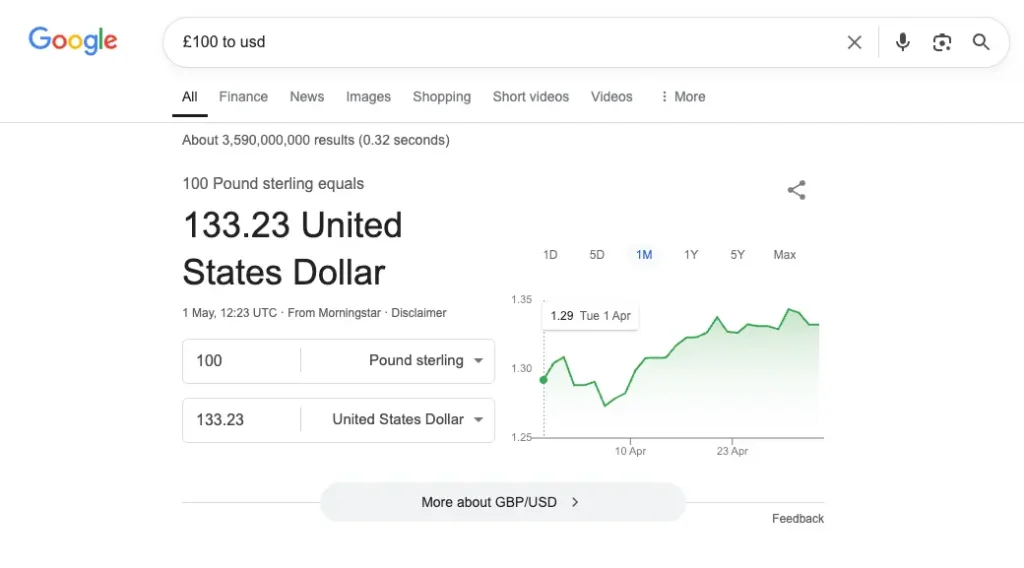
These types of searches are usually top-of-funnel and purely informational. Think of queries like “Convert £100 to dollars” or “What time does Tesco close?” They’re quick, specific, and the answer lives right on the SERP.
Drivers Behind Zero-Click Searches
Google’s goal is to provide users with the highest quality experience by giving them the best answers to their queries as fast as possible. To do that, it’s built a growing list of SERP features that deliver information instantly.
AI Overviews
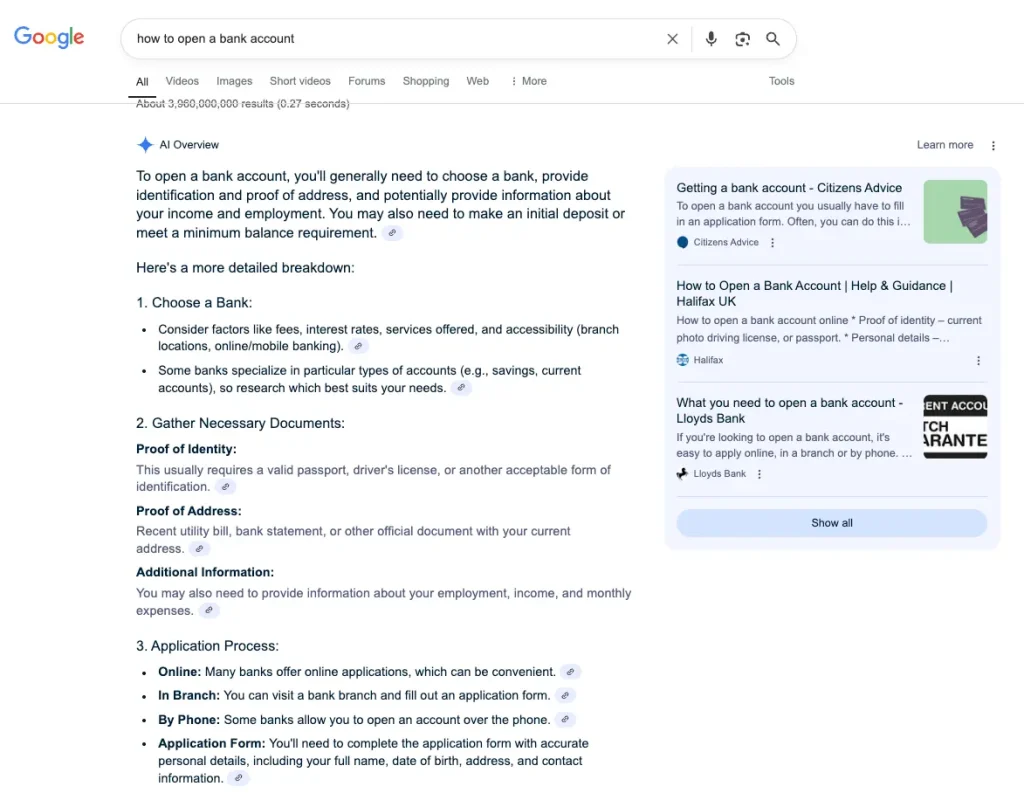
AI Overviews are Google’s latest addition to its SERP feature stack. These AI-generated summaries appear at the top of the results page and pull information from multiple sources to answer user queries in a single, cohesive response. Because they sit above traditional organic results and are styled for readability, they draw attention and clicks away from every other listing.
AI Overviews typically appear for information-based questions like “How to open a bank account?”
Another development to watch closely is AI Mode — Google’s experimental, conversational search interface currently in testing in the U.S.
Unlike AI Overviews, which sit alongside traditional search results, AI Mode entirely replaces the standard results page. It delivers fully AI-generated answers in a personalised, chat-style format, based on the user’s query and search history.
This represents an even greater shift toward zero-click search. With fewer links and more direct answers, click-through rates are likely to drop further, especially for informational queries. While still in testing, AI Mode signals where Google is headed — and businesses need to prepare for a future where visibility comes from being cited in AI answers, not just ranking on page one.
Featured Snippets
Featured Snippets are short excerpts that Google displays at the top of the SERP to answer a specific query directly. They’re pulled from third-party, high-quality pages that clearly and concisely answer the user’s question.
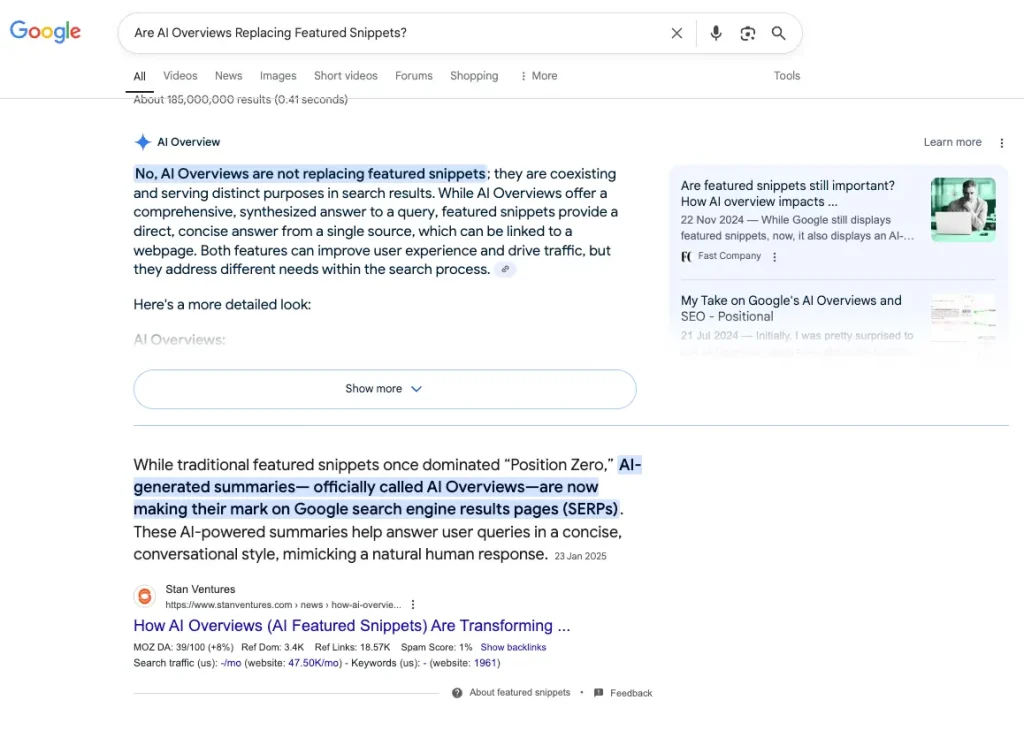
You’ll find that the prevalence of Featured Snippets has dropped since the rollout of AI Overviews. But when they do appear, it will be for simple questions like “Are AI Overviews replacing Features Snippets?” As you’ll see in the result, both an AI Overview and a Featured Snippet are present.
Knowledge Panels
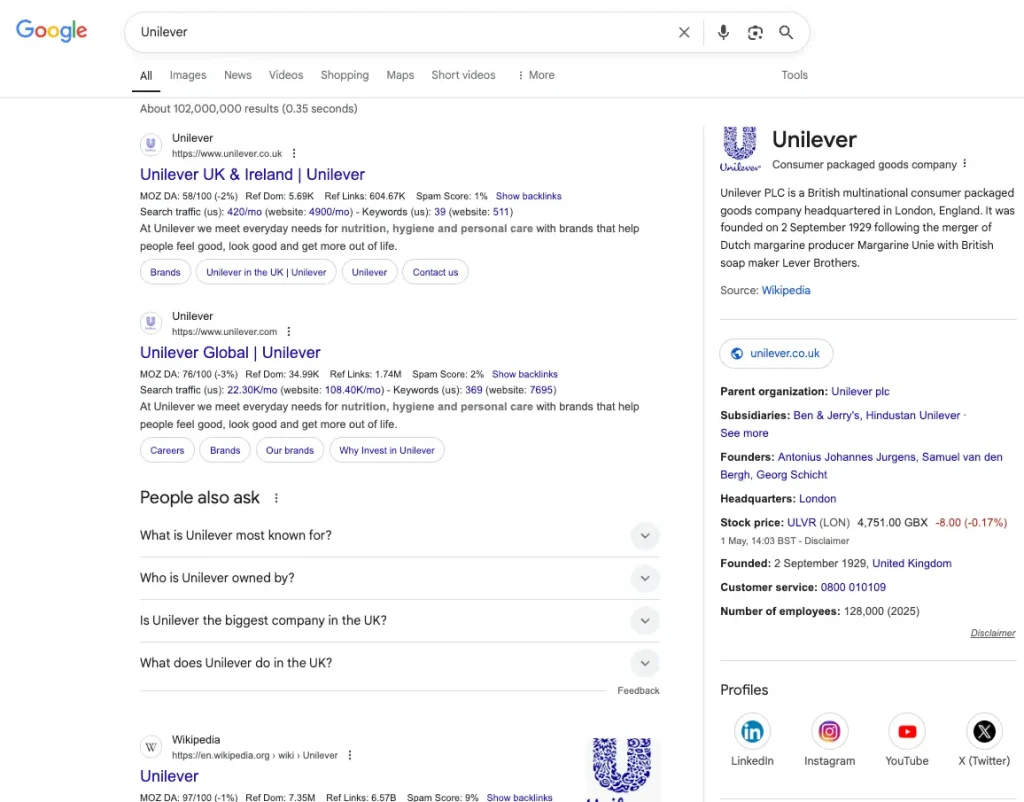
Knowledge Panels appear on the right-hand side of desktop search results (or at the top on mobile) and present a snapshot of factual information about a person, brand, or entity. They are automatically generated using information from across the web.
They typically show up for branded searches such as “Unilever,” person searches such as “Rishi Sunak,” place searches such as “London,” and concept searches such as “Attachment Theory.”
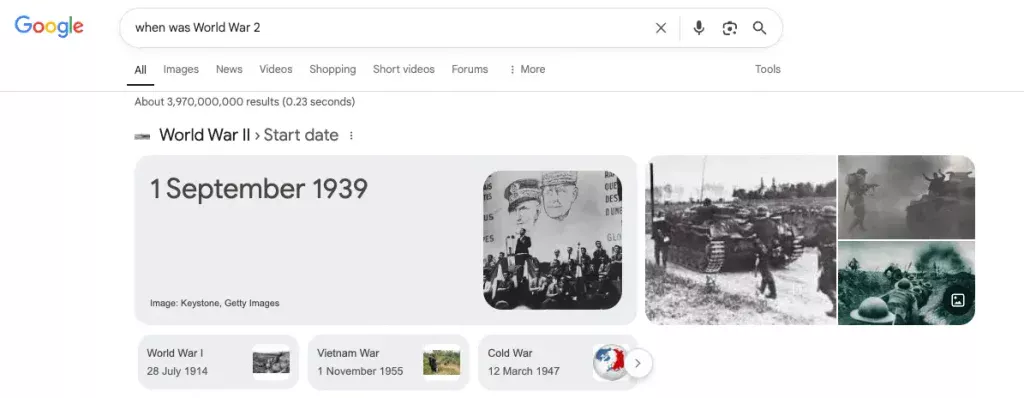
Direct Answer Boxes
Direct Answer Boxes, also called “Instant Answers,” are when Google provides factual, one-line answers to a user query. Since the answer is displayed immediately, there’s no reason to click through.
Like Featured Snippets, the frequency of Direct Answer Boxes has dropped thanks to AI Overviews. You’ll still typically see these appear for math, currency conversions, or date queries, like “When was World War 2?”.
People Also Ask
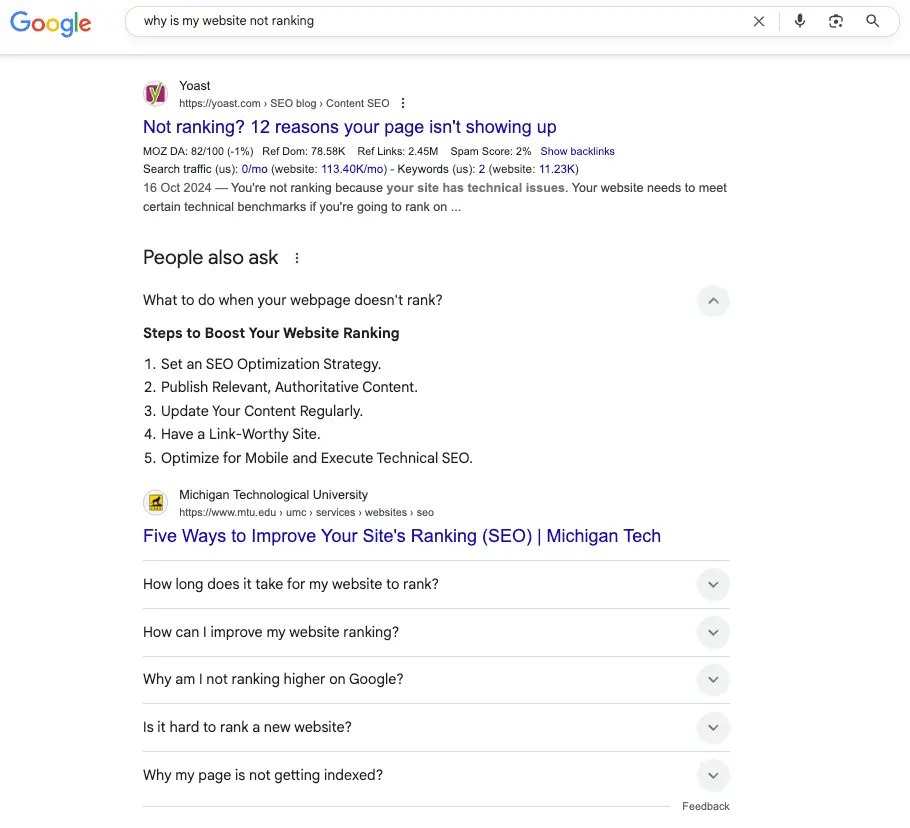
The People Also Ask box shows a list of related questions users commonly search for. Clicking on one expands the box to reveal a short answer, often pulled from a different site than the original result. Since users can keep asking more questions, they often stay entirely within Google’s interface.
This feature is common for broad queries like “Why is my website not ranking?” where follow-up questions naturally arise.
Local Pack
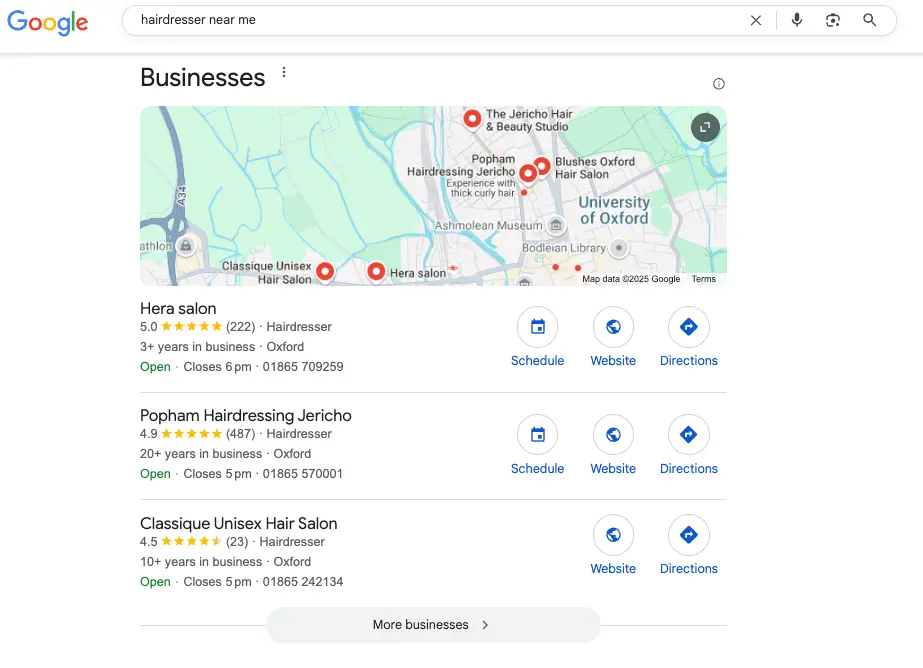
The Local Pack appears for searches with local intent and displays a map with nearby business listings, including reviews, hours, and contact options.
These results often lead to zero clicks on websites but high engagement through phone calls, direction requests, or walk-ins. It’s especially impactful on mobile, where users take action without ever landing on your site.
You’ll typically see the Local Pack show up for queries like “hairdresser near me.”
The Real Impact of Zero-Click Search
Google has been rolling out SERP features like Knowledge Panels, Answer Boxes, and Featured Snippets for over a decade. But none have impacted click-through rates as dramatically as AI Overviews.
Recent research shows that the presence of an AI Overview causes an average 15.5% drop in click-through rate across all listings. Even more striking, Ahrefs found that when AI Overviews are present, the site ranking in position can see its CTR fall by up to 34.5%.
That matters. Fewer clicks mean less traffic. And less traffic often means fewer leads, fewer conversions, and less visibility into how your audience is discovering and engaging with your brand.
But here’s the nuance: not all clicks are created equal.
Let’s look again at the examples from above:
- Convert £100 to dollars.
- When was World War 2?
These are highly top-of-funnel, informational searches — users are looking for quick answers, not products or services. If you’re an online currency exchange or a bookseller specialising in WWII history, these queries may not lead to immediate conversions anyway.
But there are zero-click queries where showing up still carries strategic value, especially when they nudge users further down the funnel. For example, someone searching for the “best time to exchange currency for travel” is starting to compare options. A well-placed Featured Snippet or AI Overview mention here could position your brand as the go-to when they’re ready to convert.
As Tim Cameron-Kitchen, Founder of Exposure Ninja, puts it: “Zero-click searches can be beneficial because they compress the buyer journey. I’m no longer looking for information; I’m further down the funnel and now looking for potentially something to buy.”
So you may be losing early clicks — but you’re gaining buyer readiness. Visibility in AI Overviews, Featured Snippets, or local packs might not get the user to your site immediately, but it builds familiarity. And when that person is ready to take action, you’re already the brand they recognise.
How To Win in a Zero-Click World
SEO Best Practices Still Matter
Search Engine Optimisations (SEO) best practices still matter because Google needs high-quality content to power its search features.
AI Overviews and Featured Snippets pull their answers from websites. If your site isn’t technically sound, well-structured, and easy for Google to understand, it won’t be chosen — which means your brand won’t appear.
However, technical SEO is only part of the equation. You also need to optimise for the right keywords — specifically, the ones that trigger features like AI Overviews or Featured Snippets.
These are the queries where users are most likely to see answers directly in the SERP — and the content Google features gets the visibility, authority, and brand recognition. Even without the click, you’re still showing up at the top of the funnel, shaping awareness and trust.
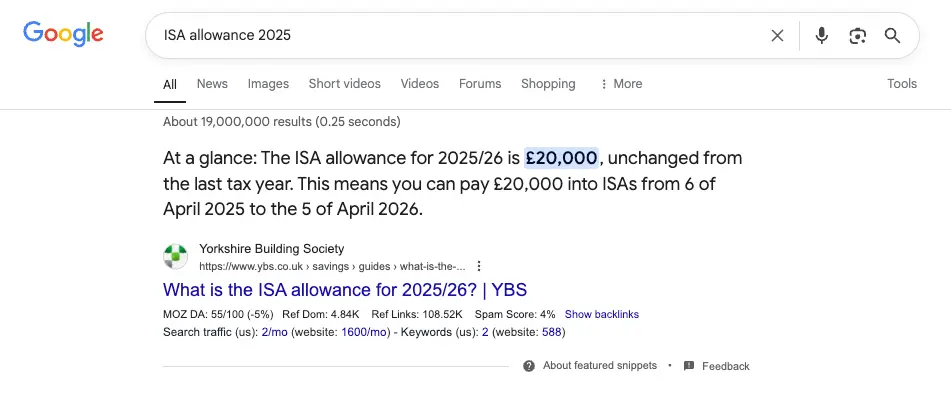
Start by identifying keywords that commonly trigger these features. Look for question-based or informational queries like “ISA allowance 2025″ and manually check them in the SERP to see if a feature is triggered. Then, structure your content to answer those queries clearly, using headings, bullet points, and schema markup where relevant.
Nail Search Intent
Search intent is what a user really wants when they type a query into Google — and in a zero-click world, matching that intent precisely is how you earn visibility.
There are four main types of search intent:
- Informational: The user wants to learn something, such as “How does an ISA work?”
- Navigational: They’re looking for a specific brand or page, like “Vanguard ISA login.”
- Transactional: They’re researching options before buying, such as “best ISA providers UK.”
- Commercial: They’re ready to take action or buy, like “open stocks and shares ISA online.”
If your content clearly aligns with the user’s intent, it’s far more likely to be chosen for an AI Overview, Featured Snippet, or People Also Ask box.
For example, when searching “How much can I put into an ISA this year?” an AI Overview appears that includes a source from Lloyds Bank.
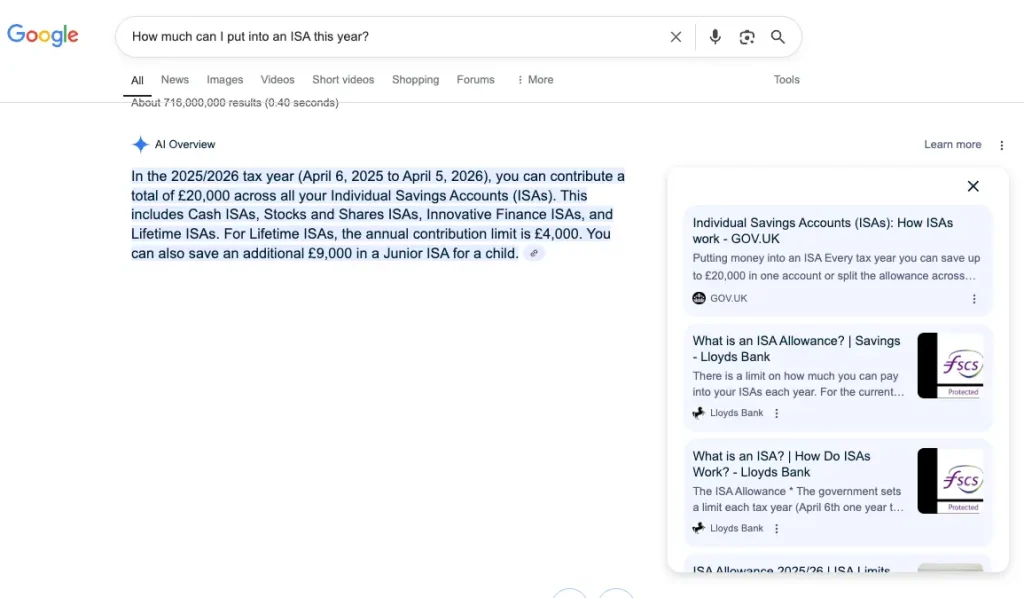
Lloyds is cited because its content directly answers the query. The page leads with a clear, factual statement about the current ISA allowance, written in plain language and formatted so Google can extract it.
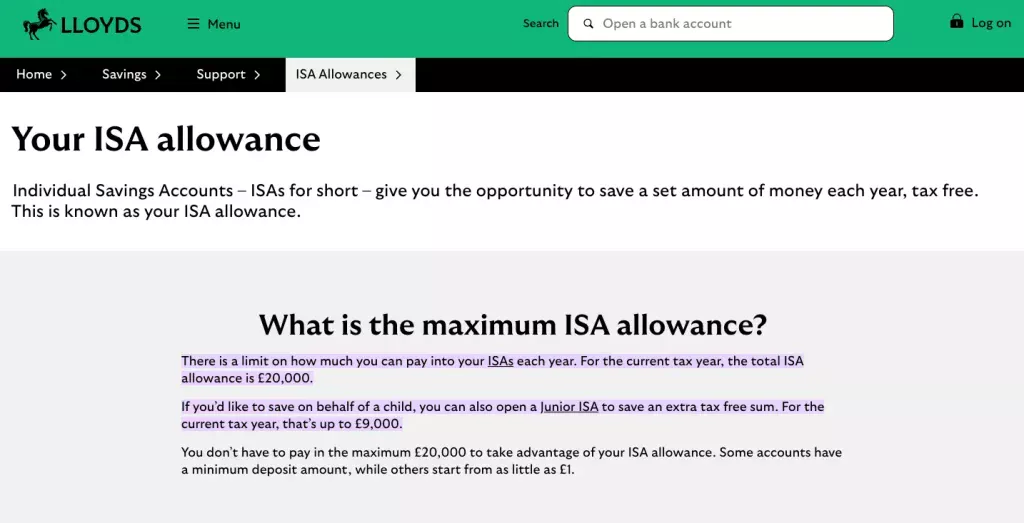
This type of visibility builds brand familiarity and trust. Even if users don’t click, they begin to associate Lloyds with ISA expertise. When they later search for providers or consider switching accounts, Lloyds is already top of mind.
Shift Focus to Quality Metrics
With more answers appearing directly in Google’s results, fewer users are clicking through to websites — especially for quick, top-of-funnel searches.
This shift is actually a benefit. These SERP features act as a filter, satisfying low-intent searches directly on the results page. This means that when users do click through to your website, they are more likely to be further down the funnel and closer to taking action.
So, instead of focusing on how many people visit your site, focus on what those visitors do once they arrive. Are they filling out a form, booking a consultation, or making a purchase?
By making quality-based metrics more important, like conversion rates, lead volume, form submissions, calls, and revenue generated, you can focus your SEO strategy on what actually drives growth, not just visits.
Optimise for AI Overviews
If you want to capture the visibility, brand recognition, and trust that comes from being cited in AI Overviews, you need to structure your content specifically for them. That means:
- Answering the main query clearly and directly within the first few lines.
- Writing clearly, concisely, and with easy-to-read paragraphs.
- Using structured headings and bullet points to make it easy for Google to extract key insights.
- Backing up claims with reliable sources and up-to-date data.
- Including expert input to strengthen authority.
- Demonstrating Experience, Expertise, Authoritativeness, and Trustworthiness (E-E-A-T) through author bios, site trust signals, and accuracy.
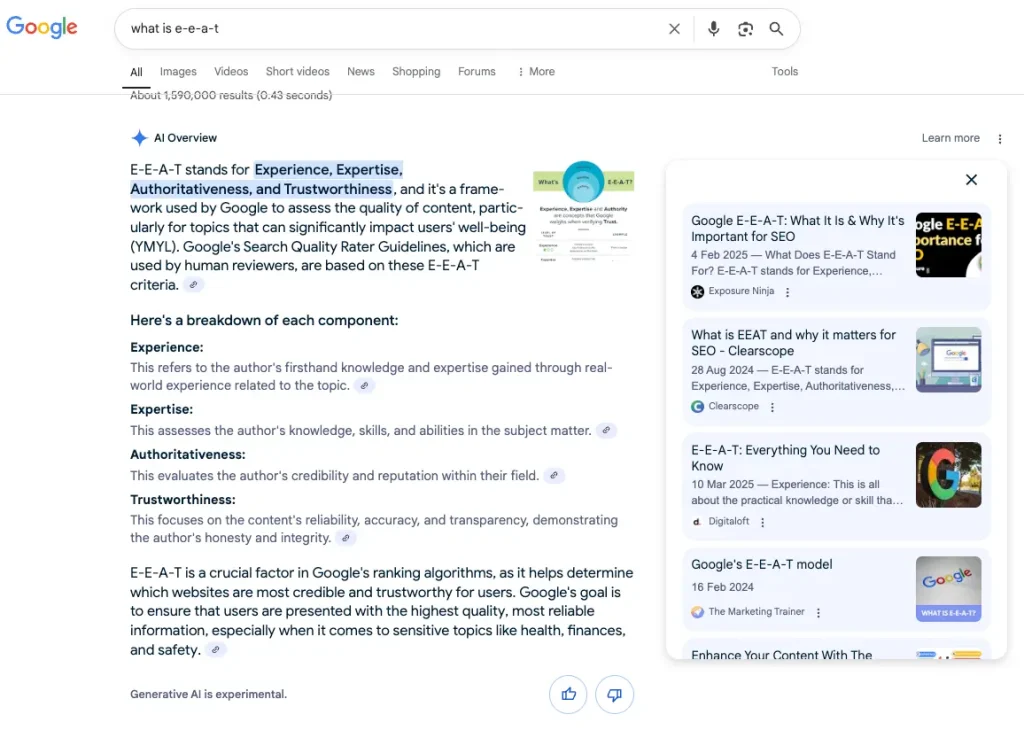
We used this exact approach when refreshing our E-E-A-T guide. We opened with a direct summary that answered the query, simplified the language, broke down complex ideas using bullet lists, cited reliable sources, and added insights from our in-house experts. The page was fully aligned with the target keyword and optimised for clarity, structure, and trust.
That’s how we secured a spot in the AI Overviews. It wasn’t luck — it was a deliberate application of best practices designed for this new search experience.
Use Middle- and Bottom-of-Funnel Content To Drive Action
Your top-of-funnel blog posts might fuel zero-click features, but your middle and bottom-of-funnel content is what converts interest into action. That’s where serious users evaluate options, compare providers, and make purchase decisions.
As Charlie Marchant, CEO of Exposure Ninja, explains: “You can offset traffic loss from zero-click search by focusing on middle- and bottom-of-funnel content. Top-of-funnel is more likely to be surfaced in AI Overviews, but buyers further down the funnel still want detailed, actionable content, and they’ll click to get it.”
Create content like comparison pages, pricing breakdowns, implementation guides, and case studies. This type of content encourages clicks, builds trust, improves your conversion rate, and boosts your authority across the SERPs, including within AI-generated results.
Build Brand Authority Across the SERP
In 2025, it’s not just about your website anymore. It’s about whether users see:
- Your brand providing an expert definition in a Featured Snippet.
- Your business explained accurately in a Knowledge Panel
- Your location, contact details, and a positive review in the Local Pack
- Your insights in a People Also Ask box when users need more information
- Your citations in AI Overviews alongside other credible brands in your industry
Every one of these touchpoints contributes to authority, builds trust, and increases the chance that a user chooses you when they’re ready to act.
To win, you need a multi-strategy approach — one that combines SEO, content marketing, and Generative Engine Optimisation (GEO) to ensure every piece of content is optimised for each Google SERP feature. That means:
- Creating technically sound, well-structured pages that rank organically
- Crafting content that answers specific questions for Featured Snippets and People Also Ask boxes
- Building local visibility through Google Business Profiles and Local Pack optimisation
- Developing high-quality, trustworthy content that earns inclusion in AI Overviews.
It’s not just about ranking anymore — it’s about being everywhere your audience looks, across every format Google now serves.
FAQs
How many searches are zero-click?
Around 58.5% of U.S. searches and 59.7% of European searches end without a click, according to SparkToro’s 2024 research.
Should you create zero-click content?
Absolutely. Even if users don’t click, zero-click content builds authority and puts your brand front and centre in SERP features like AI Overviews or Featured Snippets.
How do you optimise for zero-click searches?
To optimise for zero-click searches, structure content to directly answer common questions using concise language, especially in headers and the first sentence of each section. Use schema markup (like FAQ schema) to increase your chances of being featured in AI Overviews, Featured Snippets, or People Also Ask. Prioritise clarity, credibility, and formatting that make your answers easy for search engines to extract and display.