How To Appear in Generative AI Searches (Like ChatGPT)


The search landscape is evolving dramatically with generative AI platforms like ChatGPT rapidly gaining traction. While Google remains the dominant search engine with over 83% of UK searches and approximately 90% globally, there’s a noticeable shift occurring.
For the first time, Google has experienced a drop in UK users—1.8 million fewer in recent measurements—while ChatGPT has surged to 400 million weekly users as of February 2025, representing a staggering 300% growth since November 2023.
As marketing leaders, this raises critical questions: How do we ensure our brands appear in these AI-powered search results? Is optimising for generative AI different from traditional SEO? Should we even care about this emerging search channel?
In a recent Moz webinar, Charlie Marchant, CEO of Exposure Ninja, addressed these pressing concerns and shared pioneering strategies for generative engine optimisation (GEO). Her agency has helped global brands like The Ordinary secure prime positioning in both Google’s AI Overviews and chatbot recommendations like ChatGPT, Gemini, and Perplexity. The results? Significant sales growth driven by strategic presence in AI-generated search results.
Executive Summary
The AI Search Landscape Is Growing Rapidly:
- ChatGPT reached 400 million weekly users in February 2025 (up 300% from November 2023)
- Google AI Overviews now appear on approximately 20% of searches in the UK and US
- Long-tail queries (4+ words) trigger AI Overviews up to 60% of the time
- AI Overviews have expanded to over 100 countries worldwide
Key Differences Between Traditional SEO and Generative Engine Optimisation (GEO):
- SEO focuses on ranking webpages; GEO aims to get brand mentions directly in AI-generated content
- While SEO relies heavily on keywords and backlinks, GEO depends on brand mentions and text patterns
- Currently, AI-generated answers prioritise informational content over commercial recommendations (though this is evolving)
How to Optimise for Generative AI:
- Understand the mechanics behind how AI engines process and reformulate queries
- Implement strategies to appear in both Google’s AI Overviews and chatbot recommendations
- Create content that aligns with AI knowledge bases and citation preferences
- Measure success through new metrics designed specifically for generative search visibility
Understanding the Generative AI Search Revolution
The Changing Search Landscape
The search landscape is experiencing its most significant shift since Google’s dominance began. According to UK communications regulator Ofcom, traditional search engines like Google, Bing, and Yahoo are seeing their first-ever decline in user numbers, with Google losing 1.8 million UK users year-on-year.
Meanwhile, ChatGPT’s meteoric rise continues. Brad Lightcap, Chief Operating Officer at OpenAI, recently revealed ChatGPT’s user base has reached 400 million weekly users — a 33% increase from December 2024 and a remarkable 300% growth from November 2023.
“This rise in ChatGPT and generative AI is changing the playing field,” notes Charlie Marchant. “While ChatGPT currently commands only about one to four percent of searches compared to Google’s 83% in the UK and 90% globally, its rapid growth trajectory makes it impossible to ignore.”
How Generative AI Search Actually Works
Generative Engine Optimisation (GEO) — also known as LLM Optimisation (LLMO), Generative Search Optimisation (GSO), or AI Search Optimisation — is the process of optimising digital content to appear in AI search results, both in Google’s AI Overviews and in chatbot responses.
When a user enters a query into a generative AI platform like ChatGPT, the system:
- Reformulates the query: breaks down complex questions into simpler, searchable components
- Searches for information: either through its own knowledge base or by accessing search engines
- Summarises findings: synthesises information from multiple sources
- Generates a response: creates natural-language text that directly answers the user’s question
“Perhaps the most interesting thing about this model,” explains Marchant during the Moz webinar, “is that sometimes these generative engines like ChatGPT can just answer based on their own underlying training data that they were first trained on, without actually going to the web and making a search for things—not always, but sometimes.”
Why Google AI Overviews Matter
Google’s AI Overviews have rapidly expanded since their initial rollout in the US:
- August 2023: Launched in the UK
- October 2023: Extended to over 100 countries
- March 2024: Testing began in EU countries (Germany, Switzerland, Italy)
Currently, approximately one in five searches in the UK and US displays an AI Overview, with long-tail keywords (four or more words) triggering them up to 60% of the time.
The distribution of AI Overviews varies by industry, with health-related queries showing the highest prevalence (43%), followed by informational searches related to arts, entertainment, jobs, education, science, and nature (25%). As Marchant shared in the Moz presentation, this data comes from research conducted by Moz through their Whiteboard Friday series, highlighting how AI Overviews are primarily appearing in informational search contexts.
A significant development occurred in October 2024 when Google began incorporating sponsored products into AI Overviews for commercial terms. These product ads integrate with existing Google Ads campaigns, including AI-powered search ads, shopping, and performance max campaigns.
The Crucial Differences Between SEO and GEO
While traditional SEO and Generative Engine Optimisation share similarities, they operate on fundamentally different principles:
Traditional SEO:
- Primary Focus: Ranking webpages in conventional search engines
- Authority Signals: Keywords, backlinks, on-page optimisation
- User Intent: Accommodates a broad range of intents (informational, transactional, commercial)
- Goal: Drive click-through to websites
Generative Engine Optimisation (GEO):
- Primary Focus: Securing brand mentions and citations within AI-generated answers
- Authority Signals: Brand mentions and text patterns that AI systems can recognise and aggregate
- User Intent: Currently prioritises informational content, though commercial recommendations are increasing
- Goal: Shape the narrative within AI responses to position your brand favourably
“SEO and GEO, they are pretty different, though they do massively overlap,” says Marchant. “Where we were previously focusing on just ranking in search results pages, GEO is actually trying to get content directly included in the AI-generated answer so that users don’t need to click through multiple links.”
Proven Strategies for Generative AI Visibility
Exposure Ninja has developed and tested specific strategies for increasing brand visibility in generative AI searches. Here’s how they helped The Ordinary secure prominent mentions in both Google’s AI Overviews and ChatGPT responses for key product terms like “hyaluronic acid”:
1. Optimise for Multiple Query Variations
AI systems reformulate user queries into multiple search variations. For example, when someone asks ChatGPT about “best hyaluronic acid,” the system might internally search for:
- best value hyaluronic acid
- most effective hyaluronic acid brands
- recommended hyaluronic acid products
- where to buy hyaluronic acid
By optimising for these different query variations and ensuring consistent brand presence across them, Exposure Ninja successfully positioned The Ordinary as the top recommendation across multiple AI-generated responses, resulting in significant sales growth.
2. Leverage the Source Preferences of AI Platforms
Different AI platforms have distinct preferences for which sources they cite. For example:
- Google AI Overviews: Tend to cite authoritative websites that rank highly for relevant keywords
- ChatGPT: Often references well-established sources with strong brand recognition
- Perplexity: Frequently cites multiple types of sources, including user-generated content
Understanding these preferences allows marketers to strategically position their content where it’s most likely to be referenced by specific AI platforms.
3. Structure Content for AI Consumption
The way content is structured significantly impacts whether AI systems will reference it. Effective content for AI consumption typically includes:
- Clear, factual information presented in a straightforward manner
- Structured data that’s easy for AI to parse and extract
- Comprehensive answers to common questions in the industry
- Content that aligns with the patterns AI systems are trained to recognise
When Exposure Ninja applied these principles to The Ordinary’s content strategy, they successfully secured mentions in ChatGPT responses for queries like “best value hyaluronic acid,” “which hyaluronic acid should I buy,” and product recommendations.
Next Steps: Implementing Your Generative AI Strategy
Based on Exposure Ninja’s experience helping global brands succeed with generative AI optimisation, here are concrete steps marketing leaders can take to improve their visibility:
1. Audit Your Current AI Search Presence
Before implementing any strategy, understand your current visibility in AI search:
- Use tools to check which of your target keywords trigger Google AI Overviews
- Test key product/service queries in ChatGPT and other AI platforms to see if your brand appears
- Analyse competitor mentions to identify gaps and opportunities
2. Align SEO and GEO Strategies
While SEO and GEO differ, they should complement each other:
- Ensure your traditional SEO foundation is strong, as it influences AI citations
- Expand keyword research to include question-based and conversational queries
- Optimise existing content to provide clear, factual information that AI systems can easily reference
3. Develop Comprehensive, Authoritative Content
AI systems prioritise content that thoroughly addresses user questions:
- Create in-depth guides that answer the most common questions in your industry
- Include structured data, lists, and factual statements that are easy for AI to extract
- Organise content logically with clear headings and sections
4. Monitor and Adapt to AI Platform Updates
The generative AI landscape is evolving rapidly:
- Stay informed about algorithm updates and new features
- Regularly test and measure your visibility in different AI platforms
- Be prepared to adjust strategies as AI capabilities and preferences change
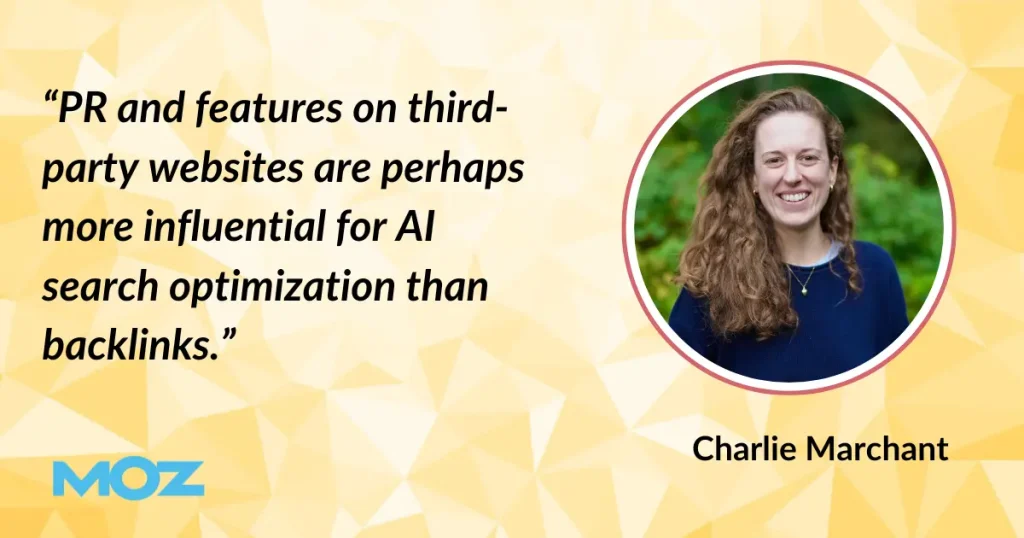
“SEO, as we know, relies heavily on keywords, backlinks, and on-page signals as well. GEO’s a bit different. It depends on brand mentions and what these generative AI engines do is predict text patterns so that they can understand them, and then aggregate information from different places, and they have specific ones that they prefer to prioritise.”
 Charlie Marchant
CEO
Charlie Marchant
CEO
In Conclusion
The rise of generative AI search presents both challenges and opportunities for forward-thinking marketing leaders. While Google remains the dominant search platform, ChatGPT and other AI tools are rapidly gaining users and reshaping how people find information online.
Successful Generative Engine Optimisation requires understanding the unique mechanics of AI search, creating content structured for AI consumption, and strategically positioning your brand across the sources AI platforms prefer to cite.
As Charlie Marchant’s work with The Ordinary demonstrates, brands that embrace generative AI optimisation now can secure valuable visibility that drives real business results. Those who wait may find themselves playing catch-up in an increasingly AI-driven search landscape.
By implementing the strategies outlined in this article, marketing leaders can ensure their brands not only survive but thrive in the age of generative AI search.