How To Create High Converting B2B Landing Pages


Learn the essential elements of high-converting B2B landing pages that will dramatically improve your marketing ROI.
The battle for B2B leads is intensifying. As digital ad costs continue to rise and competition grows fiercer, your landing pages have become the critical conversion point that determines whether your marketing budget delivers a stellar ROI or disappointing results.
For marketing directors and CMOs, this presents both a challenge and an opportunity — optimise your landing pages correctly, and you can outperform competitors who are spending significantly more on traffic acquisition.
But what exactly makes a B2B landing page genuinely effective?
How do you structure a page that converts sophisticated business buyers who are notoriously more analytical and deliberate than consumers? This article examines high-performing examples and extracts actionable principles you can implement immediately.
Executive Summary
The most effective B2B landing pages share several critical elements:
- Immediate clarity — They communicate exactly what’s being offered in the first 3-5 seconds
- Strategic credibility signals — They showcase trust elements above the fold where they have maximum impact
- Objection handling — They proactively address common hesitations before they become barriers
- Clear pathways — They guide different visitor segments toward appropriate next steps
- SEO integration — They serve dual purposes as both conversion tools and search traffic magnets
The businesses achieving 5-6% conversion rates (versus the industry average of 1-2%) don’t just create aesthetically pleasing pages — they build strategic conversion assets that make every pound spent on traffic dramatically more effective.
The Anatomy of High-Converting B2B Landing Pages
Let’s examine what makes exceptional B2B landing pages work by looking at real-world examples that are driving outsized results.
Immediate Value Proposition Clarity
The most successful B2B landing pages establish exactly what they’re offering within seconds. This isn’t merely about aesthetics — it’s about creating immediate understanding.
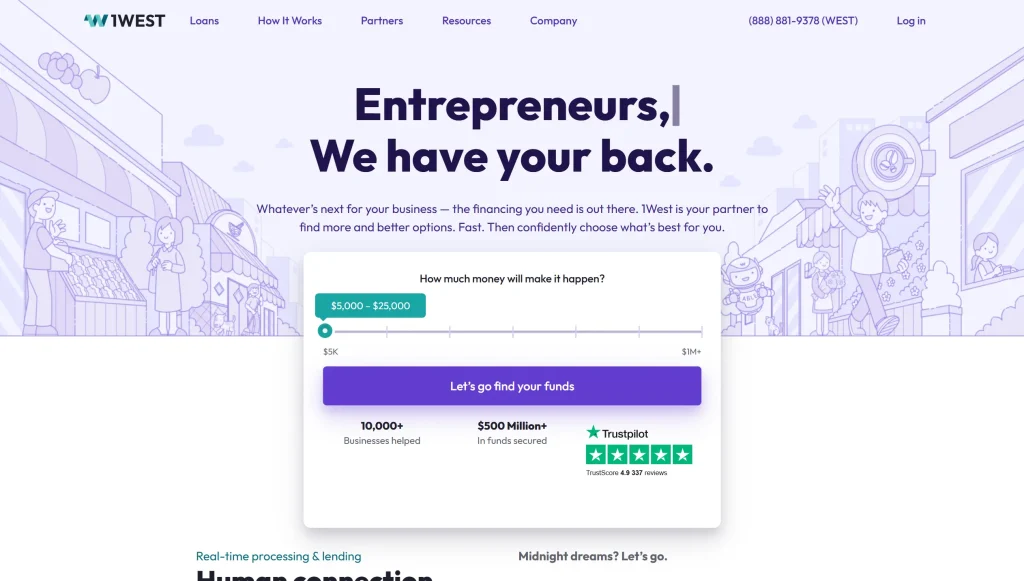
In our first example from the business insurance sector, 1West’s home page immediately communicates its purpose. There’s no ambiguity about what the company offers or who they serve. This immediate clarity allows visitors to quickly determine they’re in the right place, dramatically reducing bounce rates.
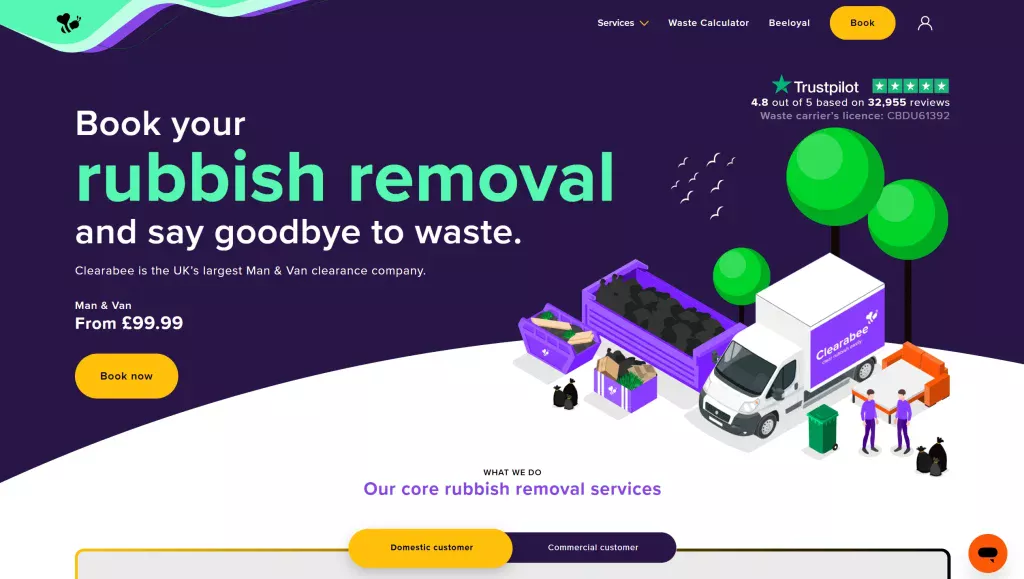
Similarly, Clearabee, a business waste collection service, uses a straightforward headline that instantly communicates its service offering. This clarity isn’t just user-friendly — it’s a conversion imperative. When your prospect immediately understands what you offer, they’re more likely to continue engaging with your page.
Strategic Credibility Positioning
B2B buyers are inherently sceptical. They require more evidence than consumer buyers before making a decision. High-converting pages understand this psychology and prioritise trust elements strategically.
Both examples place credibility indicators above the fold — not buried at the bottom where they have minimal impact. This includes:
- Industry certifications
- Client logos
- Trust badges
- Performance statistics
These elements create immediate reassurance that the visitor is dealing with a reputable provider.
Objection Handling as Conversion Strategy
The best B2B landing pages actively identify and dismantle potential objections before they become conversion barriers.
Our insurance example incorporates the word “instant” into their quote CTA — a small but powerful word choice that preemptively addresses the common objection that getting a quote will be time-consuming. This subtle linguistic choice serves as an objection-handling device that increases conversion likelihood.
Clearabee uses pricing as a strategic objection handler. Rather than hiding prices (as many B2B companies do), they showcase them prominently, turning what could be an objection into a competitive advantage. This transparency serves as a powerful trust signal while simultaneously removing a major friction point from the conversion process.
Intelligent Visitor Pathing
Where many B2B landing pages fail is in treating all visitors as identical. High-converting pages recognise that different visitors have different needs, questions, and levels of readiness.
Clearabee’s landing page includes a section that helps redirect visitors who might have arrived at the wrong service page. This thoughtful addition prevents losing potential customers who simply landed on the incorrect page of their site. It acknowledges the complex nature of their service offerings while providing clear navigation paths for different visitor needs.
This segmentation approach dramatically increases conversion rates by ensuring that each visitor type receives appropriate guidance regardless of where they are in their buying journey.
SEO and Conversion Harmony
Perhaps most impressively, the 1West insurance landing page mentioned ranks fourth in the US for the highly competitive term “business insurance” — demonstrating that conversion optimisation and SEO are not mutually exclusive goals.
This dual-purpose approach represents the future of B2B landing pages. Rather than creating separate assets for traffic acquisition and conversion, forward-thinking marketing leaders are developing comprehensive pages that:
- Contain sufficient content depth for search visibility
- Maintain conversion focus without overwhelming visitors
- Serve both organic search traffic and paid traffic effectively
This integration maximises the efficiency of both your SEO and PPC investments.
The ROI Mathematics of Landing Page Excellence
There’s a critical business reality that many marketing leaders overlook: landing page conversion rates directly determine how much you can afford to spend on traffic acquisition.
Using Clearabee as an example, their carefully optimised landing page likely achieves conversion rates of 5-6%, compared to industry averages of 1-1.5%. This difference fundamentally changes their marketing economics:
- A competitor with a 1.5% conversion rate might break even at £4 per click
- Clearabee, converting at 5%, could profitably spend up to £13 per click
This competitive advantage compounds over time, allowing high-converters to outbid competitors for premium traffic while maintaining better ROI. For marketing directors under pressure to demonstrate efficient growth, landing page optimisation offers one of the highest leverage activities available.
The beauty of a fantastic B2B landing page is that it makes all of the rest of your digital marketing more profitable, and if you’re the marketing manager, it makes you look like a genius.
 Tim Cameron-Kitchen
Founder
Tim Cameron-Kitchen
Founder
How To Apply These Principles to Your B2B Landing Pages
In Conclusion
The B2B landing page landscape continues to evolve, but the fundamental principles of conversion rate optimisation remain consistent:
- Clarity
- Credibility
- Objection handling
- Visitor pathing.
The businesses that excel in these areas create significant competitive advantages through superior conversion economics.
For marketing leaders, the implications are clear — landing page optimisation isn’t merely a design exercise, but a strategic business initiative with direct impact on marketing ROI and competitive positioning. In today’s increasingly competitive digital landscape, companies that master these principles will enjoy a sustainable advantage in customer acquisition efficiency.
Watch This Next
There are dozens of reasons why your B2B landing pages aren’t converting, from weak CTAs and overbearing forms, to learn exactly what’s blocking your visitors from converting — and sabotaging your pipeline and revenue generation — watch this video and learn all of the conversion rate mistakes you might be making.