Best eCommerce Platform: 10 Options Compared for 2026

The best eCommerce platform for most growing UK brands is Shopify.
It’s quick to launch, simple for non-technical teams to run and grows from a first product to a large catalogue on Shopify Plus without changing platform.
If you want full control of your content and SEO, WooCommerce on WordPress is the stronger choice. If you sell B2B or carry a very large catalogue, look at BigCommerce or Adobe Commerce.
Our Shopify developers and WordPress developers build and migrate stores on these platforms, so below we compare 10 options on UK pricing, transaction fees, SEO and how far each one can grow with you.
Choosing well matters: the Office for National Statistics puts 28.8% of all retail sales in Great Britain online in September 2026.
Best eCommerce Platforms at a Glance
| Platform | Best For | Starting Price (UK) | Platform Transaction Fee | Hosting |
| Shopify | Most growing brands | £19 a month (Basic, billed yearly) | None with Shopify Payments; 0.6% to 2% with other providers (0.2% on Plus) | Hosted |
| WooCommerce | SEO and control | Free plugin, plus hosting, theme and extensions | None | Self-hosted |
| BigCommerce | B2B and large catalogues | $29 a month (Core, billed annually; priced in US dollars) | None with embedded providers; up to 2% with open providers | Hosted |
| Adobe Commerce | Enterprise and complex catalogues | Quote only (Magento Open Source is free) | Not published | Cloud or self-hosted |
| Wix | First stores and small catalogues | £16 a month (Core, billed yearly, excluding VAT) | Not stated on the pricing page | Hosted |
| Squarespace | Design-led brands | £12 a month (Basic, billed annually) | 2% on Basic; none on Core and above | Hosted |
| Square Online | Shops that also sell in person | Free plan; paid plans from £20 a month | None (card fees from 1.4% + 25p) | Hosted |
| ShopWired | UK-focused stores | £34.95 a month (Essentials, billed monthly) | None on external gateways | Hosted |
| Ecwid | Adding a store to an existing site | £5 a month (Starter, up to 10 products) | None | Hosted (embedded in your site) |
| PrestaShop | European selling and open-source control | Free download; hosted from €24 a month excluding VAT | None | Self-hosted or hosted |
Prices and fees come from each platform’s own pricing page on 12 November 2026. They change often, so check them before you sign up. Card processing fees are charged on top unless we say otherwise.
Picked Shopify or WooCommerce? We build and migrate stores on both. Book a consultation and our eCommerce website developers will talk through your store with you.
1. Shopify: Best for Most Growing Brands
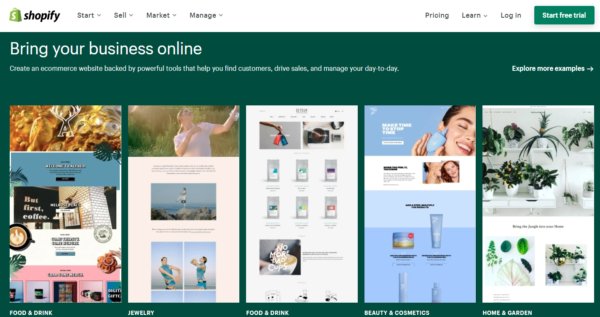
Shopify is a hosted platform: it looks after hosting, security, updates and checkout, so your team can focus on selling.
It’s our default recommendation for most growing brands. It’s quick to launch, easy for non-technical teams to manage, and its app store covers almost everything a store adds later, from subscriptions and reviews to loyalty schemes and fulfilment.
Pricing (UK)
Shopify’s UK pricing is £19 a month for Basic, £49 for Grow and £259 for Advanced when billed yearly (£25, £65 and £344 billed monthly). Shopify Plus starts at £1,800 a month.
Shopify Payments card rates start at 2% + 25p on Basic and fall to 1.5% + 25p on Advanced. If you use a different payment provider, Shopify adds its own fee on each sale: 2% on Basic, 1% on Grow, 0.6% on Advanced and 0.2% on Plus.
Pros and Cons
- Pros: Quick to launch, simple to run, hosting and checkout handled for you, a large choice of themes and apps, and room to grow on Shopify Plus.
- Cons: App subscriptions add up, there’s an extra fee if you don’t use Shopify Payments, and you can’t change the fixed URL structure (/products/ and /collections/).
Who It’s Best For
Brands that want to sell quickly without managing servers, from a first store to a large catalogue. If that’s you, our Shopify development agency can build, redesign or migrate your store.
Our Developers’ Take: The fixed URLs aren’t a ranking problem in themselves. The issue we look for is themes that link to products through collection paths, which creates duplicate URLs for the same product, so make sure your theme links to the main product URL.
2. WooCommerce: Best for SEO and Control
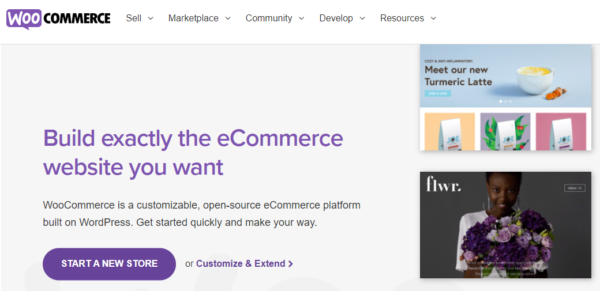
WooCommerce is a free plugin that turns a WordPress site into a store. You host it yourself, which means more to look after, but you get full control of your content, URLs, design and data.
For content-led brands, that control matters. Your blog, buying guides and product pages live on one site, and you can shape the site structure and internal links however your SEO strategy needs.
Pricing (UK)
The plugin is free. You pay for hosting, a theme, premium extensions (WooCommerce lists most at $29 to $299 a year) and development time. WooPayments charges 1.5% + 25p on UK cards, and WooCommerce adds no platform transaction fee.
Pros and Cons
- Pros: Full control of content, URLs and structured data, no platform transaction fees, a huge choice of plugins, and you own your site and data.
- Cons: You’re responsible for hosting, updates and security, plugin conflicts can slow a site down, and you’ll need developer support as you grow.
Who It’s Best For
Brands that publish a lot of content, want control over their SEO or already run WordPress. Our WordPress development team can build a new store or rebuild an existing one.
Our Developers’ Take: Most slow WooCommerce stores we’re asked to fix are slow because of their hosting and their plugin count, not WooCommerce itself. Managed WordPress hosting and a plugin audit usually make the biggest difference.
3. BigCommerce: Best for B2B and Large Catalogues
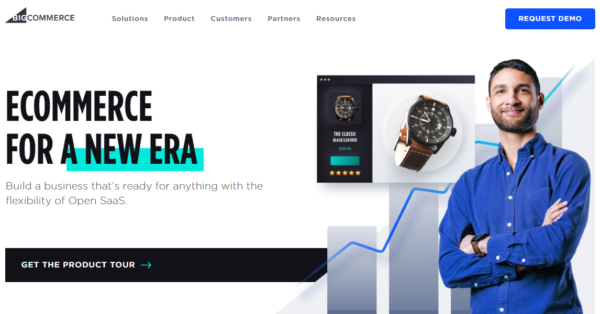
BigCommerce is a hosted platform like Shopify, but with more features built in as standard, so you rely less on paid apps.
It’s a strong option for large catalogues and B2B selling, with a B2B Edition for things like company accounts, customer price lists and quote requests.
Pricing (UK)
BigCommerce shows its prices in US dollars, even on its UK pricing page: Core is $29 a month, Growth $79 and Scale $299, billed annually. Each plan has a sales limit (Core covers up to $30,000 of sales over the last 12 months), so your plan rises as your sales do.
There’s no platform transaction fee if you use one of BigCommerce’s embedded payment providers. With an open payment provider, the fee is 2% on Core, 1% on Growth and 0.6% on Scale.
Pros and Cons
- Pros: Lots of features built in, strong B2B tools and no platform fee with embedded payment providers.
- Cons: Prices and sales limits are in US dollars, plans rise with your sales, and there’s a smaller choice of themes and apps than on Shopify.
Who It’s Best For
B2B sellers and stores with large or complex catalogues that would otherwise need a lot of Shopify apps.
Our Developers’ Take: Check the sales limits against your forecast before you sign up. A good year can move you onto a more expensive plan, so it’s worth pricing the next tier up from day one.
Switching from BigCommerce to Shopify?
If you’re already using BigCommerce and thinking about switching to Shopify (after the Shopify 2.0 update), then you can read all about how to complete that migration in this post: How to Migrate BigCommerce to Shopify.
4. Adobe Commerce (Magento): Best for Enterprise and Complex Catalogues
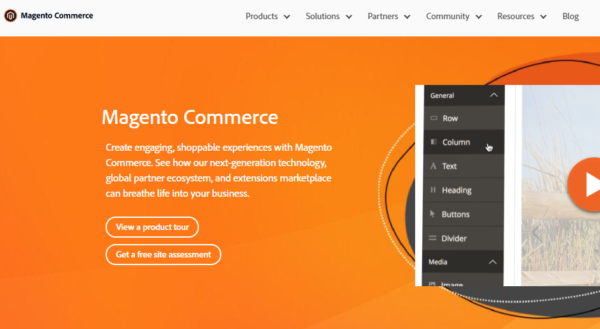
Adobe Commerce is the paid, enterprise version of Magento. It’s built for very large catalogues, multiple stores, currencies and complex pricing, and Adobe now sells it as a SaaS service (Adobe Commerce as a Cloud Service) as well as a cloud-hosted platform.
Magento Open Source is still free to download, but you’ll need a development team to host, secure and maintain it.
Pricing (UK)
Adobe doesn’t publish prices: every plan is quoted. Budget for the licence plus a specialist development partner to build and run the store.
Pros and Cons
- Pros: Handles complex catalogues and multi-store setups, can be customised deeply and works with Adobe’s wider marketing tools.
- Cons: Expensive to license, build and maintain, needs specialist developers, and changes take longer than on hosted platforms.
Who It’s Best For
Enterprise retailers with complex catalogues and an in-house or agency development team.
Our Developers’ Take: Unless you need that complexity, the running costs rarely add up for a mid-sized store. Brands on older Magento builds are often better served by a move to Shopify.
Switch from Magento to Shopify
If you’re using Magento (now Adobe Commerce) and thinking of switching to Shopify, then read through this Magento to Shopify migration guide before you do:
5. Wix: Best for First Stores and Small Catalogues
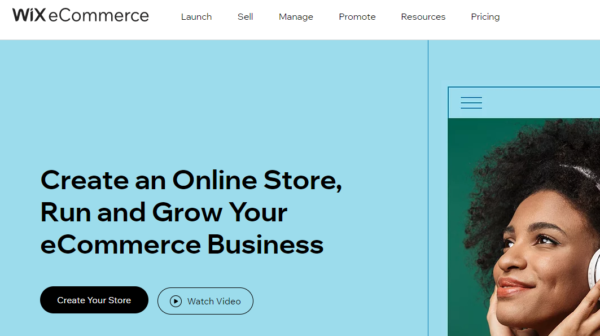
Wix is a drag-and-drop website builder with eCommerce on its Core plan and above. It’s quick to set up and fine for a small catalogue, but as you grow it gives you less control over checkout, speed and SEO than the platforms above.
Pricing (UK)
Wix’s plans that can take payments are Core at £16 a month, Business at £25 and Business Elite at £119, billed yearly and excluding VAT. The Free and Light plans can’t take payments.
Pros and Cons
- Pros: An easy editor, hosting included and a low starting price.
- Cons: Fewer advanced eCommerce features, less flexibility for SEO on larger sites, and it’s harder to move away from later.
Who It’s Best For
Service businesses adding a few products, or brands testing an idea before investing in a bigger build. If you’re weighing up Wix, Squarespace, WordPress and Shopify for a new site, the biggest difference is how far each one will grow with you.
6. Squarespace: Best for Design-Led Brands

Squarespace is known for its templates, which makes it a good fit for brands where presentation sells the product, such as fashion, homeware and art.
Its eCommerce covers the essentials, including shipping and subscriptions, but it has fewer integrations than Shopify for more complex operations.
Pricing (UK)
Squarespace’s plans are Basic at £12 a month, Core at £17, Plus at £29 and Advanced at £79, billed annually. Basic charges a 2% transaction fee on online store sales; Core and above don’t. Card rates start at 2.0% + 25p, falling to 1.5% + 25p on Advanced.
Pros and Cons
- Pros: Strong templates, simple to manage and no transaction fee from Core upwards.
- Cons: A limited app ecosystem, less control over technical SEO, and it isn’t built for large catalogues.
Who It’s Best For
Brands with a small, visual range who want a polished store without a developer.
7. Square Online: Best for Shops That Also Sell in Person
Square Online is the online store from Square, the card reader and till system. If you already take payments in person with Square, your stock, orders and payments sit in one place.
It’s limited compared with the platforms above, but hard to beat on cost for a shop, café or market trader moving online. Square also owns Weebly, whose online store now takes payments through Square.
Pricing (UK)
There’s a free plan with no monthly fee, and paid plans start at £20 a month. Square’s UK pricing for online payments is 1.4% + 25p on UK cards and 2.5% + 25p on non-UK cards. Clearpay and free click and collect are built in.
Pros and Cons
- Pros: Free to start, linked to Square’s tills and card readers, and click and collect included.
- Cons: Basic design and SEO controls, fewer integrations, and it isn’t built for large or international stores.
Who It’s Best For
Shops, cafés and market traders who already use Square in person and want to sell online without a separate system.
8. ShopWired: Best for UK-Focused Stores
ShopWired is a hosted eCommerce platform with prices in pounds and plans based on your turnover, which makes costs easy to forecast for UK stores.
Pricing (UK)
ShopWired’s plans are Essentials at £34.95 a month, Advanced at £79.95 and Premium at £149.95 billed monthly, with discounts of 10%, 20% and 30% for paying one, two or three years upfront. They cover annual turnover of up to £50,000, £200,000 and £500,000, and Enterprise starts at £299.95 a month.
ShopWired Payments starts at 1.9% + 20p (1.5% + 20p on Advanced and Premium), and there’s no transaction fee if you use an external payment gateway.
Pros and Cons
- Pros: Pricing in pounds, lots of features built in and no fees on external gateways.
- Cons: A smaller ecosystem of apps and developers, and turnover limits that move you up plans as you grow.
Who It’s Best For
UK brands that want an all-in-one hosted platform with predictable pricing in pounds.
9. Ecwid: Best for Adding a Store to an Existing Website
Ecwid adds a shop to a website you already have, or to your social media, without rebuilding the site.
Pricing (UK)
Ecwid’s pricing starts at £5 a month for up to 10 products. Venture (up to 100 products) is £29 a month, Business (up to 2,500 products) is £49 and Unlimited is £119, billed annually and excluding tax. Ecwid charges no transaction fees, though your payment provider’s fees still apply.
Pros and Cons
- Pros: Quick to add to an existing site, no transaction fees and low costs for a small range.
- Cons: Product limits on each plan, less SEO control because the store sits inside another site, and fewer advanced features.
Who It’s Best For
Businesses with a website they’re happy with that want to start selling a small range online.
10. PrestaShop: Best for European Selling and Open-Source Control
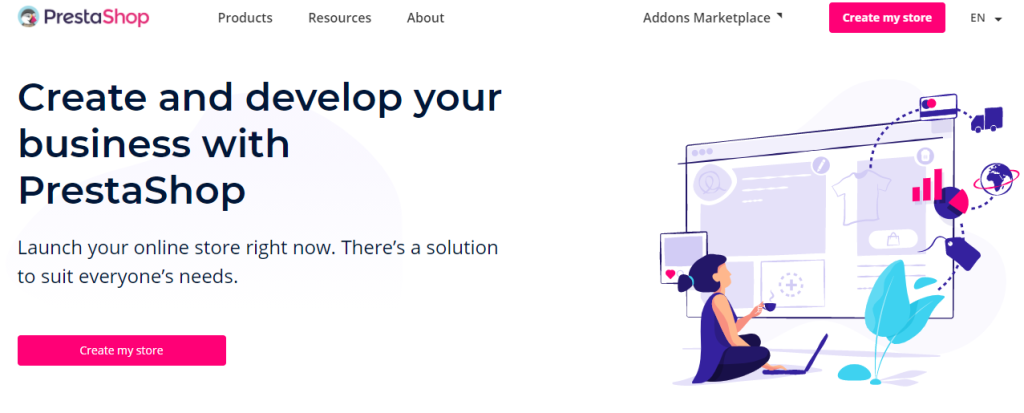
PrestaShop is a free, open-source platform from France. Like WooCommerce, you host and maintain it yourself, or you can pay for PrestaShop Hosted.
PrestaShop lets you use a number of languages and currencies so that you can sell in markets around the world.
Pricing (UK)
The open-source version is a free download, with hosting and domain costs on top. PrestaShop Hosted costs €24 a month excluding VAT when paid annually, or €29 a month with no commitment.
Pros and Cons
- Pros: Free to download, strong multi-language and multi-currency features, and full control of your code.
- Cons: Prices in euros for the hosted version, you’re responsible for updates and security when you self-host, and there are fewer UK developers than for WooCommerce or Shopify.
Who It’s Best For
Stores selling across several European countries that want open-source control.
How to Choose the Best eCommerce Platform for Your Business
The right platform depends less on features lists and more on how your business sells and who will run the store. Work through these questions before you compare plans.
- Total Cost: Add up the plan, apps or extensions, card fees, any platform transaction fee and development time. A cheap plan with expensive apps can cost more than a higher plan.
- Catalogue Size: A few dozen products suit almost any platform. Thousands of products with variants, bundles or customer-specific pricing point to Shopify Plus, BigCommerce or Adobe Commerce.
- Who Runs It Day to Day: Hosted platforms suit teams without a developer. Self-hosted platforms need someone to handle updates, security and hosting.
- SEO and Content: If organic search drives your sales, check how much control you get over URLs, page templates, structured data and blog content.
- Where You Sell: Check the integrations for marketplaces, social shops, in-person tills and the couriers you already use.
- UK Readiness: Make sure the platform shows VAT-inclusive prices to consumers, handles VAT correctly on your invoices and connects to UK carriers.
If you’re still unsure, start where you expect to be in three years, not where you are now. Moving platforms later is possible, but it costs time and carries SEO risk if redirects aren’t handled properly.
Which eCommerce Platform Is Best for SEO?
Any of the top four platforms can rank well. In our SEO team’s experience, what decides it is the work done on the site: a clear structure, fast pages, unique product and category copy and good internal linking.
WooCommerce gives you the most control, because you can change almost anything. Shopify ranks well too, as long as you manage duplicate product URLs, app scripts that slow pages down and the fixed URL structure. BigCommerce has solid SEO settings built in, and Wix and Squarespace are fine for small sites but harder to scale.
The same pages also feed AI Search. Tools such as ChatGPT and Google’s AI Mode read product and category pages when they answer shopping questions, so specific product details, clear comparisons and honest reviews give your store a better chance of being cited. Our eCommerce SEO and AI Search Optimisation teams work on both.
Hosted vs Self-Hosted vs Headless eCommerce
Hosted platforms (Shopify, BigCommerce, Wix, Squarespace, Square Online, ShopWired, Ecwid) run on the provider’s servers. You pay a monthly fee, and they handle hosting, security and updates.
Self-hosted platforms (WooCommerce, Magento Open Source, PrestaShop) run on hosting you choose. You get more control and no platform fees, but you’re responsible for keeping the site fast and secure.
Headless eCommerce separates the shop’s back end from the front end customers see, so developers can build a custom front end on top of Shopify, BigCommerce or Adobe Commerce. It suits large brands with complex needs and a development budget to match, not most stores.
eCommerce Platforms vs Marketplaces
Marketplaces such as Amazon, eBay and Etsy bring you shoppers who are already searching, but you pay fees on each sale, follow their rules and don’t own the customer relationship.
An eCommerce platform gives you your own store, your own customer data and your own brand, but you have to bring the traffic through SEO, paid ads and email.
Most growing brands do both: they use marketplaces for reach and their own store for margin and repeat customers. Shopify and BigCommerce both connect to the major marketplaces, so stock and orders stay in one place.
How We Chose These Platforms
We started with the platforms UK merchants are most likely to consider, including those that appear in UK search results for “best eCommerce platform”.
We checked every price, fee and plan on each platform’s own pricing page on 12 November 2026, using UK pricing wherever it’s published. We then judged each one on cost, ease of use, SEO control, how far it can scale and how ready it is for UK selling, drawing on our team’s experience of building and migrating stores.
We’ve removed two platforms from the previous version of this guide: Weebly, whose online store now runs on Square, and Volusion, which publishes US dollar pricing only.
FAQs
What Is the Best eCommerce Platform in the UK?
For most UK brands, Shopify. It has UK pricing in pounds, UK card rates through Shopify Payments and the widest choice of apps and developers. WooCommerce is the better choice if you want full control of your SEO and content.
What Is the Best eCommerce Platform for a New Store?
Shopify Basic is the easiest serious starting point, at £19 a month billed yearly. If you’re only selling a few products alongside a service, Square Online’s free plan or Wix’s Core plan will keep costs down.
Which eCommerce Platform Has the Lowest Fees?
WooCommerce and PrestaShop charge no platform fees, but you pay for hosting and development. Of the hosted platforms, Square Online has a free plan and Ecwid charges no transaction fees. Always compare the total cost, including card fees and apps.
Is Shopify Better Than WooCommerce?
Shopify is easier to run and better for teams without a developer. WooCommerce gives you more control over content and SEO, with more to manage yourself. We build on both, so we recommend whichever fits how your team works.
Can I Move My Store to a Different Platform Later?
Yes. Products, customers and orders can usually be migrated, but you need to redirect every old URL to protect your rankings. Our guides cover moving WooCommerce to Shopify, BigCommerce to Shopify and Magento to Shopify.
Do I Need a Developer to Build an eCommerce Store?
Not to launch a simple store on a hosted platform. You’ll usually need one for a custom design, integrations with your stock or accounting systems, a migration or a self-hosted platform.
Need Help Choosing or Building Your Store?
Our eCommerce website developers build and migrate stores on Shopify and WooCommerce, and our SEO and conversion rate optimisation teams help them grow once they’re live.
On a live video call, we’ll review your current store or plans, recommend the right platform and outline the next steps.