The Best B2C Marketing Strategies for 2025

The B2C landscape has fundamentally shifted. eCommerce and direct-to-consumer brands face unprecedented challenges — from rising customer acquisition costs to AI agents that can shop on behalf of consumers. Yet within these challenges lie extraordinary opportunities for marketers who understand how to navigate this new terrain.
Traditional marketing playbooks are becoming obsolete faster than ever. Customers now discover products through AI-powered search tools like Perplexity and ChatGPT, while sophisticated email automation and quiz-driven personalisation reshape the customer journey. The brands thriving in 2025 aren’t just adapting to these changes — they’re leveraging them to build sustainable competitive advantages.
Whether you’re a marketing director at an established brand or leading growth at an emerging company, the strategies outlined here will help you reduce customer acquisition costs, increase lifetime value, and position your brand for the AI-driven future of commerce.
Executive Summary
B2C marketing success in 2025 hinges on mastering two critical metrics: Customer Acquisition Cost (CAC) and Customer Lifetime Value (CLV). The most successful brands are implementing five core strategies:
1. Quiz-Driven Customer Acquisition — Using interactive quizzes to reduce acquisition costs whilst capturing high-quality email leads for personalised follow-up campaigns.
2. Strategic Email Automation — Implementing sophisticated sequences including basket abandonment, browse abandonment, and post-purchase education to maximise customer lifetime value.
3. AI-Optimised Content Strategy — Creating content that performs well in traditional search whilst positioning brands for AI-powered product recommendations across platforms like ChatGPT and Perplexity.
4. Digital PR for AI Visibility — Securing strategic mentions in high-authority publications to increase the likelihood of AI recommendation algorithms featuring your products.
5. Advanced Search Advertising — Leveraging both text and shopping ads with clear positioning that creates consistent experiences from ad click to conversion.
These strategies work synergistically — email capture feeds into automation sequences, digital PR boosts both SEO and AI visibility, and clear positioning improves conversion rates across all channels.
Reduce Customer Acquisition Costs Through Strategic Customer Journey Design
The Quiz Revolution: Personalisation at Scale
The most effective B2C brands recognise that customers fall into two distinct categories: those who know exactly what they want and those who need guidance. Quizzes bridge this gap whilst dramatically reducing acquisition costs.
Lick Paint’s £2 Commitment Strategy: Their colour-matching quiz guides customers through a personalised selection process before offering sample paints for just £2. This incredibly low-commitment entry point captures customers who might otherwise bounce, transforming browsers into buyers through a guided experience.
Hims’ Diagnostic Approach: The men’s health brand uses comprehensive quizzes that provide personalised feedback throughout the process. While the recommendations often follow similar patterns, the personalised journey makes each suggestion feel bespoke rather than generic.
The psychology is powerful — customers invest time in the quiz, creating commitment. They receive personalised recommendations, building trust. And they provide detailed information about their needs, enabling sophisticated follow-up marketing.
Email Capture: The Foundation of Profitable Growth
Smart brands capture email addresses immediately, recognising that follow-up marketing costs virtually nothing compared to the initial traffic acquisition investment.
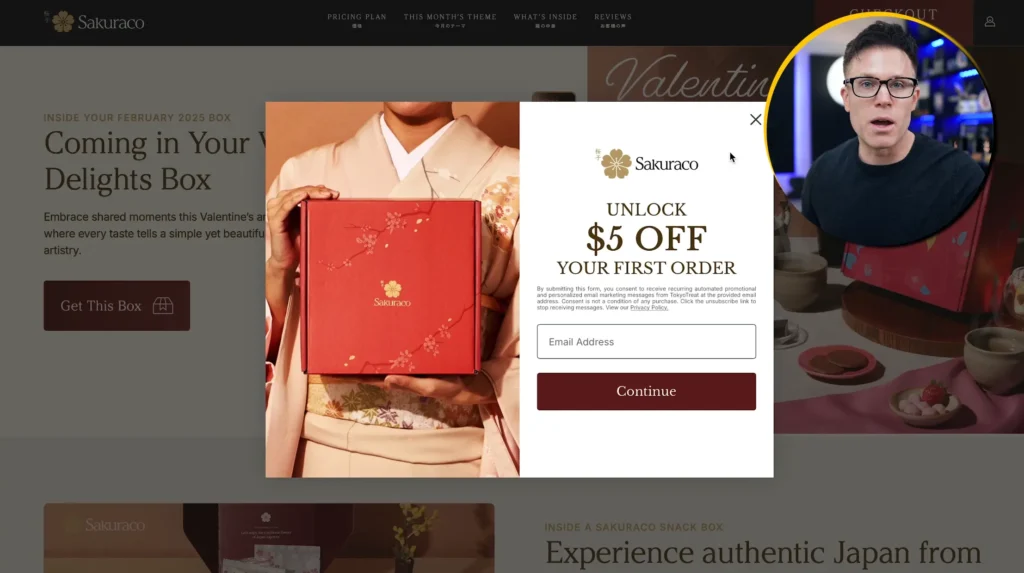
Sakuraco’s $5 Strategy: The Japanese subscription box brand offers a straightforward $5 discount for email signup. Simple, clear, and effective — demonstrating that sophisticated doesn’t always mean complicated.
The mathematical logic is compelling. If you’re paying £20 to acquire a website visitor through advertising, capturing their email for free follow-up marketing transforms your economics entirely.
Conversion Rate Optimisation Through Psychological Triggers
Scarcity and FOMO Implementation: Sakuraco’s monthly box strategy creates natural urgency — miss this month’s box, and you cannot access these specific items later. This isn’t artificial scarcity; it’s built into their business model.
Design as Differentiation: Crumbl Cookies demonstrates how exceptional design and photography can make even common products feel premium. Their visual approach has helped drive over 7 million monthly organic search visitors, proving that aesthetic excellence translates directly into traffic and revenue.
Increase Customer Lifetime Value Through Strategic Retention
Subscription Model Optimisation
The most sophisticated B2C brands understand that customer acquisition cost should be viewed as an investment in future revenue streams rather than a per-transaction expense.
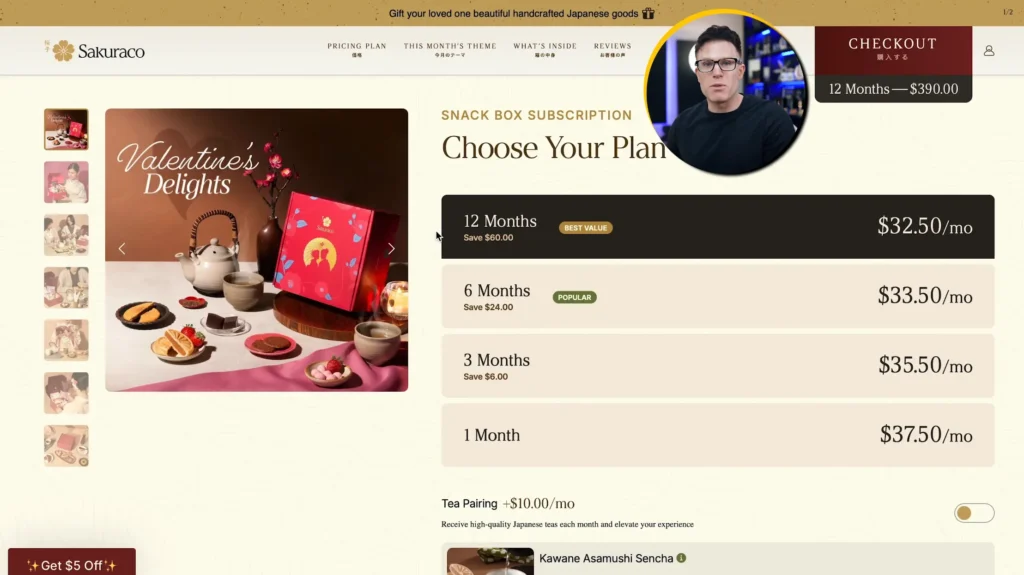
Sakuraco’s Discount Ladder Strategy: They offer increasing discounts for longer subscription commitments. If their customer acquisition cost exceeds £50 per customer, offering £20 off a 12-month subscription still generates significantly higher profit margins than single-month purchases.
This approach transforms the business model — you pay acquisition costs once but generate revenue monthly with minimal ongoing marketing investment.
Email Marketing: The Profit Multiplier
Email marketing remains one of the highest ROI activities in B2C marketing, yet most brands dramatically underutilise its potential.
Essential Email Sequences for E-commerce:
• Product Education Emails: Away Travel’s post-purchase sequences help customers understand product features, reducing returns whilst increasing satisfaction.
• Basket Abandonment: Automated follow-up for customers who add products but don’t complete checkout.
• Browse Abandonment: Targeted emails for visitors who view specific product categories, offering relevant recommendations or incentives.
The key insight: these automations can run for months or years without modification, generating profit long after the initial setup investment.
Implementation Best Practices: Away’s product education emails use custom graphics and friendly, conversational copy that feels personal rather than corporate. However, they could improve by including multiple call-to-action buttons throughout the email rather than only at the bottom.
Master AI-Powered Product Discovery
Understanding the New Search Landscape
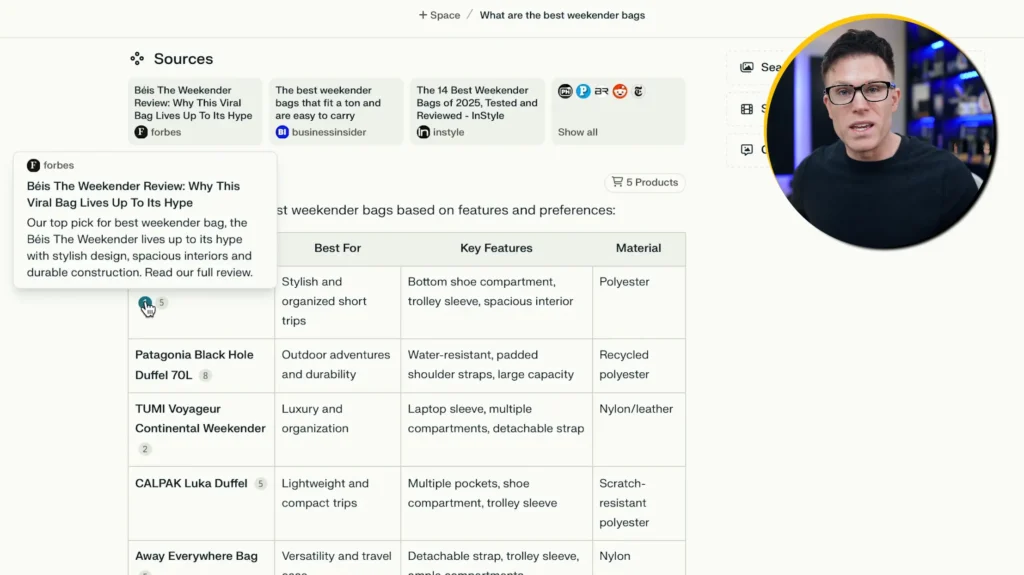
AI tools like ChatGPT and Perplexity are fundamentally changing product discovery. When customers search for “best carry-on luggage,” these platforms provide specific product recommendations — but these recommendations come from third-party content sites, not brand websites.
The Content Site Phenomenon: ChatGPT’s luggage recommendations source from publications like The Good Trade and New York Magazine. Perplexity pulls recommendations from Forbes and People Magazine. Brand websites themselves rarely appear as the source of AI recommendations.
This creates a crucial insight: your visibility in AI-powered search depends heavily on your presence in high-authority content publications.
Digital PR as AI Optimisation Strategy
Béis’ Authority Building: This luggage brand has secured coverage across CNN, New York Times, Forbes, Yahoo, USA Today, Daily Mail, People, Business Insider, and dozens of other high-authority sites. This comprehensive digital PR strategy drives both traditional SEO growth and AI recommendation visibility.
The compound effect is powerful — each high-authority mention strengthens your overall domain authority whilst increasing the likelihood that AI algorithms will reference your products when making recommendations.
Future-Proofing Insight: As AI tools become more sophisticated, getting featured in authoritative publications becomes increasingly important — not necessarily because humans read these articles, but because AI systems use them as trusted sources for product recommendations.
Product Page Optimisation for Both Human and AI Consumption
Away Travel’s Conversion-Optimised Pages: Their weekender bag product page demonstrates best practices:
• High-quality product videos early in the page layout
• Comprehensive product information without overwhelming users
• Strategic product naming (their “Weekender” bag targets exact-match search terms)
• User-generated reviews that add content depth
• Related product recommendations
These elements satisfy both human users seeking information and AI systems looking for structured, authoritative product data.
Advanced Search Advertising Strategies
Text Advertising with Clear Positioning
Hims’ Pain Point Messaging: Their search ads emphasise specific value propositions — “no waiting room, no awkward appointment, just licensed providers you can trust, all 100% online.” This messaging directly addresses customer pain points whilst overcoming common objections.
The consistency continues on their landing pages, creating a seamless experience from ad click to conversion. This alignment improves both conversion rates and Google Ads quality scores.
Multi-Brand Market Domination
Ichigo Inc’s Dual-Brand Strategy: This company operates both TokyoTreat and Sakuraco, allowing them to capture two-thirds of the advertising real estate for Japanese snack subscription searches.
The sophistication lies in their positioning differentiation:
• TokyoTreat: Fun, playful, focused on enjoyment
• Sakuraco: Authentic, premium, emphasising tradition and quality
By operating distinct brands with clear positioning, they maximise market share whilst serving different customer segments with tailored messaging.
Shopping Advertisements and Product Listings
Product Listing Advertisements (PLAs) continue growing in importance, particularly as AI tools begin integrating direct purchase options. Ensuring your products appear in shopping results positions you for both current human shoppers and future AI-driven purchasing agents.
The Content Marketing Evolution
Blog Content in the AI Era
Despite AI integration in search results, informational content remains crucial for B2C success. Google’s AI Overviews often include links to helpful content, creating opportunities for educational blog posts to drive commercial outcomes.
TravelPro’s Missed Opportunity: Their carry-on luggage size guide attracts searchers with informational intent but fails to effectively link to relevant products. The opportunity exists to connect each dimension specification with appropriate product recommendations.
Best Practice Implementation: Create comprehensive guides that answer customer questions while strategically linking to relevant products. This approach captures informational searchers and guides them toward commercial intent.
Email List Building Through Content
Content marketing and email marketing work synergistically. Educational content attracts visitors, lead magnets capture email addresses, and automated sequences nurture prospects toward purchase decisions.
The most successful B2C brands treat their blog content as the top of an email marketing funnel rather than a standalone traffic generation strategy.
Implementation Roadmap
Phase 1: Foundation Building (Month 1-2)
Email Capture Optimisation:
• Implement exit-intent popups with discount offers
• Create product recommendation quizzes for your primary categories
• Set up basic email capture forms across key landing pages
Essential Email Sequences:
• Welcome series for new subscribers
• Basket abandonment sequence
• Post-purchase education emails
Phase 2: Content and PR Strategy (Month 2-4)
SEO-Optimised Product Pages:
• Add comprehensive product descriptions
• Include high-quality product videos
• Implement user review systems
• Optimise product names for search intent
Digital PR Outreach:
• Identify high-authority publications in your industry
• Develop newsworthy angles for your products
• Begin systematic outreach for product features and mentions
Phase 3: Advanced Automation (Month 3-6)
Sophisticated Email Marketing:
• Browse abandonment sequences
• Category-specific product recommendations
• Customer lifetime value optimisation campaigns
AI Optimisation:
• Monitor your products’ appearance in AI search results
• Identify which third-party sites influence AI recommendations
• Develop relationships with key industry publications
Phase 4: Scaling and Optimisation (Month 6+)
Multi-Channel Integration:
• Coordinate email marketing with paid advertising retargeting
• Align content marketing with email nurture sequences
• Optimise for emerging AI-powered shopping platforms
Advanced Segmentation:
• Behavioural email segmentation based on browsing patterns
• Dynamic product recommendations based on purchase history
• Predictive analytics for customer lifetime value optimisation
Next Steps
The B2C marketing landscape rewards brands that move quickly to implement comprehensive strategies rather than those that perfect individual tactics. Your immediate priorities should focus on the highest-impact, lowest-complexity implementations:
This Week: Set up basic email capture on your primary landing pages with simple discount incentives.
This Month: Implement basket abandonment email sequences and begin systematic digital PR outreach to relevant industry publications.
Next Quarter: Develop comprehensive product recommendation quizzes and launch browse abandonment email automation.
The brands that implement these strategies comprehensively will build sustainable competitive advantages whilst their competitors remain focused on single-channel optimisation. Email marketing alone can generate complete return on investment within weeks, whilst digital PR efforts compound over months and years.
Success requires viewing these strategies as interconnected systems rather than isolated tactics. Email capture feeds automated sequences, digital PR boosts both SEO and AI visibility, and clear positioning improves conversion rates across all channels.
In Conclusion
The most successful B2C brands of 2025 will be those that recognise marketing’s evolution from channel-specific tactics to integrated customer experience design. Email marketing, content creation, digital PR, and paid advertising must work together to create seamless customer journeys that reduce acquisition costs whilst maximising lifetime value.
The opportunity exists now to implement these strategies whilst competitors remain focused on outdated approaches. AI-powered product discovery is still emerging, digital PR relationships take time to develop, and sophisticated email automation requires months to optimise fully.
The brands that begin implementation immediately — even imperfectly — will establish positions that become increasingly difficult for competitors to challenge. Perfect execution matters less than comprehensive implementation across all customer touchpoints.
Your competitive advantage comes not from mastering any single strategy, but from orchestrating multiple strategies into cohesive customer experiences that drive both immediate conversions and long-term loyalty.
Watch This Next
One of our favourite brands to analyse during all of this was Hims, and we’ve recorded a long marketing deep dive video on how they’ve been able to earn such quick successes within a very short period of time.
Watch our video, COPY Hims’ $60M/Month Marketing Strategy, to see whether you can copy their best marketing tactics.